





Kuruma Ebi: The Live Japanese Tiger Prawn
At a good sushi counter, the kuruma ebi is alive until shortly before it reaches you. A guide from The Sushi Geek says a good chef will always buy the prawn live and prepare it only moments before it is served. This guide from Yuzu Omakase covers what kuruma ebi is, why it is kept… Continue reading Kuruma Ebi: The Live Japanese Tiger Prawn
Our Creations ● 2026 Nov 25
- Kuruma ebi (車海老, Marsupenaeus japonicus) is the Japanese tiger prawn, a striped prawn from warm, sandy bays that Japanese cooks treat as a premium ingredient.
- The name means “wheel prawn”: when the prawn curls, the dark stripes on its body look like a wheel.
- At a sushi counter, kuruma ebi is served in one of two ways, boiled moments after it leaves the tank, or live as odori, shelled and placed on the rice while it is still moving.
At a good sushi counter, the kuruma ebi is alive until shortly before it reaches you. A guide from The Sushi Geek says a good chef will always buy the prawn live and prepare it only moments before it is served. This guide from Yuzu Omakase covers what kuruma ebi is, why it is kept alive, and the two ways it reaches the plate.
What is kuruma ebi?
Kuruma ebi (車海老) is the Japanese name for Marsupenaeus japonicus, a prawn in the family Penaeidae. Older books list it as Penaeus japonicus. In English it is called kuruma prawn, kuruma shrimp or Japanese tiger prawn.
According to Japanese Wikipedia, an adult is about 15 centimetres long, and females grow larger, up to about 30 centimetres. English Wikipedia gives smaller maximum sizes (17 centimetres for males and 27 for females), so published sizes vary by source. Alive, the prawn is blue-grey or pale brown, with black stripes running diagonally across the carapace and the abdomen. Japanese Wikipedia says its stripes are the most distinct of the penaeid prawns in Japan.
Japanese Wikipedia says kuruma ebi lives on sandy or muddy seabeds in calm bays. By day it buries itself in the sand with only its eyes showing, and at night it moves along the bottom. In Japan its range reaches as far north as southern Hokkaido, and across the Indo-Pacific it extends to northern Australia and South Africa.
Why is it called kuruma ebi?
Kuruma ebi means “wheel prawn.” The word kuruma (車) is the Japanese word for wheel. Japanese Wikipedia explains that when the prawn curls its belly, the stripes on its body look like a wheel, called 車輪 (sharin).
Did You Know? Japanese Wikipedia lists saimaki and maki as the Japanese names for young or small kuruma ebi.
Why does kuruma ebi have to be alive?
Kuruma ebi is kept alive because, as Japanese Wikipedia notes, a dead prawn spoils quickly and develops an off flavour. The same page says that packed in damp sawdust, kuruma ebi can survive for a long time, and that it is shipped live in this way.
The same page says the prawn’s amino acid content, which is tied to its umami, is better than that of other prawn species, and that high-end restaurants demand it for this reason. English Wikipedia’s entry on odori ebi adds that kuruma prawns are said to be in prime condition when the flesh is grey, the tail is bluish and there is no fishy smell.
How is kuruma ebi served at a sushi counter?
Kuruma ebi is served at a sushi counter either boiled or live. The Sushi Geek says it is most often boiled.
| Boiled nigiri | Odori (live) | |
|---|---|---|
| How it is prepared | The chef skewers the prawn on a wooden stick and boils it quickly in salted, vinegared water. The prawn comes out just as it turns red and is chilled. The head and sometimes the tail come off, and the shell is peeled | The prawn is shelled just after it leaves the tank and set on the rice while it still moves |
| Texture and taste | Served slightly warm. The firm flesh meets the soft ebi miso (the prawn’s liver), and the taste is rich, sweet and full of umami | Translucent flesh with a firm, springy bite and a strongly sweet taste |
| What it needs | A live prawn, prepared moments before serving | A counter equipped to handle live seafood, and immediate preparation |
Sources: The Sushi Geek (boiled nigiri), Sushi Walker dictionary (odori)
The Sushi Geek says the chef places the ebi miso between the prawn and the rice, where it adds creaminess to the bite. Sushi University adds that boiling makes the prawn curl, so chefs use skewers or cut small incisions to keep it straight, and that the prawn’s umami deepens with heat. Japanese Wikipedia says heating raises both its umami and its chew. Sushi University also notes that in traditional Edomae sushi the boiled prawn may be aged for several days in kimizu oboro, a sweetened egg and vinegar mixture.
When is kuruma ebi in season?
Japanese Wikipedia says kuruma ebi is caught almost all year, with the most landed in summer. It gives the best season as early summer to autumn and spawning as June to September. A female of about 20 centimetres releases roughly 700,000 to 1,000,000 eggs.
Is kuruma ebi wild or farmed?
Kuruma ebi is both wild and farmed, and farming has a long history in Japan. According to Japanese Wikipedia, farming began in 1905 in Kamiamakusa, Kumamoto, where wild young prawns were kept in seawater ponds. The same page credits a company led by Motosaku Fujinaga in Akiho, Yamaguchi, with hatching the species from eggs in 1963, which it describes as a world first and as the start of commercial kuruma farming. Farming now takes place across western Japan, and Yamaguchi and Kumamoto are named as the main prefectures.
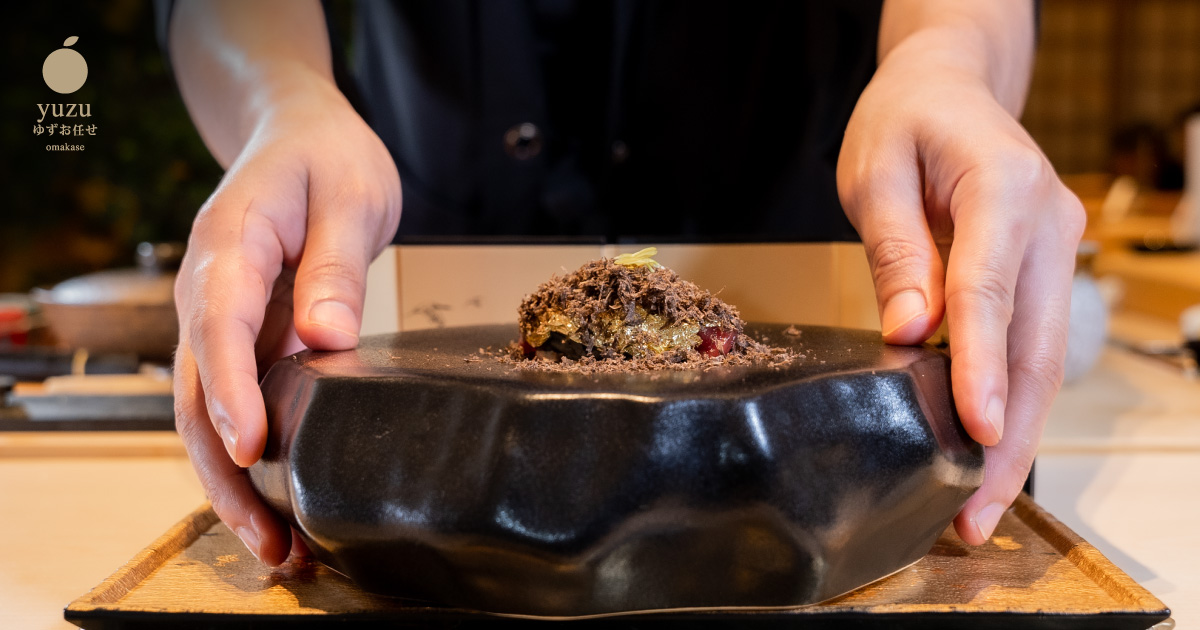
Kuruma ebi in an omakase meal
Kuruma ebi appears in an omakase meal as nigiri, either boiled or live. The Sushi Geek notes that a good chef prepares the prawn only moments before serving, so the timing of each piece depends on when it leaves the tank.
Frequently asked questions
What is kuruma ebi?
Kuruma ebi (車海老, Marsupenaeus japonicus) is the Japanese tiger prawn, a striped prawn from warm, sandy bays that Japanese cooks treat as a premium ingredient. Adults are about 15 centimetres long, and females grow larger.
Why is it called kuruma ebi?
Kuruma ebi means “wheel prawn.” When the prawn curls its belly, the stripes on its body look like a wheel.
Is kuruma ebi eaten raw?
Kuruma ebi is eaten both ways. At a sushi counter it is most often boiled, and in the style called odori it is served live, shelled and placed on the rice while it still moves.
What is odori ebi?
Odori ebi is live prawn served as nigiri. The prawn is shelled just after it leaves the tank and set on the rice while it still moves, which looks as if it is dancing. It is usually made with kuruma ebi and needs a counter equipped to handle live seafood.
What does kuruma ebi taste like?
Boiled kuruma ebi is rich, sweet and full of umami, with firm flesh that contrasts with the soft ebi miso. Served live, the flesh is translucent, springy and strongly sweet.
When is kuruma ebi in season?
Kuruma ebi is caught almost all year, with the most landed in summer. The best season runs from early summer to autumn.
Is kuruma ebi farmed?
Kuruma ebi is both wild and farmed. According to Japanese Wikipedia, farming in Japan began in 1905 in Kumamoto, and the main farming prefectures are Yamaguchi and Kumamoto.
Next time kuruma ebi arrives on your rice, ask whether it was boiled or served live, and when it left the tank.
Reserve a seat at the Yuzu Omakase counter on the website.
Website: https://www.yuzuomakase.com/
Tel: 0638988989
Line: Yuzu Omakase
FB: Yuzu Omakase
RELATE
-
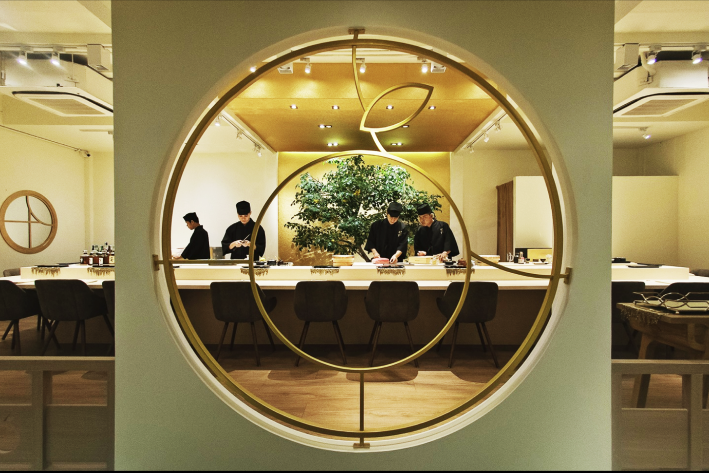
Why Does Omakase Need to Be Creative?
Omakase (お任せ) comes from the Japanese verb makaseru (任せる), to entrust, and means “I’ll leave it up to you,” so an omakase meal is one the diner hands to the chef instead of ordering from a menu. Omakase needs to be creative because the chef is expected to build the meal around the day’s seasonal… Continue reading Why Does Omakase Need to Be Creative?
Our Creations ● 2026 Sep 23
-
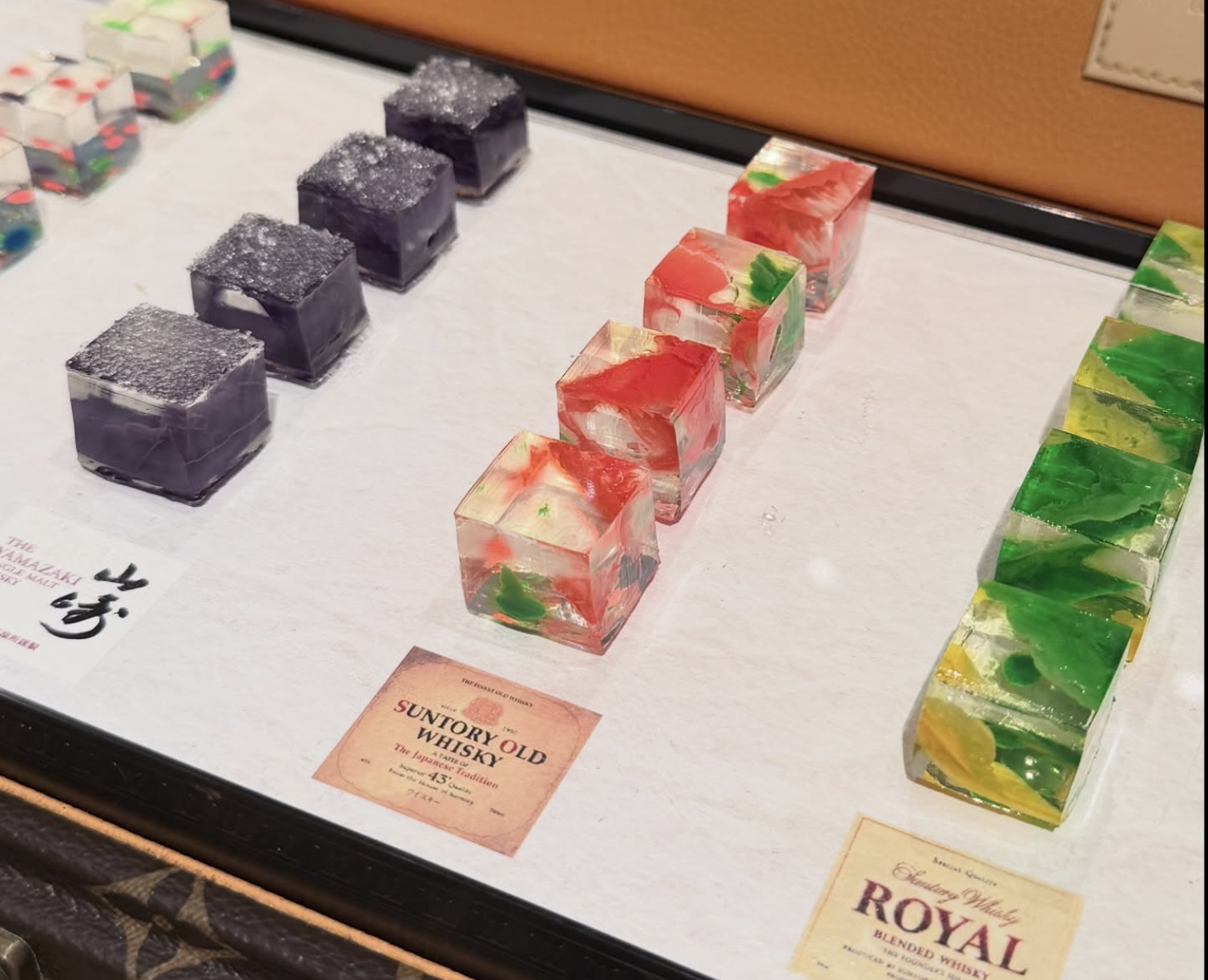
What Is Whisky Jelly?
Whisky jelly is a set dessert in which whisky is the flavouring rather than the drink, served in the same form Japan has used for coffee jelly and fruit jelly for roughly a century. Japan’s jelly dessert tradition is not ancient. It arrived in the Taisho period, from 1912 to 1926, as a domestic answer… Continue reading What Is Whisky Jelly?
Our Creations ● 2026 Aug 30
-
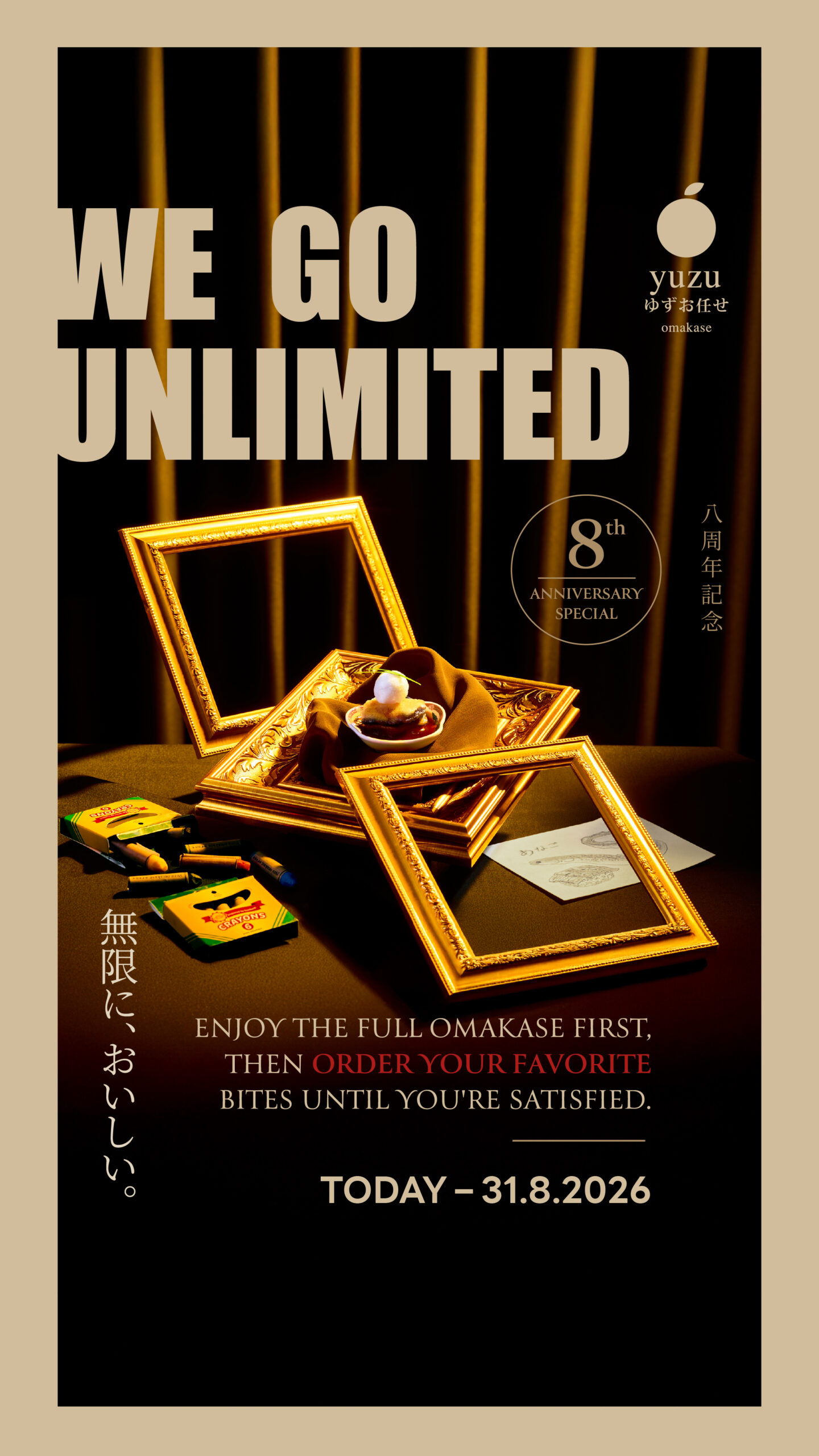
We Go Unlimited: 8th Anniversary | Yuzu Omakase Bangkok
Eight years ago, Yuzu Omakase seated its first guests in Bangkok. To mark the eighth anniversary, the house is making a simple, generous promise called We Go Unlimited. Your full omakase (お任せ) course is served first, exactly as the chef composed it, from the first bite to the last. Then, once the last course has… Continue reading We Go Unlimited: 8th Anniversary | Yuzu Omakase Bangkok
Our Creations ● 2026 Jul 14
-
A New Beverage Pairing, Built Around the Counter
An omakase moves in courses, and so should the drink beside it. Yuzu Omakase has introduced a new beverage pairing at its Siam Square counter in Bangkok, a sequence of pours chosen to follow the meal rather than sit apart from it. The pairing arrives in three forms: a House Pairing that crosses sake, whisky,… Continue reading A New Beverage Pairing, Built Around the Counter
Our Creations ● 2026 May 29

