


Engawa: The Cut Most Diners Never Notice
Engawa (縁側) is the thin band of muscle that moves the dorsal and ventral fins of a flatfish, and the classic engawa comes from hirame, the olive flounder. Engawa tastes richer than the white body meat of the same fish, with more fat, a clean sweetness, and a crunchy chew that comes from its high… Continue reading Engawa: The Cut Most Diners Never Notice
Local Story ● 2026 Sep 25
Engawa (縁側) is the thin band of muscle that moves the dorsal and ventral fins of a flatfish, and the classic engawa comes from hirame, the olive flounder.
Engawa tastes richer than the white body meat of the same fish, with more fat, a clean sweetness, and a crunchy chew that comes from its high collagen content.
A single flatfish gives only four strips of engawa, so a two kilogram hirame yields roughly fourteen to fifteen pieces of engawa sushi.
Engawa is often served aburi, seared briefly with a flame, because the heat loosens its fat and brings out flavour without cooking the piece through.
In a traditional house in Japan, the engawa is the strip of wooden floor that runs along the outside edge, between the rooms and the garden. Guests cross it without looking down, and sushi chefs borrowed the word for a part of the flounder that gets the same treatment. At the counter it arrives as a small ivory piece, sometimes with a faint char across the top, and it is easy to take it for one more piece of shiromi and move on. That would be a pity. Engawa is the fin muscle of the flatfish, scarcer than almost anything else on the board, and it eats like nothing else the same fish can give. Yuzu Omakase explains where this narrow cut comes from, why it behaves so differently from the fillet it borders, and what a chef is deciding when a piece of it is set in front of you.
What Engawa is?
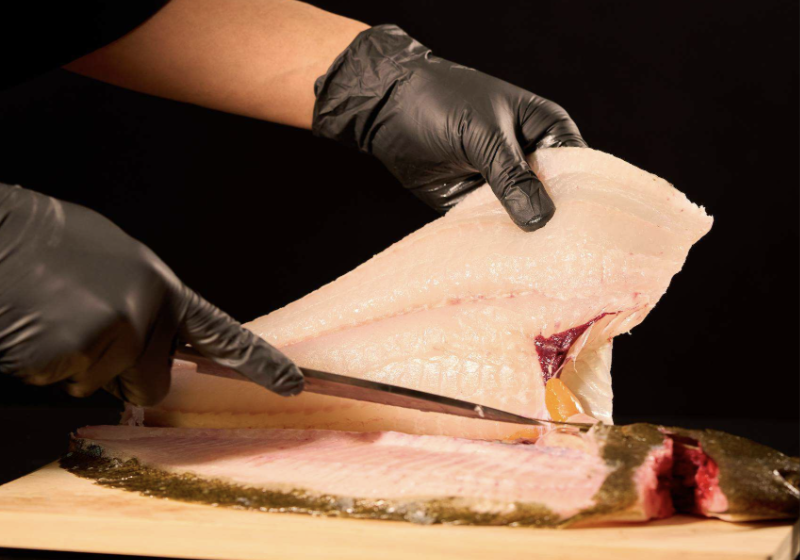
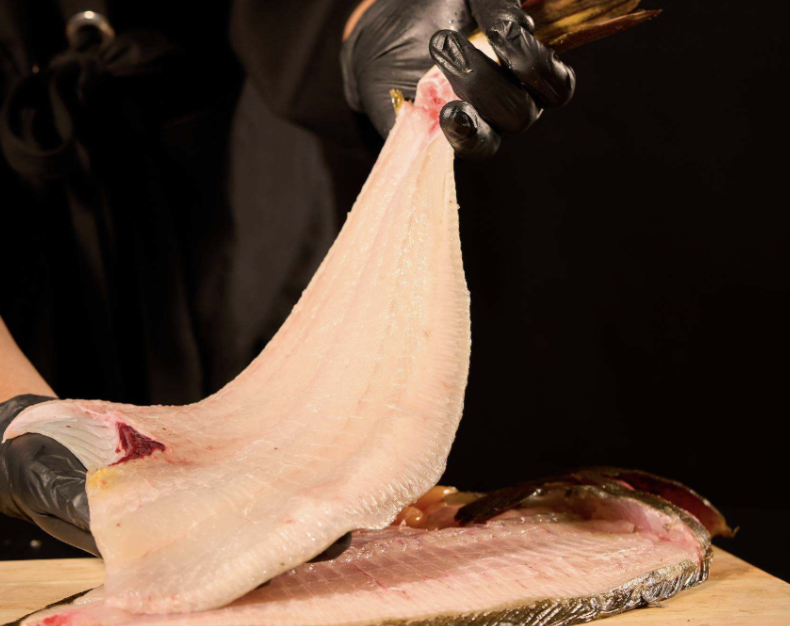
Engawa is the muscle that moves the soft rays of a flatfish's dorsal and ventral fins, the long fins fringing its top and bottom edges. Those fins work every time the fish swims, which makes the muscle beneath them the most exercised part of the animal, and that work is why it chews and tastes the way it does. The name is a picture: the strip lies along the edge of each fillet the way the veranda lies along the edge of a house.
The classic source is hirame, Paralichthys olivaceus, the olive flounder at the heart of hirame kombujime. Karei, the right eyed flounders, give engawa too, and makogarei, the marbled flounder, is the one most often named. Chefs keep the two apart with a short rhyme, hidari hirame, migi karei: with the white side down, hirame has its eyes on the left and karei on the right.
English menus usually call it flounder fin or fluke fin. Strictly, it is the muscle that drives the fin, which is why it eats like meat rather than cartilage.
Why There Is So Little Engawa in a Fish
Engawa is scarce because a flatfish only has so much edge. Only four strips of engawa come from a single flatfish, each running along the border of a fillet, and a two kilogram hirame gives roughly fourteen or fifteen pieces of engawa sushi. That assumes a skilled knife. A hurried one leaves a good share of the engawa on the frame, so the yield is partly the fish and partly the hand that opened it.
Anyone in Bangkok who has seen engawa on a casual menu, priced well below a cut this rare, has probably met a different fish. Budget and conveyor counters commonly use the engawa of Greenland halibut, karasugarei (カラスガレイ), Reinhardtius hippoglossoides, a large flatfish of the cold northern seas that lives mostly between 500 and 1,000 metres down. One Greenland halibut can yield twenty to sixty portions of engawa, against four strips from an ordinary flounder. Kamchatka flounder is another stand in.
**Good to know:** When a menu lists engawa without naming the fish, ask which one. Hirame engawa and karasugarei engawa share a name and a shape, not a size, a fat profile, or a price.
What Engawa Tastes Like
Engawa tastes like a richer, more assertive version of the white fish it comes from. Hirame body meat is lean, translucent and quiet. The engawa beside it carries noticeably more fat, and that fat reads as a clean, almost elegant sweetness rather than oiliness. The texture is the surprise: a distinct crunch, a spring that resists and then gives, from the collagen packed into a muscle that never rests. For many people that chew is the point.
Season sharpens all of this. Hirame is best from late autumn through winter, when the fish stores fat against the cold water, and the kan-birame caught around January and February is the fattest and firmest of the year. Karei engawa usually peaks from spring into early summer, so engawa has two seasons, from two different fish.
Raw or Aburi: How Engawa Is Served
Engawa is served both raw and aburi, and the choice between them is a judgement about fat. Served raw as nigiri, the strip is usually given fine, shallow cuts across its surface, a technique called kakushi-bocho (隠し包丁), or hidden knife, so the collagen gives under the teeth instead of fighting them. The cuts are almost invisible, and they change the piece more than any sauce could.
Aburi is the other road, and engawa is one of the cuts it suits best. A brief pass of flame starts melting the surface fat, which rounds the taste and releases flavour that only warm fat carries, while the centre stays cool. Whether to sear is not a house rule. It depends on how much fat that fish is carrying, and a chef who sears a lean summer strip the same way as a fat winter one has stopped looking at the fish.
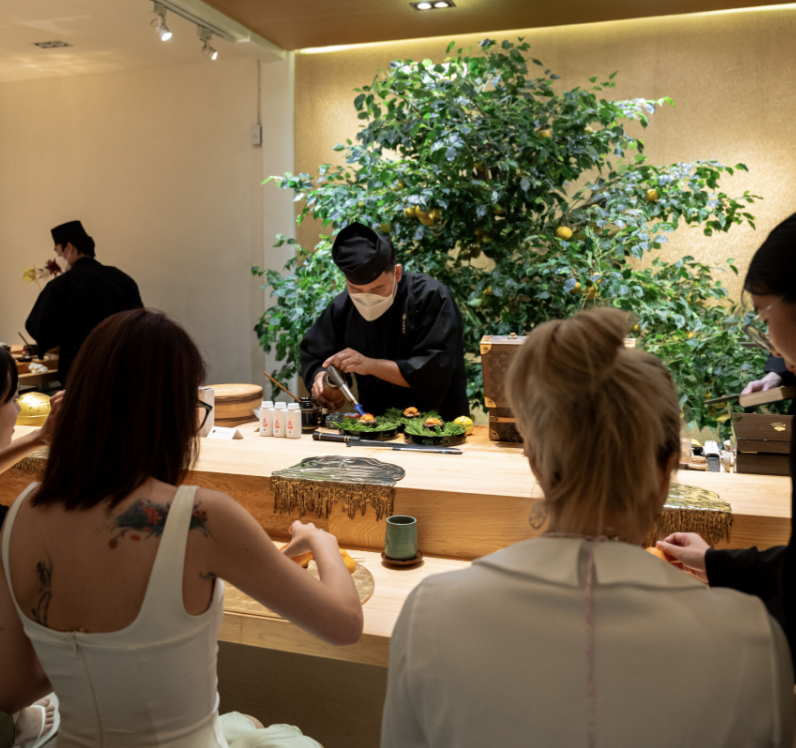
Engawa in an Omakase Meal
Engawa in an omakase meal tends to sit at a hinge in the course, and exactly where is the chef's call. It belongs to the white fish family that traditionally opens a sushi sequence, yet carries more fat and texture than the lean pieces around it, so it can step the meal from the clean opening toward the richer fish that follow. Too early, it crowds the delicate flounder it came from. Too late, it gets lost among the fattier cuts.
The small decisions carry weight here: raw or seared, how deep the hidden cuts go, how warm the rice is under a piece whose fat reacts to temperature, and whether it needs anything more than a pinch of salt or a thin brush of nikiri.
Yuzu Omakase builds its courses on Toyosu sourcing, an unbroken cold chain and a selection that follows the season, the standard a cut this small and seasonal depends on.
**Good to know:** If engawa arrives seared, eat it straight away. The point of the flame is warm fat against cool rice, and that contrast does not wait.
Frequently Asked Questions
What is engawa in sushi?
A: Engawa (縁側) is the muscle that moves the dorsal and ventral fins of a flatfish, served as nigiri or seared aburi. The classic engawa comes from hirame, the olive flounder, and the name comes from the wooden veranda along the edge of a traditional house in Japan.
What does engawa taste like?
A: Engawa tastes richer than the white body meat of the same fish, with more fat, a clean sweetness, and a crunchy, springy chew from its high collagen content. Searing it aburi melts the surface fat and brings out its flavour.
What is the English name for engawa?
A: English menus usually call engawa flounder fin or fluke fin, though it is really the muscle that drives the fin rather than the fin itself.
Why is engawa so rare?
A: A single flatfish gives only four strips of engawa, so a two kilogram hirame yields roughly fourteen to fifteen pieces of engawa sushi. Many lower priced plates use Greenland halibut engawa instead, from a much larger fish.
Most of the attention in a sushi meal goes to the obvious places: the fatty tuna, the sea urchin, the piece everyone photographs. Engawa lives at the edge, in a muscle most people never think about, four thin strips to a fish. Like the veranda it is named after, it is easy to walk straight across. Pay attention, though, and the edge of the fish often turns out to be the part the chef was most careful with. The beauty of this food so often hides in its simplest details.
Reserve a seat at the Yuzu Omakase
Website: https://www.yuzuomakase.com/
Tel: 0638988989
Line: Yuzu Omakase
FB: Yuzu Omakase
IG: yuzu_omakase
RELATE
-
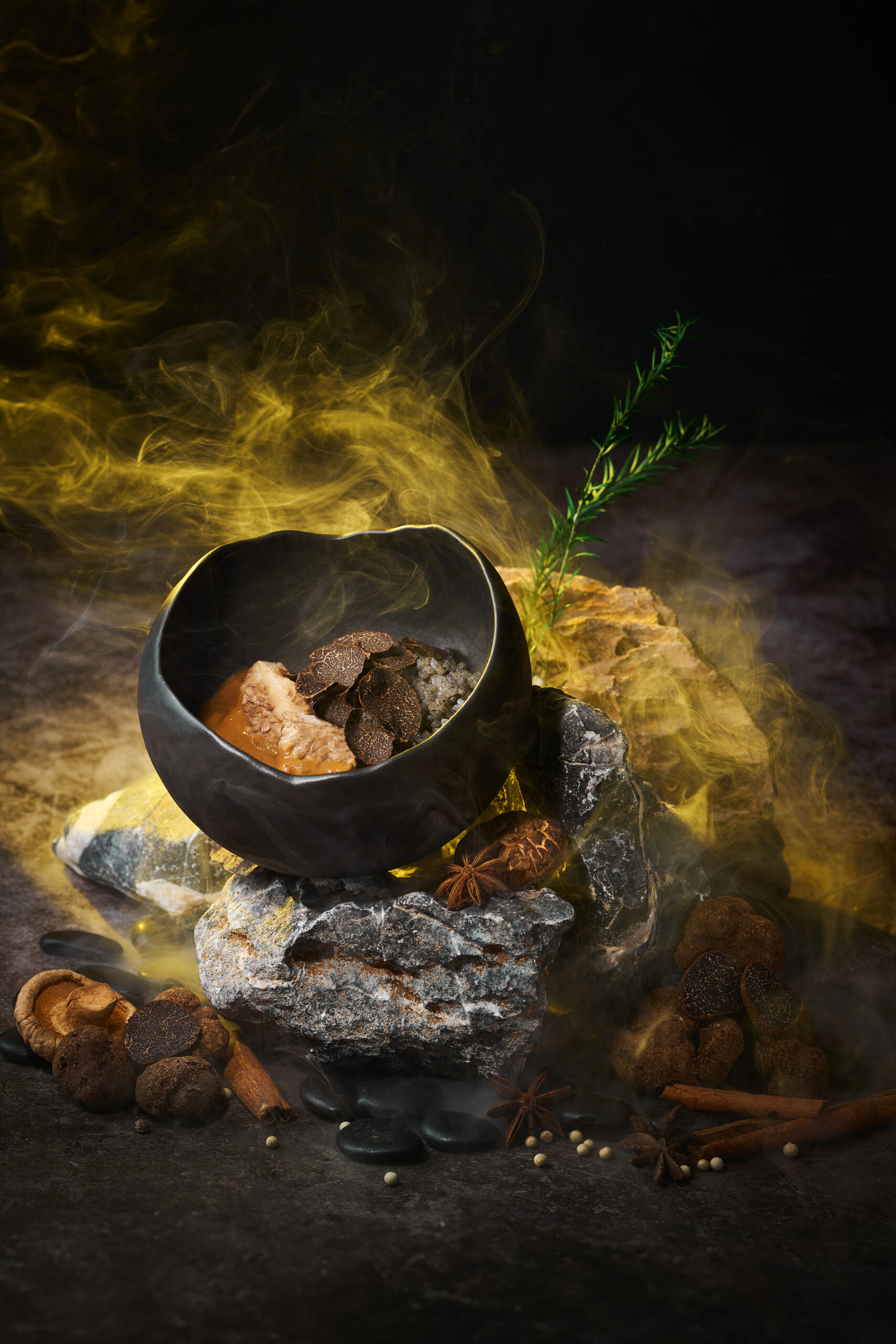
What Is Truffle (トリュフ), and How Much Belongs on Sushi?
Truffle, written toryufu (トリュフ) on a Japanese menu, is the underground fruiting body of a fungus in the genus Tuber, which lives in partnership with the roots of trees such as oak, hazel and beech. The white truffle, Tuber magnatum from Piedmont in northern Italy, is shaved raw because its aroma fades with heat, while… Continue reading What Is Truffle (トリュフ), and How Much Belongs on Sushi?
Local Story ● 2026 Sep 25
-
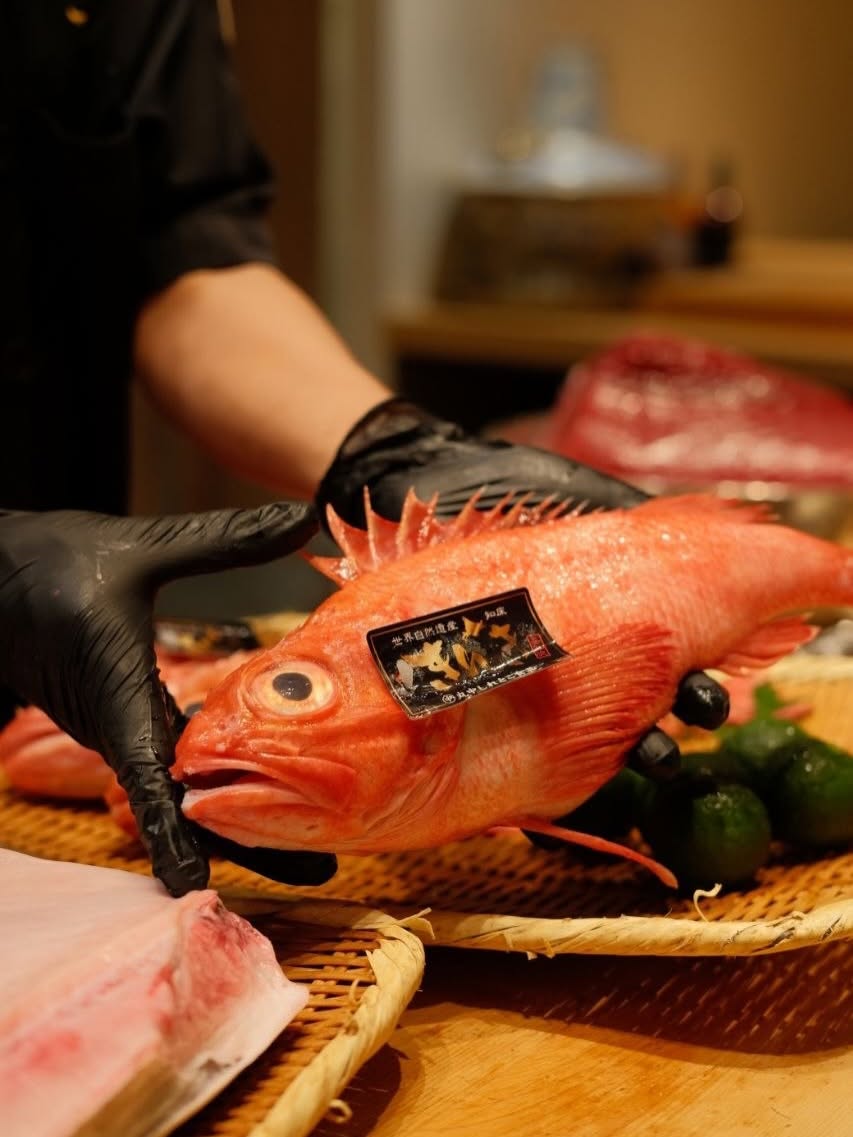
What Is Kinki Fish? Kichiji, the Deep Water
Kinki is the Japanese counter name for Sebastolobus macrochir, a deep water thornyhead from the northwestern Pacific that is classified as a white fish but carries far more fat than a white fish usually does. Kinki, kichiji and menme are three names for one species, used in different regions and different registers, and none of… Continue reading What Is Kinki Fish? Kichiji, the Deep Water
Local Story ● 2026 Aug 30
-
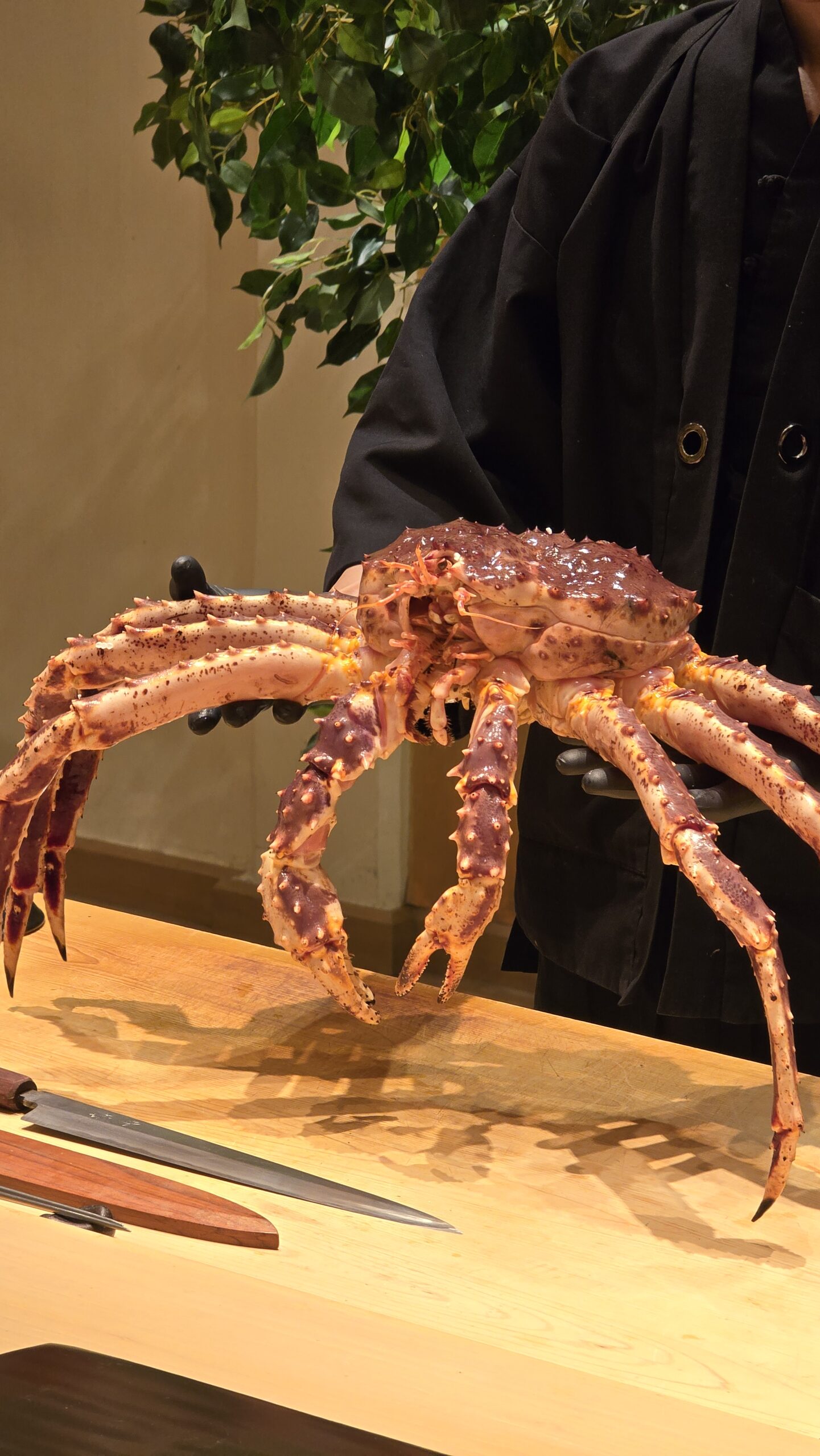
What Is Taraba King Crab? The Hokkaido Giant That Is Not Actually a Crab
Taraba king crab, tarabagani in Japanese, is the red king crab, the largest and most prized of the king crab species found in Japanese waters. Taraba is not a true crab. It belongs to the hermit crab family, and the giveaway is the leg count: true crabs have ten legs, taraba has eight, with two… Continue reading What Is Taraba King Crab? The Hokkaido Giant That Is Not Actually a Crab
Local Story ● 2026 Aug 30
-
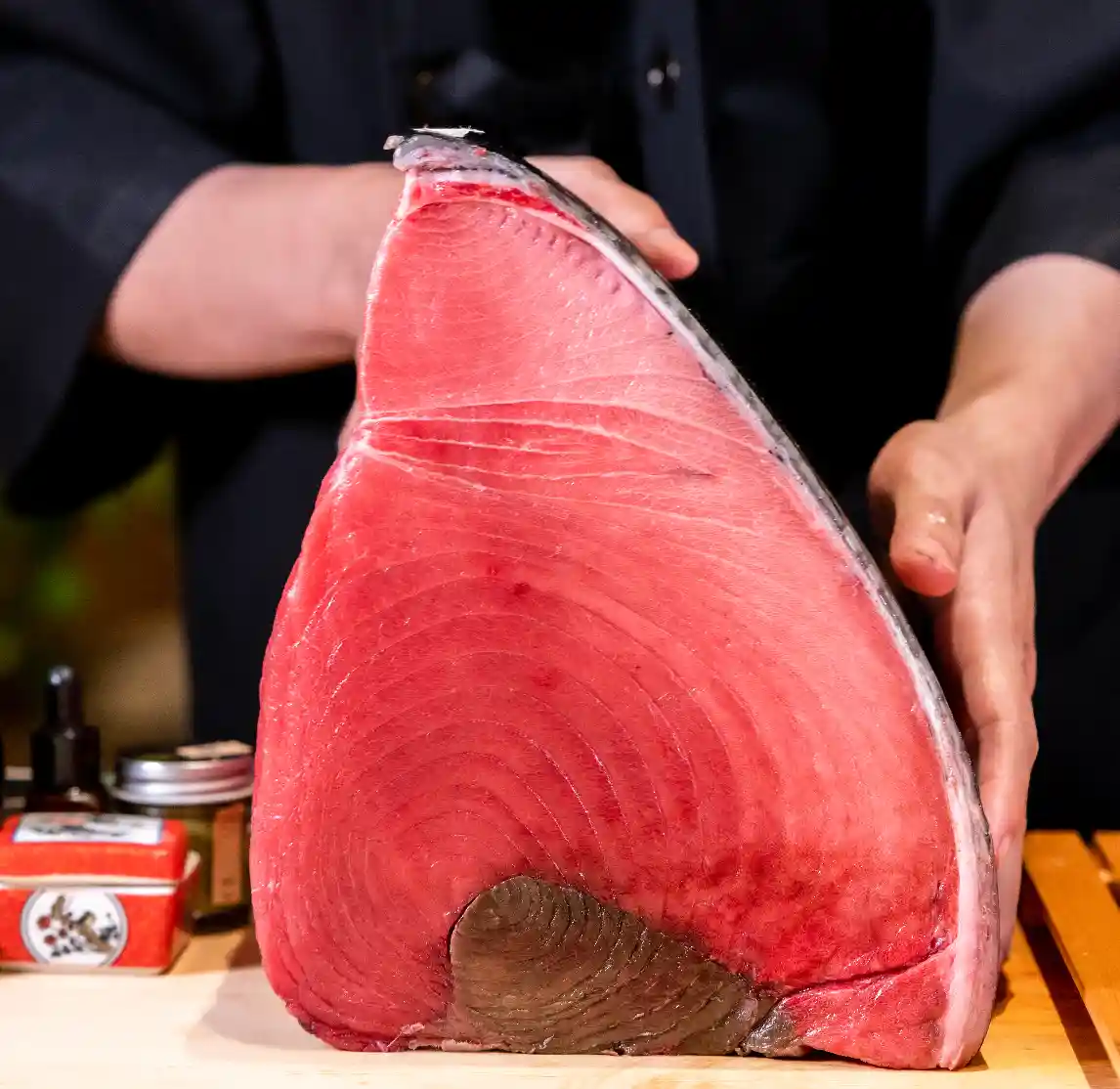
Akami, Chutoro, Otoro: The Three Cuts of Bluefin Tuna
Akami, chutoro, and otoro are the three sushi cuts of bluefin tuna, running from the lean loin along the spine, through the fattier belly and back, to the richest belly section nearest the head. The three cuts of bluefin tuna differ mostly in fat: akami carries barely any, chutoro about 15 to 20 percent, and… Continue reading Akami, Chutoro, Otoro: The Three Cuts of Bluefin Tuna
Local Story ● 2026 Jul 27

