




Kegani: Hokkaido’s Hairy Crab and Why Winter Is Its Season
Hokkaido has long served kegani at New Year and at celebrations, and it is the smallest of the four crabs the island is best known for. Next to a king crab it looks modest: small enough to hold in one hand, with a shell covered in fine hairlike spines. This guide from Yuzu Omakase explains… Continue reading Kegani: Hokkaido’s Hairy Crab and Why Winter Is Its Season
Local Story ● 2026 Nov 25
- Kegani (毛蟹) is the horsehair crab, Erimacrus isenbeckii, a small true crab with ten legs from the cold waters around Hokkaido, named for the hairlike spines on its shell.
- LIVE JAPAN names winter, from December to February, as kegani season on Hokkaido’s Pacific coast at Hidaka and Tokachi, but Hokkaido lands kegani almost all year because each coast opens its fishery in different months.
- Hokkaido allows only male kegani with a shell length of 8 centimetres or more to be caught. The meat is fine and sweet, and the orange kani miso under the shell is rich and smooth.
Hokkaido has long served kegani at New Year and at celebrations, and it is the smallest of the four crabs the island is best known for. Next to a king crab it looks modest: small enough to hold in one hand, with a shell covered in fine hairlike spines. This guide from Yuzu Omakase explains what kegani is, how it differs from king crab, and why it can be in season in both December and March.
What is kegani?
Kegani (毛蟹) is the Japanese name for the horsehair crab, Erimacrus isenbeckii, a true crab that the Hokkaido government lists in the family Cheiragonidae (クリガニ科). The character 毛 means hair, and the name comes from the fine, soft spines that cover its shell and legs. It lives mostly in the Sea of Okhotsk and on the Pacific side of Hokkaido, on sandy or sandy mud seabeds shallower than 150 metres, in water at or below 15°C, according to the Hokkaido government.
The Hokkaido government also notes that the crab is orange after moulting and darkens as it recovers. LIVE JAPAN gives the usual size: a typical crab weighs from about 400 grams, one over 500 grams counts as large, and one over a kilogram is rare.
LIVE JAPAN records that kegani began to be eaten in the 1920s, almost entirely as canned crab, and that boiled and live crab reached the market around 1965.
How is kegani different from king crab?
Kegani is a true crab with ten legs, and taraba, the red king crab, has eight legs including its claws and is more closely related to hermit crabs. The Japan Tourism Agency’s multilingual database lists this difference in leg count. LIVE JAPAN names four crabs that Hokkaido is known for: taraba, zuwai and hanasaki, which are larger, and kegani, the smallest. It gives taraba’s shell length as about 25 centimetres, with a leg span over 1 metre and about 2 kilograms as common, and says most taraba sold in Japan comes from Russia and Alaska.
| Kegani | Taraba (red king crab) | |
|---|---|---|
| Type | True crab, ten legs | Eight legs including claws, closer to hermit crabs |
| Size | About 400 grams and up, fits in one hand | Shell about 25 centimetres long, legs spread over 1 metre, around 2 kilograms is common |
| Where it comes from | Landed around Hokkaido almost all year | Mostly from Russia and Alaska, with Hokkaido catches rare |
Sources: Hokkaido government, Japan Tourism Agency multilingual database, LIVE JAPAN
Read more about taraba, the red king crab.
Why is winter kegani season?
Winter is kegani season on Hokkaido’s Pacific coast, where LIVE JAPAN names December to February as the season for the Hidaka and Tokachi coasts. This is where the Kuroshio and Oyashio currents meet, plankton grows in abundance, and Hidaka kombu is harvested. LIVE JAPAN reports that kegani from these waters has a rich flavour of the shore and creamy kani miso.
Further east near Kushiro, the port of Shiranuka starts fishing in September and may run until mid January, in three stages until the season’s quota is filled. Serai, a Shogakukan magazine, explains that the boats work as the sea cools, and the crab comes up with firm meat and a strong sweetness.
Did You Know? The Erimo fishing cooperative sells its kegani from December to February and says all of it is kata gani, “hard crab.” The Hidaka Central cooperative uses the same word for crab packed tightly with meat.
According to LIVE JAPAN, kegani has also long been a feast for the Hokkaido New Year, and Serai reports that boiled Shiranuka crab is sent across Japan as a year-end gift.
Is kegani available all year?
Kegani is landed somewhere in Hokkaido for most of the year, because each coast opens its fishery in different months. Water temperature and climate change the timing of moulting and spawning, so the seasons differ from coast to coast. Sources group the coasts differently, so this table follows the Hokkaido government’s calendar:
| Area | Main fishing months |
|---|---|
| Soya | February to May |
| Abashiri (Sea of Okhotsk) | March to August |
| Iburi | June to August |
| Tokachi and Kushiro | January to March, and August to December |
| Hidaka | December to April |
Source: Hokkaido government, Fisheries and Forestry Department
Around February the coast of the Sea of Okhotsk is covered by drift ice, and under the ice plankton multiplies. LIVE JAPAN says the crab that feeds on it gains sweetness and umami, and is landed in March once the ice has gone. The same page lists Funka Bay in July and August, where hot springs along the shore feed minerals into the water, and says the crab there is soft and delicate.
Did You Know? Because kegani is caught in shallow coastal water and lands nearly all year, its price moves less with the season than that of taraba or zuwai, according to LIVE JAPAN.
Why does Hokkaido catch only male kegani?
Hokkaido allows only male kegani with a shell length of 8 centimetres or more to be caught, and females may not be taken at all. The government says the rule leaves stock for later years and also raises the value of what is landed. In Shiranuka, near Kushiro, fishers use baited basket traps that bring each crab up alive and unharmed, and they release females and undersized males, according to Serai.
What does kegani taste like, and how is it eaten?
Kegani meat is fine grained, with a delicate sweetness. Under the shell sits the orange kani miso, smooth and rich. The Omu fishing cooperative describes it as full of fat and glycogen.
The Hokkaido government says kegani tastes good enough that boiling in salted water is all it needs. The Hidaka Central cooperative boils freshly landed crab in 3 to 4 percent brine, and in ports where the season is open, crab is often boiled at the harbour straight after landing, which is called hama yude (浜茹で). LIVE JAPAN describes how to open one with kitchen scissors:
- Place the crab belly up, cut the legs off at the base, then cut each in two at the joint.
- Make a cut along one side of a hairy leg shell and open it with your fingers, and the meat comes out easily.
- For the kani miso, turn the crab over, work your thumb under the triangular flap on its belly, and lift the shell.
After the meat, some people finish with koura zake (甲羅酒): wrap the outside of the shell in foil, pour in sake suited to warming, and heat it. The last of the kani miso melts into the sake.
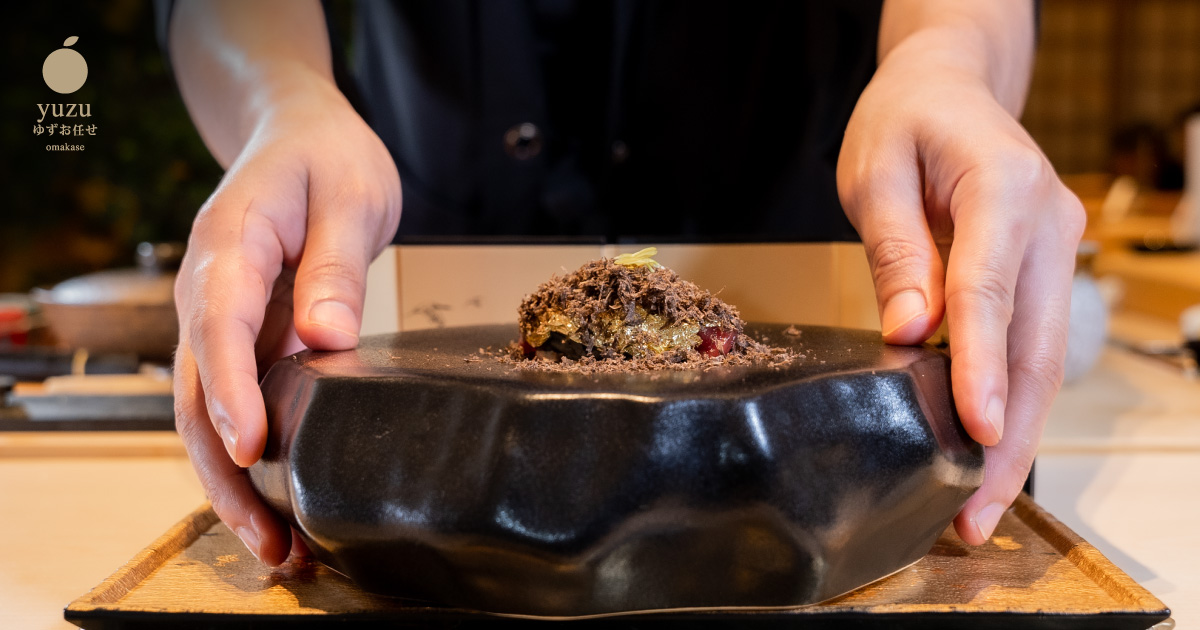
Kegani at a sushi counter
At a sushi counter, kegani appears as gunkan maki, as nigiri topped with flaked meat, or simply boiled, according to the Sushi Walker dictionary. The meat is delicately sweet and the kani miso is rich.
Frequently asked questions
What is kegani?
Kegani (毛蟹) is the Japanese name for the horsehair crab, Erimacrus isenbeckii. It is a small true crab with ten legs, found mainly around the Hokkaido coast, and named for the soft, hairlike spines on its shell.
When is kegani in season?
Kegani is landed in Hokkaido almost all year, because each coast fishes it in different months. LIVE JAPAN names winter, from December to February, as the season on the Pacific coast at Hidaka and Tokachi, and spring follows the drift ice on the Sea of Okhotsk.
What is the difference between kegani and king crab?
Kegani is a true crab with ten legs and weighs about 400 grams and up, small enough to hold in one hand. Taraba, the red king crab, has eight legs, can spread its legs over a metre, and is more closely related to hermit crabs.
What is the orange part inside a kegani?
The orange part is kani miso, the rich, smooth substance under the shell. The Omu fishing cooperative describes it as full of fat and glycogen.
Why is only male kegani caught?
Hokkaido allows only male kegani with a shell length of 8 centimetres or more to be caught. The government says the rule leaves stock for later years and also raises the value of what is landed.
How do you eat kegani?
Kegani is often boiled in salted water, which is enough to bring out the flavour. The meat is eaten with the kani miso, and some people finish with koura zake, sake warmed in the empty shell.
Hokkaido’s kegani seasons differ from coast to coast. When one is in front of you, ask which coast it came from, because the answer tells you when and where it was fished.
Reserve a seat at the Yuzu Omakase counter on the website.
Website: https://www.yuzuomakase.com/
Tel: 0638988989
Line: Yuzu Omakase
FB: Yuzu Omakase
RELATE
-
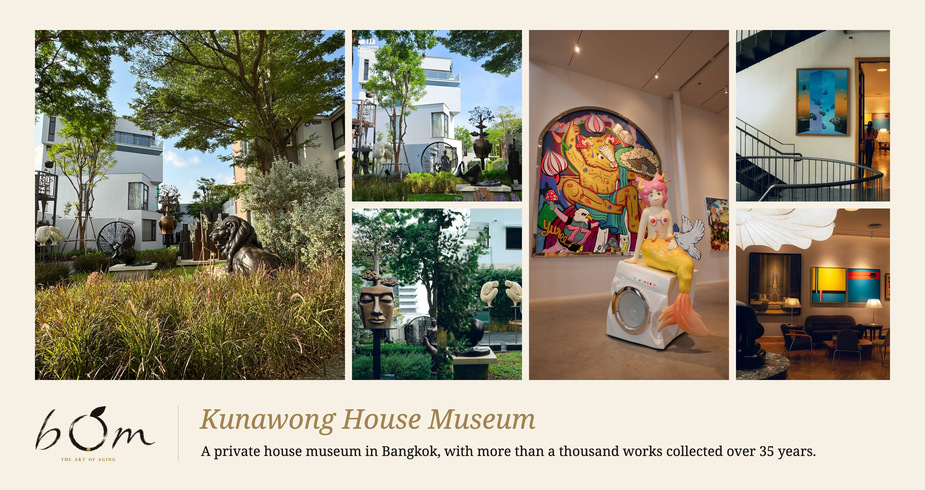
Yuzu Omakase Opens BOM, The Art of Aging, a Chef’s Table Inside Kunawong House Museum
For one season only, a private house museum in Lat Phrao opens its doors for dinner for the first time, with 18 seats a night and a course built around the art on its walls. BANGKOK, 23 November 2026. Yuzu Omakase today announced BOM, The Art of Aging, a chef’s table staged inside Kunawong House… Continue reading Yuzu Omakase Opens BOM, The Art of Aging, a Chef’s Table Inside Kunawong House Museum
Local Story ● 2026 Nov 25
-
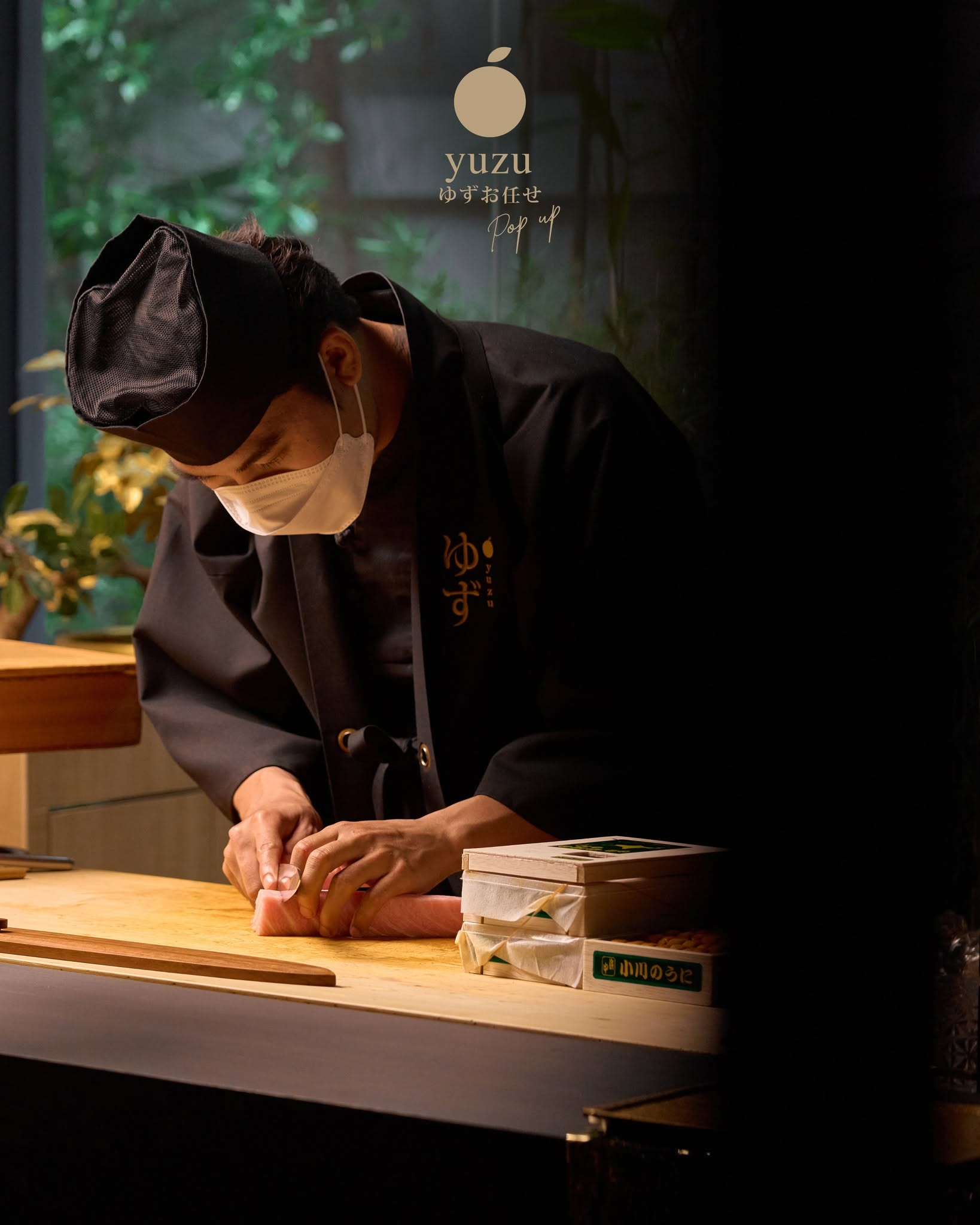
The Hinoki Counter: Why Sushi Is Served on Japanese Cypress
A hinoki counter is a sushi counter made from hinoki (檜), the Japanese cypress, Chamaecyparis obtusa, a conifer that grows naturally only in Japan. Sushi counters use it because the wood is pale, straight grained, resistant to water and rot, and keeps its scent for years, and the finest counters are cut from a single… Continue reading The Hinoki Counter: Why Sushi Is Served on Japanese Cypress
Local Story ● 2026 Oct 19
-
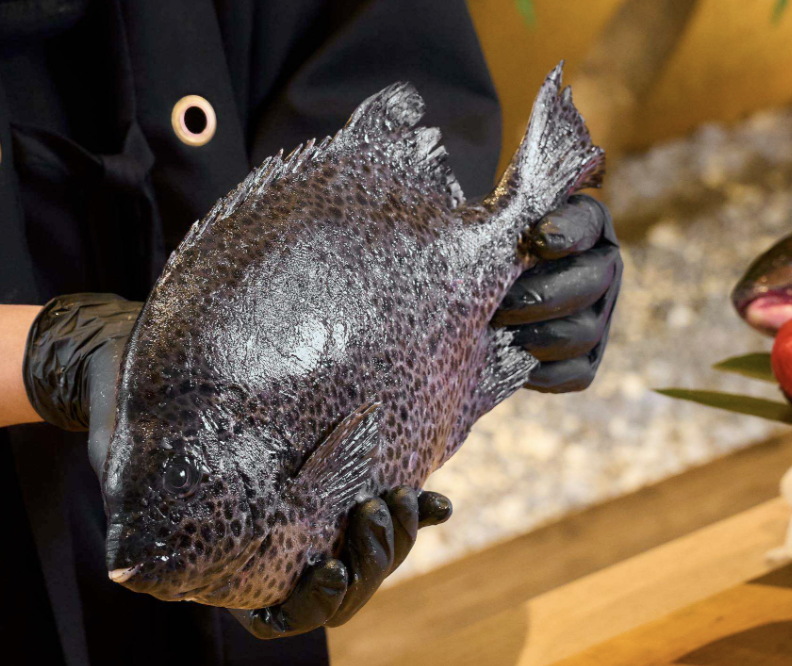
Ishigaki Dai: The Stone Wall Fish, and How It Differs From Ishidai
Ishigaki dai (イシガキダイ, 石垣鯛) is the spotted knifejaw, Oplegnathus punctatus, a white fleshed fish from the rocky coasts of southern Japan in the family Oplegnathidae. It is not another name for ishidai (石鯛). The two are separate species in the same family: ishigaki dai is covered in dark spots, and ishidai carries black vertical bars.… Continue reading Ishigaki Dai: The Stone Wall Fish, and How It Differs From Ishidai
Local Story ● 2026 Oct 19
-
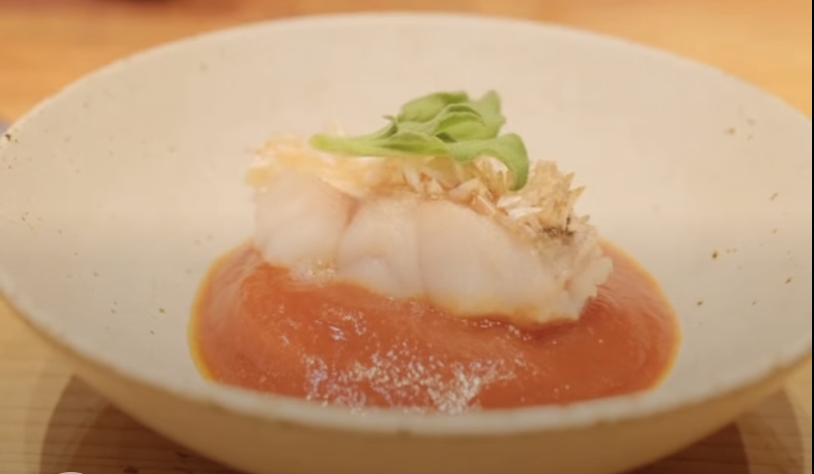
The Best Season to Taste Amadai: Winter, or Summer?
Japanese cooking calls amadai (甘鯛), the Japanese tilefish, a winter fish, at its best from roughly December to February, and Kyoto has a name for it in that season: kan-guji (寒ぐじ). Measured fat tells a different story. The Yamaguchi Prefectural Fisheries Research Center found that red amadai (アカアマダイ) from the Sea of Japan side carries… Continue reading The Best Season to Taste Amadai: Winter, or Summer?
Local Story ● 2026 Oct 18

