




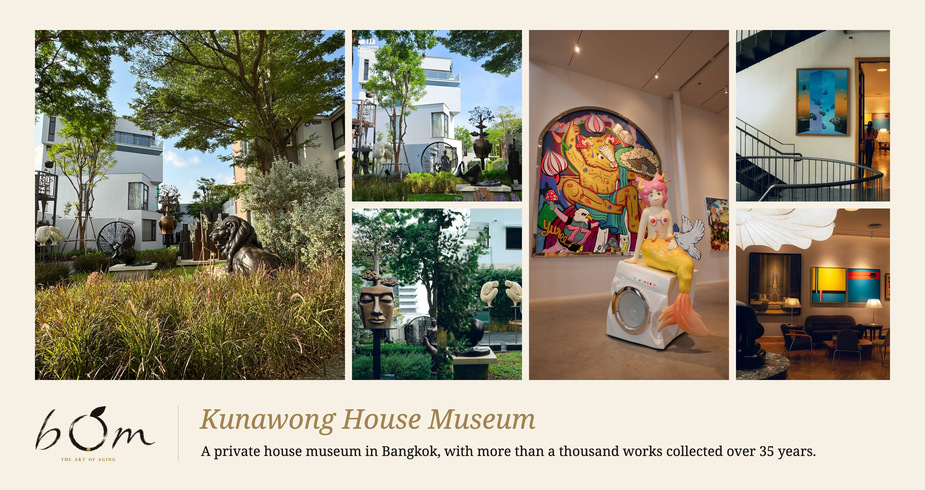
Yuzu Omakase Opens BOM, The Art of Aging, a Chef’s Table Inside Kunawong House Museum
For one season only, a private house museum in Lat Phrao opens its doors for dinner for the first time, with 18 seats a night and a course built around the art on its walls. BANGKOK, 23 November 2026. Yuzu Omakase today announced BOM, The Art of Aging, a chef’s table staged inside Kunawong House… Continue reading Yuzu Omakase Opens BOM, The Art of Aging, a Chef’s Table Inside Kunawong House Museum
Local Story ● 2026 Nov 25
For one season only, a private house museum in Lat Phrao opens its doors for dinner for the first time, with 18 seats a night and a course built around the art on its walls.
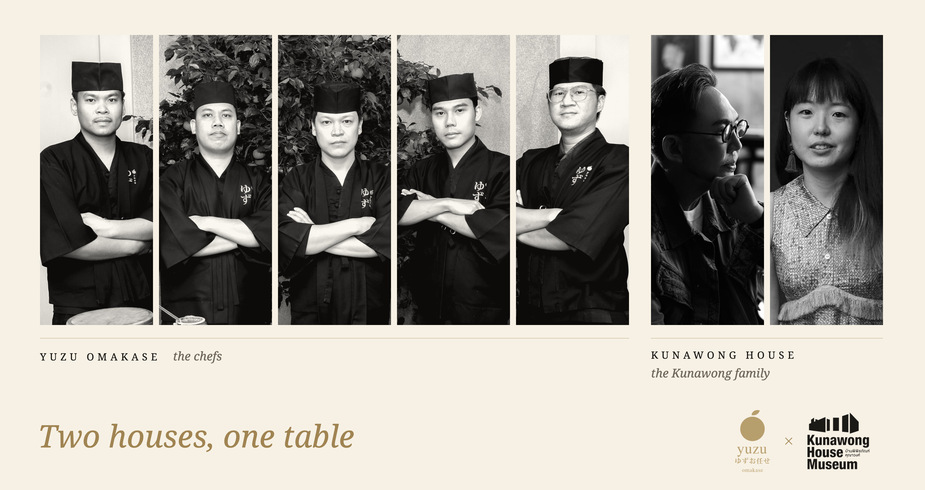
BANGKOK, 23 November 2026. Yuzu Omakase today announced BOM, The Art of Aging, a chef's table staged inside Kunawong House Museum in Lat Phrao, Bangkok. Twelve public evenings run between December 2026 and February 2027, each seating 18 guests for four hours as they move through four rooms of the house. It is the first time the house museum has ever opened for a formal dinner, and once the season closes, the course will not be served again.
A First Dinner in a Home Still Lived In
Kunawong House Museum is not a public gallery. It is the home of the collector Sermkhun Kunawong, whose family still lives among the collection, and its rooms were arranged as a home long before visitors were invited in. On an ordinary week the doors open on one day only: Sunday, for visitors who have registered in advance.
BOM changes that for one season. The house opens in the evening for the first dinner in its history, seating guests among a private collection of Thai art that spans more than three decades of collecting.
Twelve Evenings, Then It Is Gone
The season opens with a launch evening for invited guests on 5 December 2026. Twelve evenings follow that guests can reserve:
| Month | Dates |
|---|---|
| December 2026 | 11, 18 and 24 December |
| January 2027 | 8, 15, 22 and 29 January |
| February 2027 | 5, 12, 19, 20 and 27 February |
When the last evening ends in February 2027, the BOM course will be retired.
How the Evening Unfolds
Guests arrive at 19.00 in The Parlour, the reception room, where a welcome drink and the first amuse bouche set the tone. At 19.15 the group steps out into The Garden of Life, an open air sculpture garden where major works stand among the trees in the cool of the evening.
Dinner proper begins at 19.30 in The Grand Garuda Room, the centrepiece of the night. Here the main omakase course is served, and each bite arrives with the story of a work displayed in the room.
From 21.00 the evening slows down in Kacha Lounge, a room the collector designed for listening to music. Dessert, a favourite drink and live music carry the night through to 23.00.
Why Aging Joins Fish and Art
The name says it. BOM (บ่ม) means to age or to ripen, and the evening brings together two crafts that both depend on time to reach their full worth.
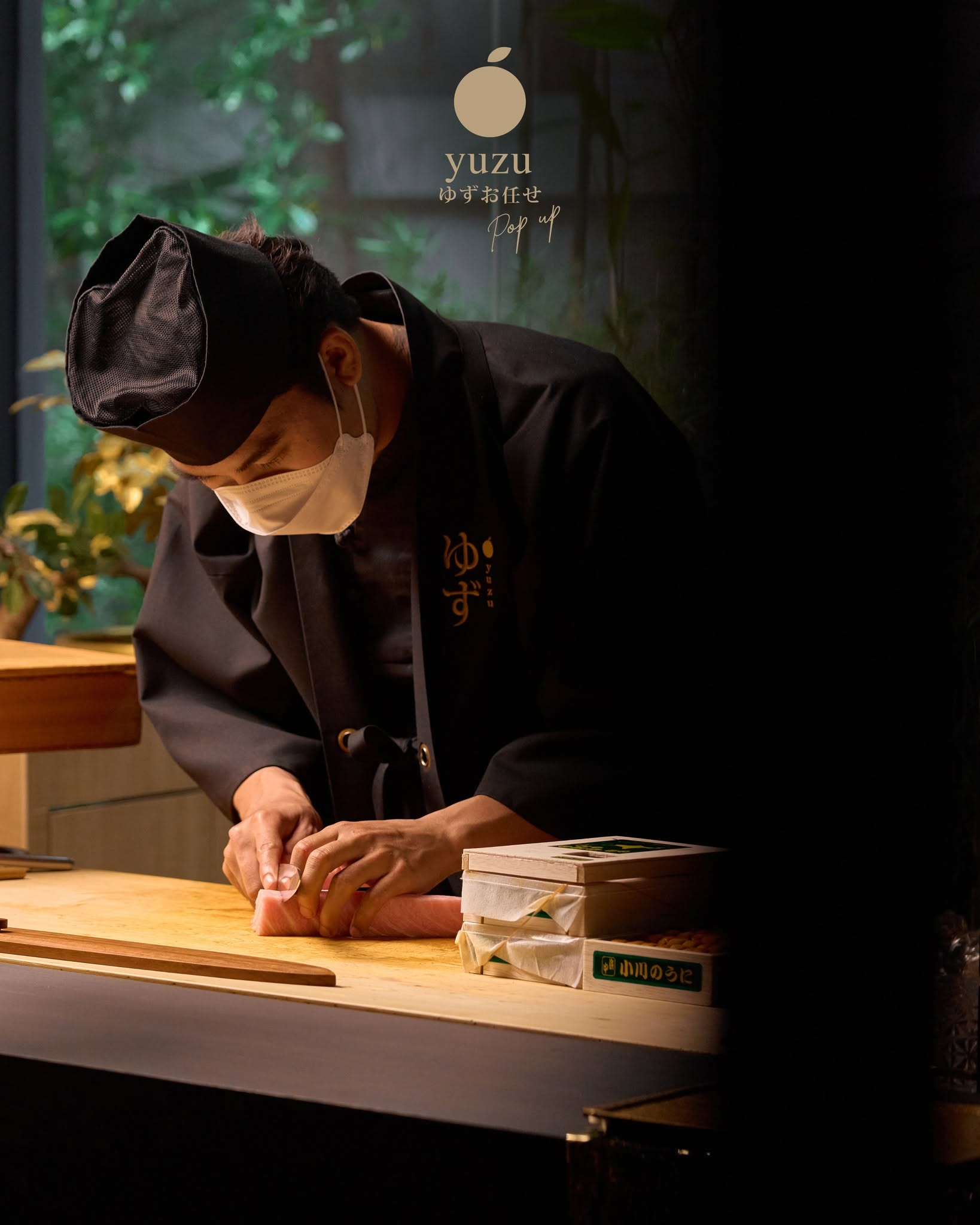
The collection was built patiently: Sermkhun Kunawong has gathered Thai art since 1992, from the Ayutthaya period to contemporary work. Yuzu Omakase works the same way with fish. Every morning, before 11.00, fresh fish lands from Japan. Each fish then rests at a temperature and humidity chosen for its species, and as it rests, its own enzymes break protein down into amino acids, and the flesh gains umami and softness.
At dinner, that idea becomes the menu. Each course is created to answer a specific work in the house, so the meal is something to look at and think about as well as to taste.
BOM After Dark, for a Shorter Night
For guests who want the atmosphere without the full dinner, BOM After Dark opens Kacha Lounge alone from 20.00 to 23.00, with last orders at 22.30. It is set for two: a board of savoury and sweet bites from Yuzu Omakase, two drinks, and live music. No full dinner booking is needed.
How to Reserve
All seats are by advance reservation through the official channels of Yuzu Omakase. Guests choose between BOM Full Course and BOM After Dark, choose a date, give the number of guests, and note any dietary restrictions so the chefs can prepare each course in full.
Frequently Asked Questions
What is BOM, The Art of Aging?
BOM, The Art of Aging, is a seasonal chef's table by Yuzu Omakase held inside Kunawong House Museum in Lat Phrao, Bangkok. Each of its courses is created in response to an artwork in the house.
When can I book BOM?
Twelve public evenings are available: 11, 18 and 24 December 2026; 8, 15, 22 and 29 January 2027; and 5, 12, 19, 20 and 27 February 2027. A launch evening for invited guests takes place on 5 December 2026.
How long is the evening, and how many guests attend?
The full BOM dinner runs from 19.00 to 23.00 and moves through four rooms of the house. Only 18 guests are seated each night, which is why every seat must be reserved in advance.
Can I visit for drinks only?
Yes. BOM After Dark opens Kacha Lounge from 20.00 to 23.00 as a set for two, with savoury and sweet bites from Yuzu Omakase, two drinks and live music, and it does not require booking the full dinner.
Is BOM a good choice for Valentine's Day?
The February evenings, including 12, 19, 20 and 27 February 2027, make BOM a private and memorable option for couples marking Valentine's season or another important occasion in Bangkok.
About Yuzu Omakase
Yuzu Omakase is a luxury omakase restaurant in Siam Square, Pathum Wan, Bangkok, serving sushi, nigiri and sashimi course by course at the chef's counter. The restaurant specialises in dry aging fish, with fresh fish arriving from Japan before 11.00 every day.
About Kunawong House Museum
Kunawong House Museum is a private house museum in Lat Phrao, Bangkok, and the home of the collector Sermkhun Kunawong and family. Its collection of Thai art, gathered since 1992, runs from the Ayutthaya period to contemporary work. The house usually opens to visitors on Sundays, by advance registration.
RELATE
-

Kegani: Hokkaido’s Hairy Crab and Why Winter Is Its Season
Hokkaido has long served kegani at New Year and at celebrations, and it is the smallest of the four crabs the island is best known for. Next to a king crab it looks modest: small enough to hold in one hand, with a shell covered in fine hairlike spines. This guide from Yuzu Omakase explains… Continue reading Kegani: Hokkaido’s Hairy Crab and Why Winter Is Its Season
Local Story ● 2026 Nov 25
-
The Hinoki Counter: Why Sushi Is Served on Japanese Cypress
A hinoki counter is a sushi counter made from hinoki (檜), the Japanese cypress, Chamaecyparis obtusa, a conifer that grows naturally only in Japan. Sushi counters use it because the wood is pale, straight grained, resistant to water and rot, and keeps its scent for years, and the finest counters are cut from a single… Continue reading The Hinoki Counter: Why Sushi Is Served on Japanese Cypress
Local Story ● 2026 Oct 19
-
Ishigaki Dai: The Stone Wall Fish, and How It Differs From Ishidai
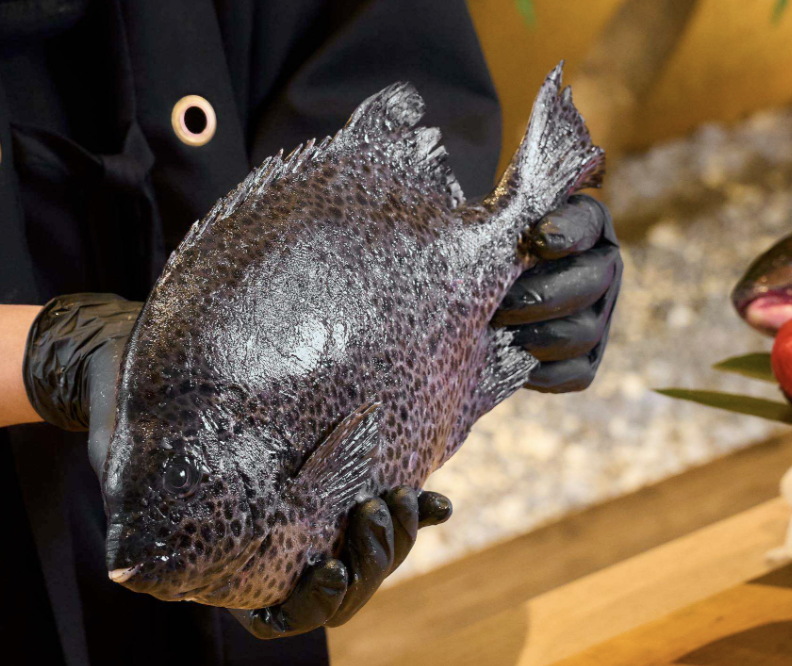
Ishigaki dai (イシガキダイ, 石垣鯛) is the spotted knifejaw, Oplegnathus punctatus, a white fleshed fish from the rocky coasts of southern Japan in the family Oplegnathidae. It is not another name for ishidai (石鯛). The two are separate species in the same family: ishigaki dai is covered in dark spots, and ishidai carries black vertical bars.… Continue reading Ishigaki Dai: The Stone Wall Fish, and How It Differs From Ishidai
Local Story ● 2026 Oct 19
-
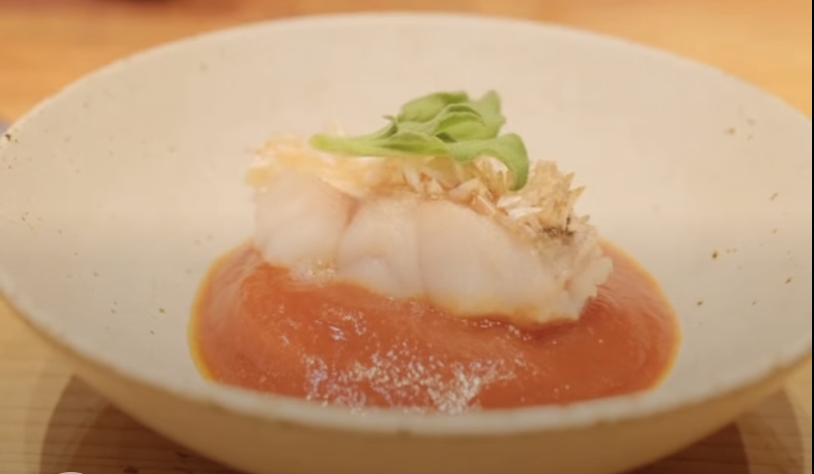
The Best Season to Taste Amadai: Winter, or Summer?
Japanese cooking calls amadai (甘鯛), the Japanese tilefish, a winter fish, at its best from roughly December to February, and Kyoto has a name for it in that season: kan-guji (寒ぐじ). Measured fat tells a different story. The Yamaguchi Prefectural Fisheries Research Center found that red amadai (アカアマダイ) from the Sea of Japan side carries… Continue reading The Best Season to Taste Amadai: Winter, or Summer?
Local Story ● 2026 Oct 18

