




Akami, Chutoro, Otoro: The Three Cuts of Bluefin Tuna
Akami, chutoro, and otoro are the three sushi cuts of bluefin tuna, running from the lean loin along the spine, through the fattier belly and back, to the richest belly section nearest the head. The three cuts of bluefin tuna differ mostly in fat: akami carries barely any, chutoro about 15 to 20 percent, and… Continue reading Akami, Chutoro, Otoro: The Three Cuts of Bluefin Tuna
Local Story ● 2026 Jul 27
Akami, chutoro, and otoro are the three sushi cuts of bluefin tuna, running from the lean loin along the spine, through the fattier belly and back, to the richest belly section nearest the head.
The three cuts of bluefin tuna differ mostly in fat: akami carries barely any, chutoro about 15 to 20 percent, and otoro about 25 to 30 percent, rising close to 40 percent at the winter peak.
There is no single best cut of bluefin tuna, because otoro is the rarest and the most expensive but many sushi chefs judge a fish by its akami, where there is no fat to hide behind.
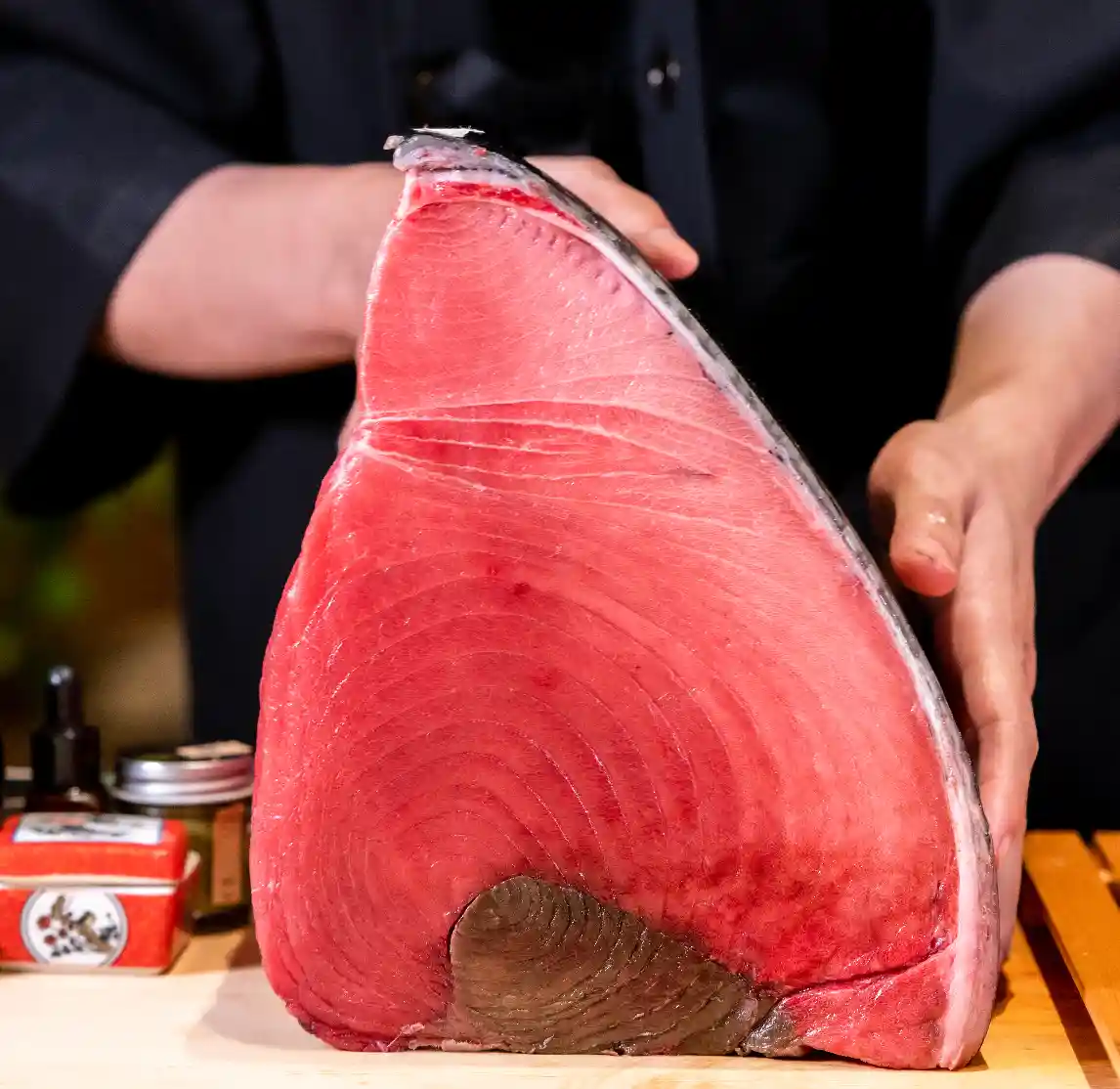
Ask a good butcher for beef and the first thing you get back is a question: which part. Chuck, sirloin, and rib come off one animal and behave like three ingredients. A bluefin tuna is read the same way. One fish reaches the counter and leaves it as three foods with almost nothing in common: akami (赤身), the lean red loin, chutoro (中トロ), the medium fatty cut, and otoro (大トロ), the fattiest part of the belly. Yuzu Omakase sets out where each sits on the fish, what separates them, and why the most expensive of the three is not automatically the one worth ordering.
What Bluefin Tuna Is
Bluefin tuna is the fish a sushi counter calls hon-maguro (本鮪), true tuna, and the name covers three species: Pacific bluefin (Thunnus orientalis), Atlantic bluefin (Thunnus thynnus), and southern bluefin (Thunnus maccoyii). In sushi usage hon-maguro almost always means Pacific bluefin, which grows to around three metres and 400 kilograms.
Bluefin is the counter's benchmark fish because it is the only tuna that reliably yields all three cuts. Bigeye (mebachi) has far more lean meat, yellowfin (kihada) has no section that counts as toro, and albacore (bincho) was not treated as a sashimi fish until recently.
Bluefin is also warm blooded in a way almost no other fish is, holding its body temperature above the water through a counter current vessel network called the rete mirabile. It never stops swimming, so its muscle is loaded with myoglobin, the iron binding protein that makes akami crimson and gives it a mineral edge.
The Three Cuts of Bluefin Tuna
The three cuts of bluefin tuna are positions on the fish, not grades handed out at a market, and the fat climbs as you move from the spine into the belly.
Akami
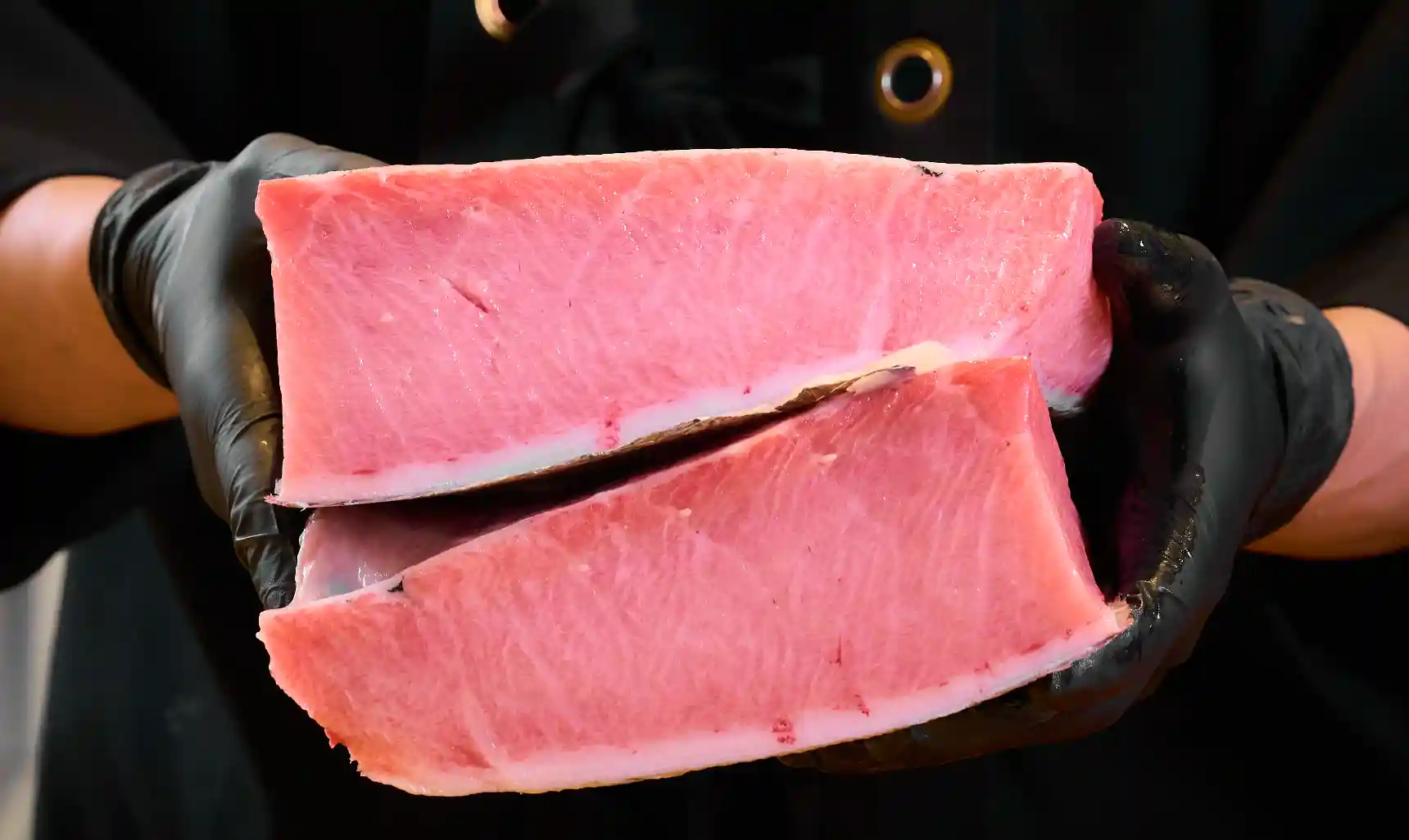
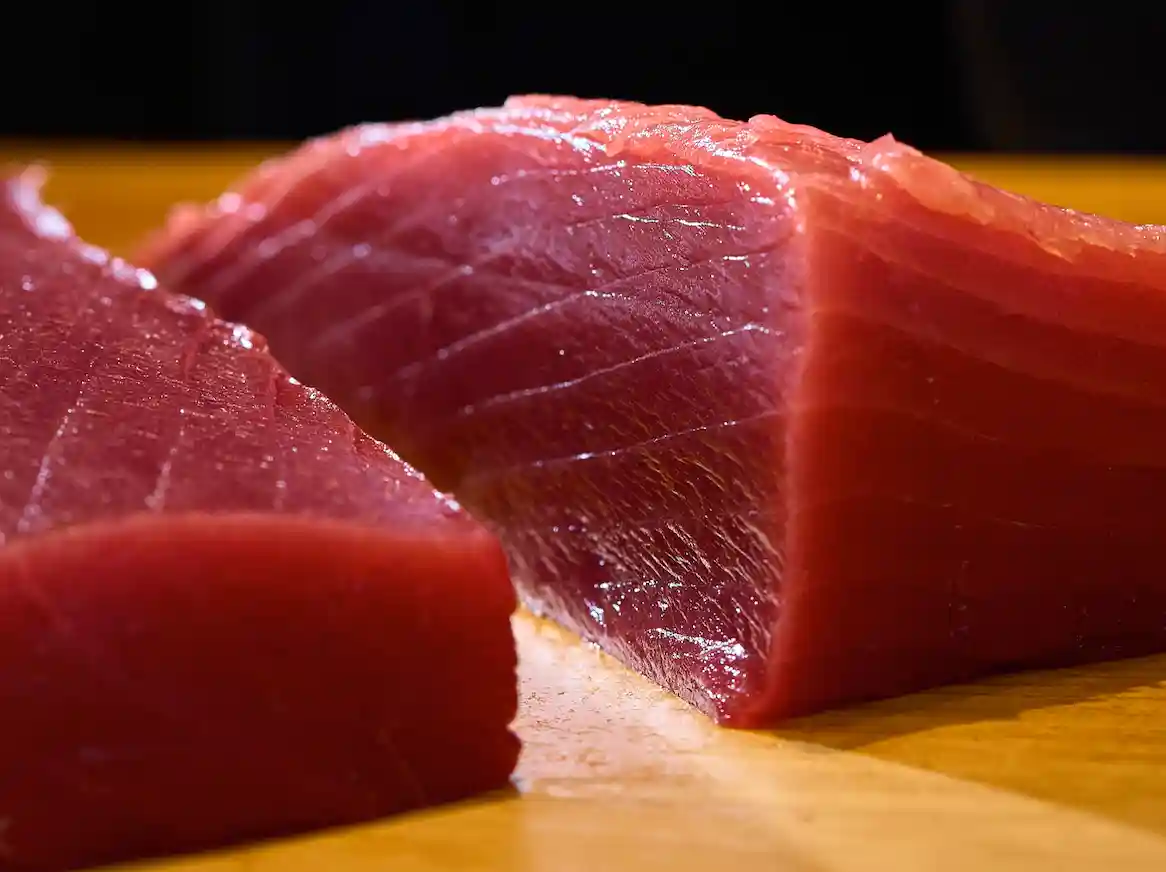
Akami (赤身) is the lean loin along the spine, and it is by far the largest part of the fish. It is dense and deep red, and it tastes of iron and clean umami with a faint sourness at the finish.
Chutoro
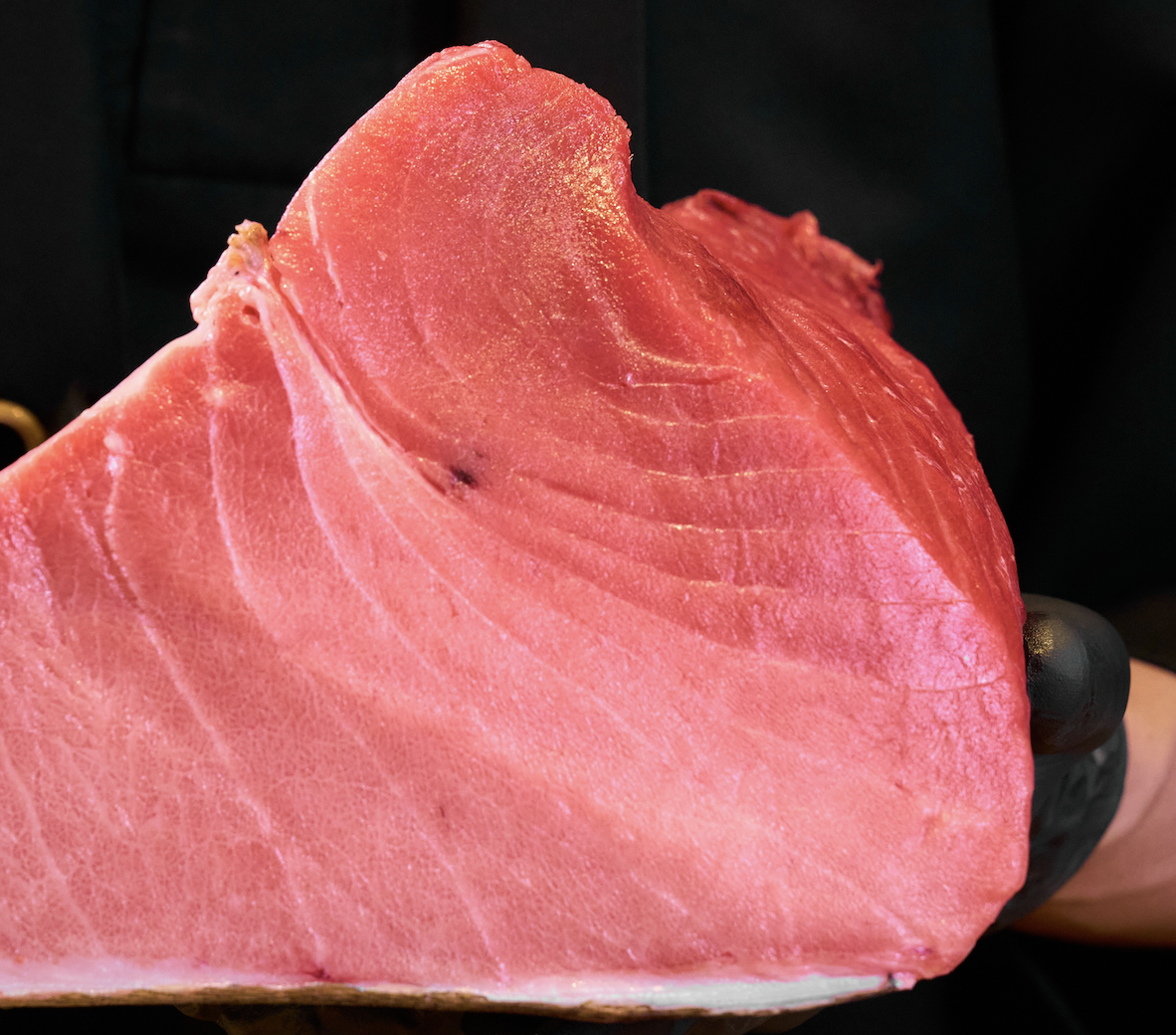
Chutoro (中トロ) sits between akami and otoro, taken from both the belly and the back, mostly nearer the skin. The colour lightens to a pink red laced with fine marbling, and the flavour turns semi sweet and heavy in umami.
Otoro
Otoro (大トロ) is the fattiest section of the belly, concentrated at the front end nearest the head and running into the kama, the collar behind the pectoral fins. It is pale pink and heavily marbled, and that marbling has its own name, shimofuri, frost fall, the same word used for marbled wagyu.
Set side by side, the three cuts of bluefin tuna line up like this.
| Cut | Where it sits on the fish | Fat | Texture | Flavour | Usually served as |
| Akami (赤身) | Lean loin along the spine, running back toward the tail | Around 1 to 2 percent | Firm and dense, with a clean bite | Iron and mineral, deep umami, faintly sour finish | Nigiri, sashimi, zuke, tekkamaki |
| Chutoro (中トロ) | Between akami and otoro, on both belly and back, nearer the skin | About 15 to 20 percent | Smooth and tender, finely marbled, never oily | Semi sweet, umami rich, balanced | Nigiri and sashimi, usually raw |
| Otoro (大トロ) | Front of the belly nearest the head, and the kama collar | About 25 to 30 percent, near 40 at the winter peak | Soft and melting, heavily marbled | Sweet, rich, short on the palate | One or two pieces of nigiri, sometimes lightly seared |
One line in that table is softer than it looks. There is no measured boundary between chutoro and otoro. If the chef says it is otoro, it is otoro.
Good to know: If the order is yours to choose, eat the three in ascending order of fat, akami first and otoro last. Fat coats the tongue, and otoro taken first flattens the akami behind it.
Why Akami Is Not the Cheap Cut
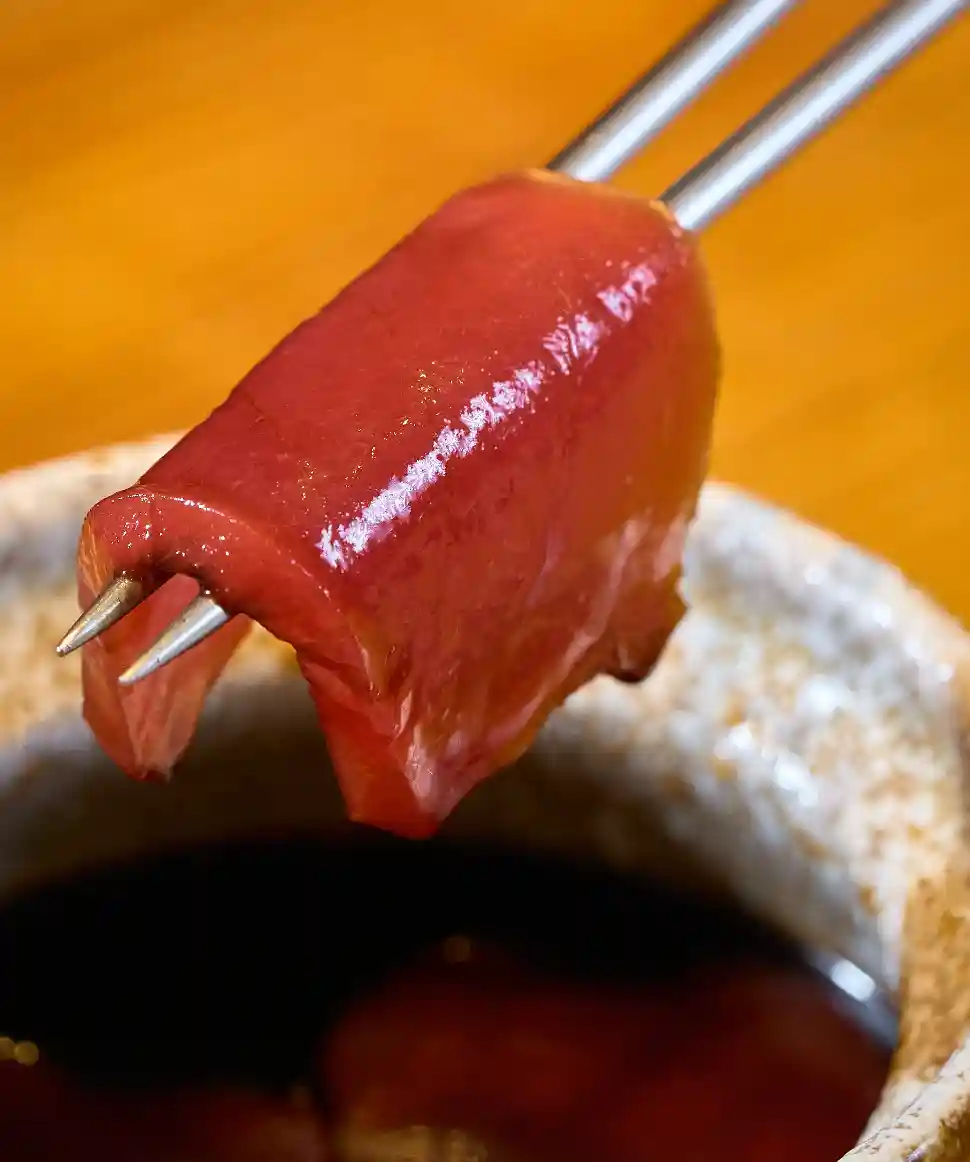
Akami is the least expensive of the three cuts of bluefin tuna, and that has very little to do with how good it is. For most of the Edo period the ranking ran the other way. Fat spoiled fast without refrigeration and soy sauce would not penetrate it, so the belly was stewed, thrown out, or nicknamed neko-matagi, the cut a cat steps over. What the sushi shops prized was lean akami marinated in soy sauce as zuke, a preservation trick that survived as a flavour. Toro became a luxury only after the war, once refrigeration caught up.
Chefs have not forgotten. Akami is the cut that shows the condition of the fish and the hand of the chef, because there is no fat to hide behind. Fat is generous that way: it coats the tongue and covers small faults. Lean meat covers nothing. The most expensive cut on the counter is the richest one, which is a different thing from the best one.
Season, Sourcing, and Aging
Bluefin tuna is at its fattest in the cold months, which is why winter toro is not summer toro. As the water cools the fish stores fat rather than spawning, and the belly peaks in December and January. Oma maguro is not a species or a grade but a brand name, held by the fisheries association of Oma at the northern tip of Aomori, for bluefin taken from the Tsugaru Strait by pole and line.
Then bluefin does something most sushi fish never does. It waits. The fish is killed by ikejime, spiked and bled at once, held in an unbroken cold chain, then aged. Wholesalers commonly hold a tuna seven to ten days before it reaches a restaurant, and the counter holds it longer, akami ready in about two days, otoro in three to five. Enzymes break protein into free amino acids and stored ATP converts into inosinic acid, so umami climbs while the flesh softens, and the window is narrow, roughly one to six degrees Celsius.
Good to know: Freshest is not a compliment where bluefin is concerned. A tuna served the day it was landed is firmer and flatter than the same fish a week later, which is why counters that take maguro seriously talk about how long they have held it.
Bluefin Tuna in an Omakase Meal
Bluefin tuna usually arrives in the middle of an omakase course, after the lean white fish that opens a meal and before the richest items near the end. Where a counter serves all three, they run in ascending order of fat, akami, then chutoro, then otoro, so every piece has somewhere to go after the last.
The decisions inside that run are small and they all belong to the chef. Whether the akami goes out raw or as zuke, which is one cut and two dishes. Whether to pass a flame across the otoro so a little fat melts while the inside stays silky. How warm the shari sits under a quarter-fat topping.
Frequently Asked Questions
Q: What are akami, chutoro, and otoro?
A: Akami, chutoro, and otoro are the three sushi cuts of bluefin tuna. Akami is the lean loin along the spine, chutoro is the medium fatty cut from the belly and the back, and otoro is the fattiest belly section nearest the head.
Q: What is the difference between chutoro and otoro?
A: Chutoro and otoro differ in fat and in position. Chutoro carries about 15 to 20 percent fat and eats smooth and balanced, while otoro sits further forward in the belly at about 25 to 30 percent and melts on the tongue.
Q: Which cut of bluefin tuna is best?
A: No single cut of bluefin tuna is best. Otoro is the rarest and most expensive, chutoro is where many regular diners settle, and many chefs rate akami highest, because lean meat shows the quality of the fish with no fat to hide behind.
Q: Is bluefin tuna endangered?
A: Bluefin tuna stock status has changed materially. In 2021 the IUCN Red List moved Atlantic bluefin from Endangered to Least Concern, southern bluefin from Critically Endangered to Endangered, and Pacific bluefin from Vulnerable to Near Threatened, and a 2024 assessment found Pacific bluefin had met its second rebuilding target twelve years early. Catch limits remain in force and some regional stocks are still depleted.
One fish, three answers. A bluefin does not have a best cut, it has a best order, and a counter shows its skill in how it walks you through them. Putting otoro in front of someone is easy. Making them slow down over the akami is the harder trick, and the one worth watching for.
Reserve a seat at the Yuzu Omakase
Website: https://www.yuzuomakase.com/
Tel: 0638988989
RELATE
-
What Is Kinki Fish? Kichiji, the Deep Water
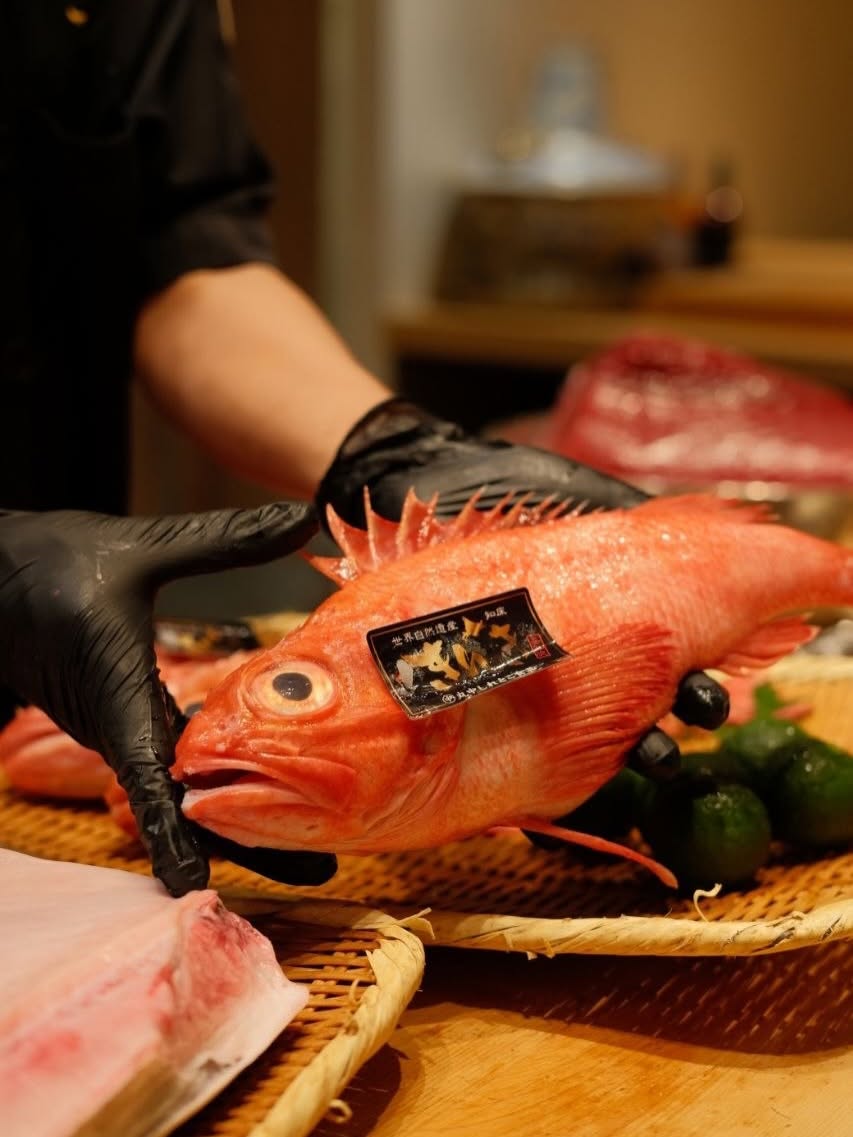
Kinki is the Japanese counter name for Sebastolobus macrochir, a deep water thornyhead from the northwestern Pacific that is classified as a white fish but carries far more fat than a white fish usually does. Kinki, kichiji and menme are three names for one species, used in different regions and different registers, and none of… Continue reading What Is Kinki Fish? Kichiji, the Deep Water
Local Story ● 2026 Aug 30
-
What Is Taraba King Crab? The Hokkaido Giant That Is Not Actually a Crab
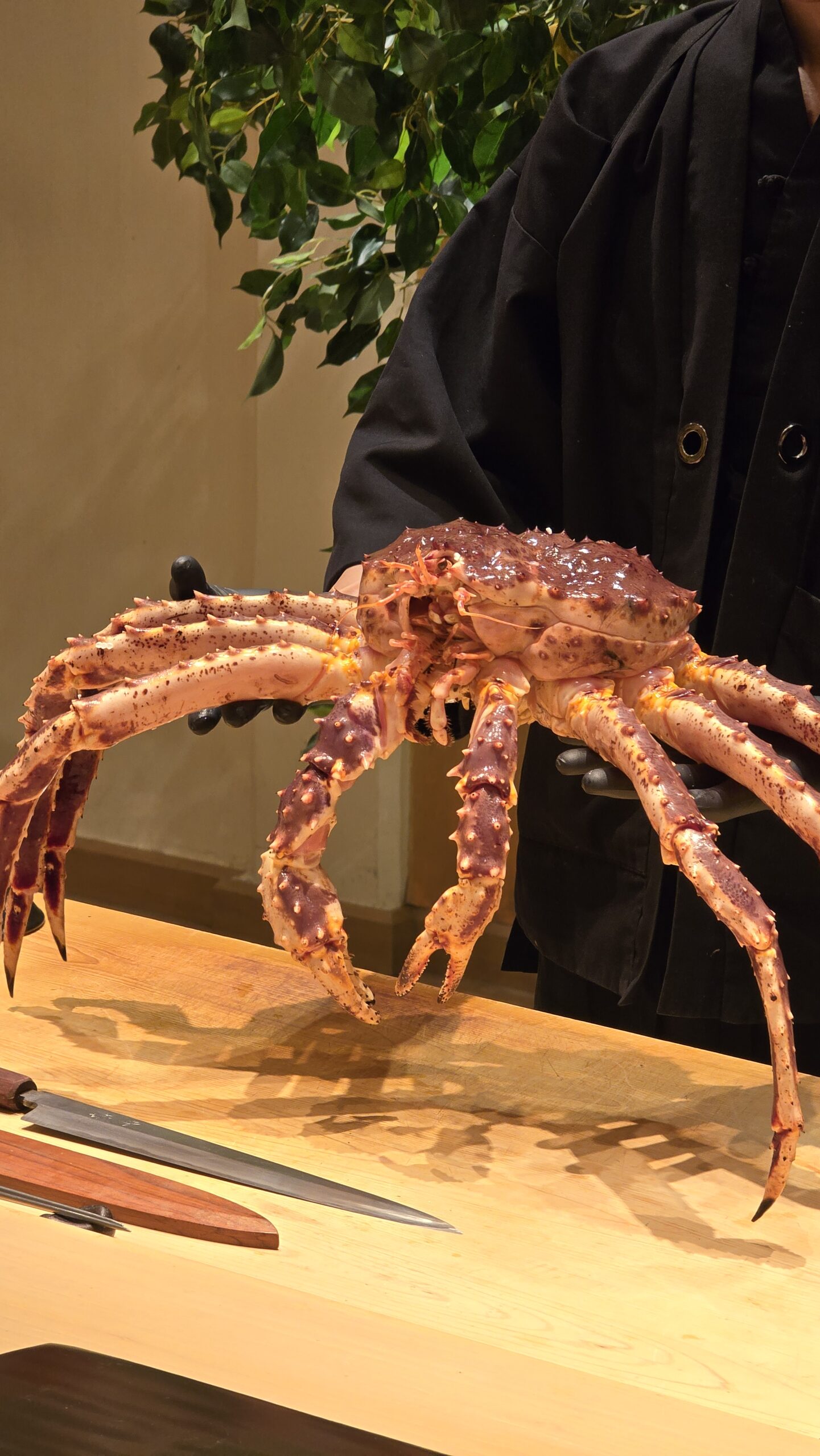
Taraba king crab, tarabagani in Japanese, is the red king crab, the largest and most prized of the king crab species found in Japanese waters. Taraba is not a true crab. It belongs to the hermit crab family, and the giveaway is the leg count: true crabs have ten legs, taraba has eight, with two… Continue reading What Is Taraba King Crab? The Hokkaido Giant That Is Not Actually a Crab
Local Story ● 2026 Aug 30
-
What Is Hirame Kombujime?
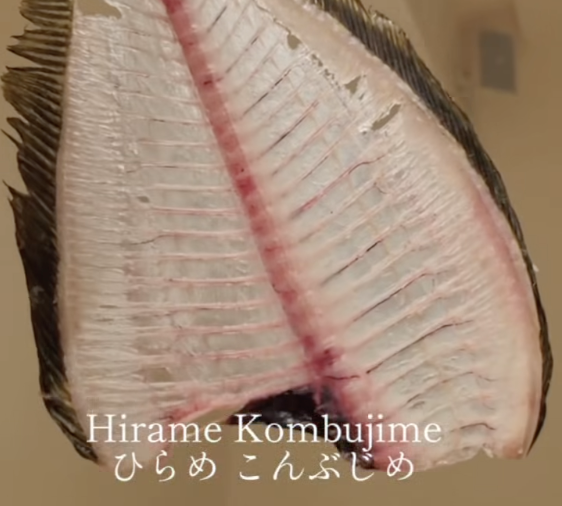
Hirame kombujime (昆布締め) is Japanese olive flounder cured between sheets of dried kombu kelp, a technique that firms the flesh and deepens its savoury flavour without any heat. Hirame kombujime tastes cleaner and rounder than raw hirame, with a firm, faintly springy bite, a quiet sweetness, and a long savoury finish carried by glutamate from… Continue reading What Is Hirame Kombujime?
Local Story ● 2026 Jul 27
-
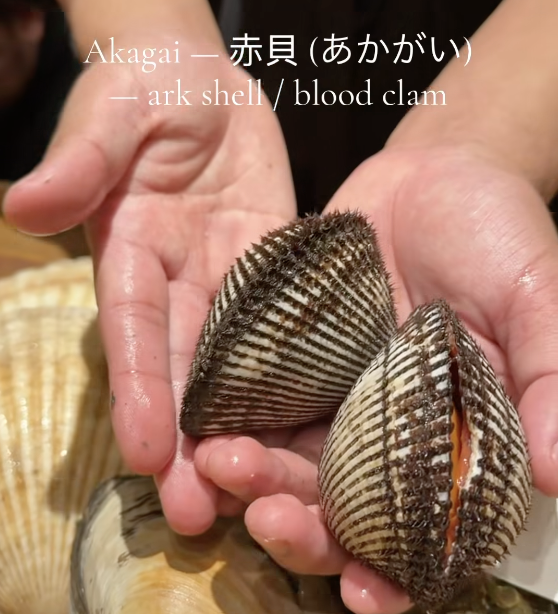
Why Japanese Akagai
Akagai (赤貝, ark shell or red clam) is one of the few clams whose flesh runs deep red, and it has been a fixture of Tokyo sushi counters since the nineteenth century. The color comes from a hemoglobin-like pigment in its blood, the texture is firm and crisp, and the aroma is the strongest argument… Continue reading Why Japanese Akagai
Local Story ● 2026 Jun 30

