


The Hinoki Counter: Why Sushi Is Served on Japanese Cypress
A hinoki counter is a sushi counter made from hinoki (檜), the Japanese cypress, Chamaecyparis obtusa, a conifer that grows naturally only in Japan. Sushi counters use it because the wood is pale, straight grained, resistant to water and rot, and keeps its scent for years, and the finest counters are cut from a single… Continue reading The Hinoki Counter: Why Sushi Is Served on Japanese Cypress
Local Story ● 2026 Oct 19
A hinoki counter is a sushi counter made from hinoki (檜), the Japanese cypress, Chamaecyparis obtusa, a conifer that grows naturally only in Japan.
Sushi counters use it because the wood is pale, straight grained, resistant to water and rot, and keeps its scent for years, and the finest counters are cut from a single plank (ichimai-ita, 一枚板) and left bare (shiraki, 白木), with no varnish at all.
The first thing most people notice when they sit down at a sushi counter is not the fish. It is the surface under their hands. Pale, almost cream with a faint blush of pink, smooth enough that it seems to have no grain at all until the light catches it. It is not cold the way stone is cold, and it does not shine the way lacquered wood shines. Lean in and there is a scent, dry and clean, somewhere between a forest and a freshly planed board. Yuzu Omakase explains what that wood is, why Japan has built its most important shrines from it for more than a thousand years, and why the plank in front of the chef is part of the meal rather than the furniture under it.
What Hinoki Is?
Hinoki is Chamaecyparis obtusa, a cypress in the family Cupressaceae and a species endemic to Japan. It grows from Fukushima Prefecture south through Honshu, Shikoku and Kyushu as far as Yakushima, and leans toward the Pacific side of the country because it does not tolerate heavy snow.
The timber is pale with a slight red tint, fine and straight in the grain, easy to split and plane, and resistant to both water and rot. It has a natural sheen without any finish, and its fragrance lasts. The name is usually glossed in English as “fire tree” (火の木).
The most celebrated hinoki comes from the natural forests of the Kiso valley in central Japan. Kiso hinoki (木曽ヒノキ) heads the Kiso goboku (木曽五木), the five fine woods of the region, and it is the name a Japanese diner recognises the way a wine drinker recognises a vineyard.
Did You Know: Hinokitiol, the compound named after hinoki and sold for its scent and properties, is present in Japanese hinoki only in trace amounts. Commercial hinokitiol is extracted mainly from Taiwanese hinoki or from hiba, a different tree. The name travelled further than the chemistry.
The Wood of Temples and Shrines
Hinoki is the essential timber of Japanese religious architecture. Hōryū-ji (法隆寺), in Nara, is the oldest surviving wooden building in the world, and it is built of hinoki.
Ise Jingū (伊勢神宮), the most important Shinto shrine in Japan, is rebuilt from new timber every twenty years in a ceremony called Shikinen Sengū (式年遷宮), and each rebuilding consumes a great deal of hinoki. Since the eighteenth century that wood has come mainly from the Kiso forests.
That history is the reason the material carries weight at a sushi bar. When the same wood used for a shrine becomes the surface where a chef sets down a piece of fish, it brings its associations with it: cleanliness, respect, and work done slowly and properly.
Why Sushi Counters Choose Hinoki
The case for hinoki is practical before it is symbolic. A sushi counter takes moisture from rice, hands and cloths for an entire evening, every evening, and the wood has to cope with that.
- It resists water and rot. Hinoki tolerates the constant damp of a working counter better than most timbers.
- It planes to an exceptionally smooth surface. Fine, straight grain gives a clean face that shows the food rather than the wood.
- Its scent lasts. Japanese diners know the smell from hinoki baths (檜風呂) and wooden interiors, and it reads as clean.
- It means something. A shrine timber tells the guest, without anyone saying it, that the room takes cleanliness and craft seriously.
One Plank, No Varnish
Two words separate an ordinary wooden counter from the kind that defines a serious sushi bar.
| Term | What it means | What it tells you |
| Ichimai-ita (一枚板) | The counter is a single plank along its whole length, not boards joined together | It came from a very large, very old tree, which makes it rare and expensive |
| Shiraki (白木) | The surface is bare wood, with no paint, stain or varnish | Every mark and stain shows, so it has to be cared for every single day |
Bare wood looks like a weakness. It is the point. A shiraki counter that is still pale and clean after years of service is evidence that the people behind it look after every detail with the same attention they give the fish.
How a Hinoki Counter Is Cared For
Hinoki absorbs and releases moisture with the air, so it moves. The care follows the same principles the Japanese apply to hinoki cutting boards.
- Wipe it with a cloth wrung almost dry, so the surface is barely damp. Standing water warps the wood.
- Keep it out of direct sun and away from strong heat, which dry it too quickly and crack it.
- Let it dry where air moves freely.
- When the surface marks or stains, hinoki can be planed or sanded back by a fraction to reveal a clean face underneath.
[CONFIRM BEFORE PUBLISH: how Yuzu Omakase cares for its counter in practice, for example how often it is wiped during service and whether it has ever been planed back.]
Sitting at a Wooden Counter
A hinoki counter is the chef’s workspace before it is your table. A few habits keep the evening easy for everyone.
- Keep bags and phones off the wood. Hard, heavy objects mark a bare surface quickly.
- Mind metal watches and large rings when you rest your arms. They scratch.
- Put chopsticks on the chopstick rest, never directly on the counter.
- When the chef sets a piece of sushi in front of you, eat it straight away. The best moment for a piece of sushi is the moment it leaves the chef’s hands.
The Counter in an Omakase Meal
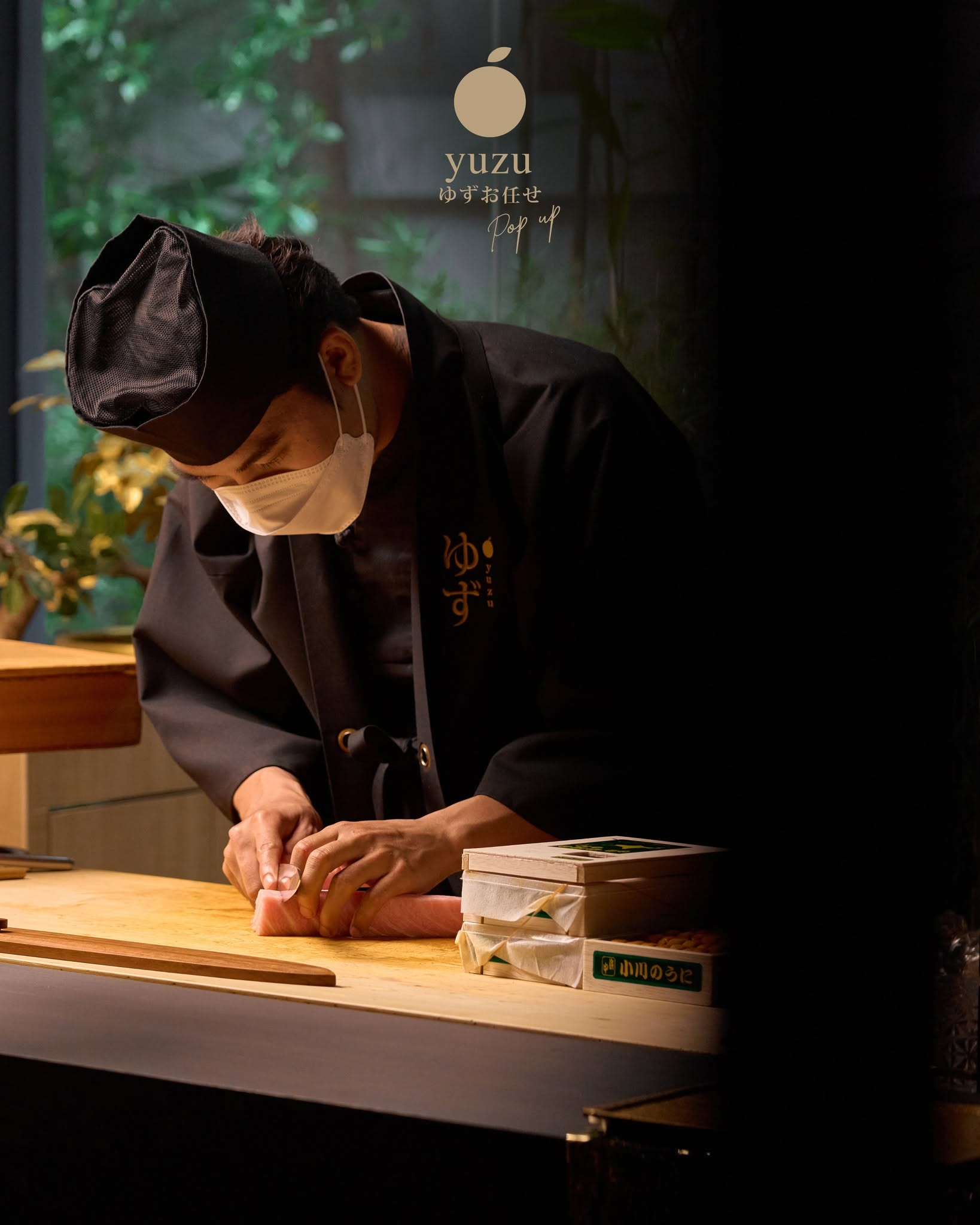
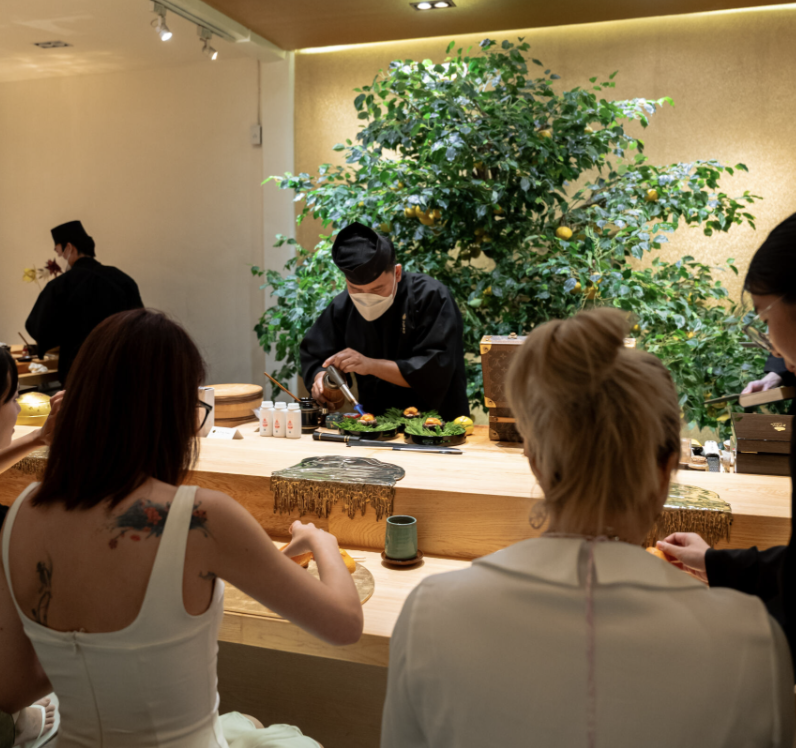
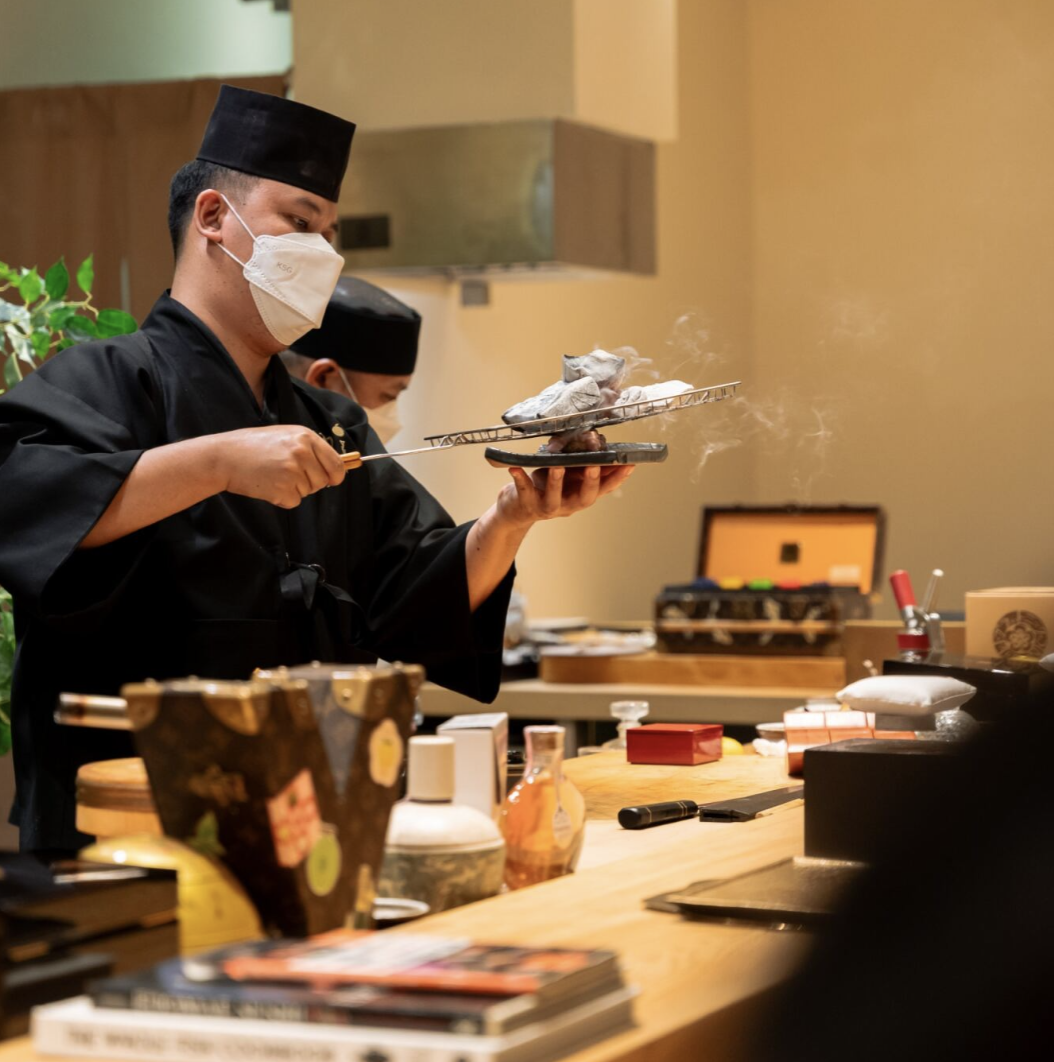
At an omakase counter, the counter is not a place to sit. It is a stage with nothing between the chef and the guest. You watch the knife go through the fish, you watch the rice being shaped, and you receive each piece at the moment the chef intends it to be eaten.
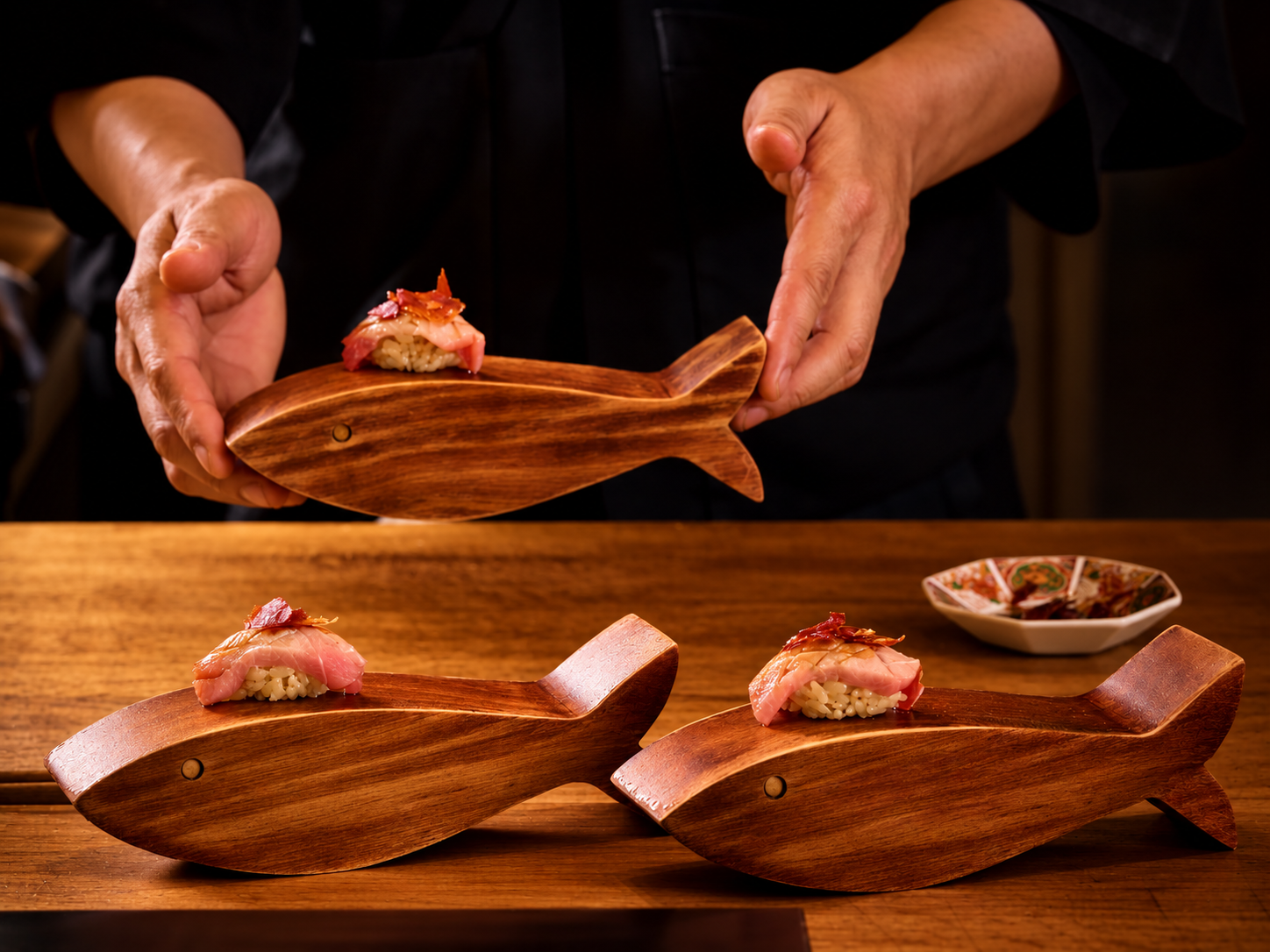
The pale wood also works as a canvas. The red of tuna, the orange of uni and the translucent white of a lean white fish all read more clearly against a natural, quiet surface that does not compete for attention.
At Yuzu Omakase, a counter in Siam Square where the season decides the menu, every piece passes from the chef’s hands to yours across the counter.
Frequently Asked Questions
Q: What is a hinoki counter?
A: A hinoki counter is a sushi counter made from hinoki (檜), the Japanese cypress Chamaecyparis obtusa, a tree endemic to Japan. The wood is pale, straight grained, resistant to water and rot, and keeps its fragrance for years.
Q: Why do sushi restaurants use hinoki wood?
A: Because it copes with constant moisture, planes to a very smooth surface, has a lasting clean scent, and is the timber Japan uses for its temples and shrines, including Hōryū-ji and Ise Jingū, so it signals cleanliness and craft.
Q: What does ichimai-ita mean?
A: Ichimai-ita (一枚板) means a counter cut from a single plank along its full length rather than several boards joined together. It requires a very large, old tree, which is why such counters are rare and expensive.
Q: Why is a hinoki counter left unvarnished?
A: A bare, or shiraki (白木), surface shows the wood itself and its scent, and because every stain shows, keeping it pale is a visible daily discipline for the restaurant.
Q: How should I behave at a hinoki counter?
A: Keep bags and phones off the wood, mind metal watches and rings, use the chopstick rest, and eat each piece as soon as the chef sets it down.
Some planks grew for longer than everyone sitting along them has been alive, combined. They were cut, planed smooth, left bare, and wiped clean every night so they would stay pale. The next time you rest your hands on a hinoki counter, think about all of that time, and you will understand why a chef would choose to work on a surface that asks for so much care.
Reserve a seat at Yuzu Omakase, 2F, 258/9 to 10 Siam Square Soi 3, Pathumwan, Bangkok.
Website: https://www.yuzuomakase.com/
Tel: 0638988989
FB: Yuzu Omakase
RELATE
-
Engawa: The Cut Most Diners Never Notice
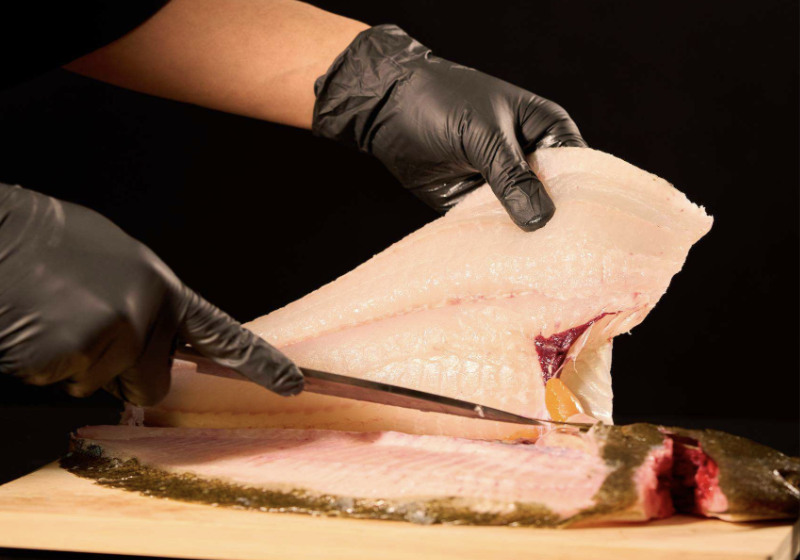
Engawa (縁側) is the thin band of muscle that moves the dorsal and ventral fins of a flatfish, and the classic engawa comes from hirame, the olive flounder. Engawa tastes richer than the white body meat of the same fish, with more fat, a clean sweetness, and a crunchy chew that comes from its high… Continue reading Engawa: The Cut Most Diners Never Notice
Local Story ● 2026 Sep 25
-
What Is Truffle (トリュフ), and How Much Belongs on Sushi?
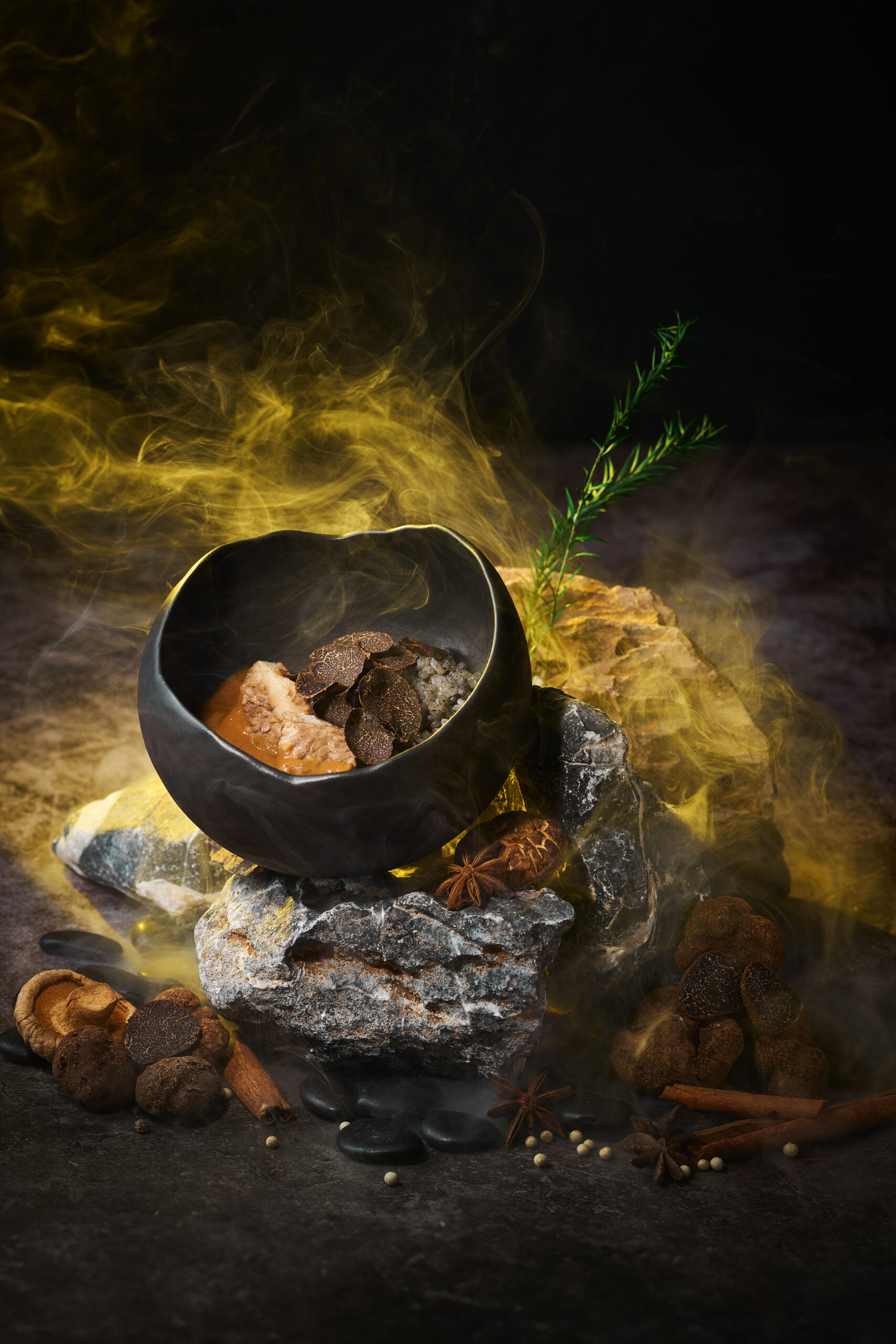
Truffle, written toryufu (トリュフ) on a Japanese menu, is the underground fruiting body of a fungus in the genus Tuber, which lives in partnership with the roots of trees such as oak, hazel and beech. The white truffle, Tuber magnatum from Piedmont in northern Italy, is shaved raw because its aroma fades with heat, while… Continue reading What Is Truffle (トリュフ), and How Much Belongs on Sushi?
Local Story ● 2026 Sep 25
-
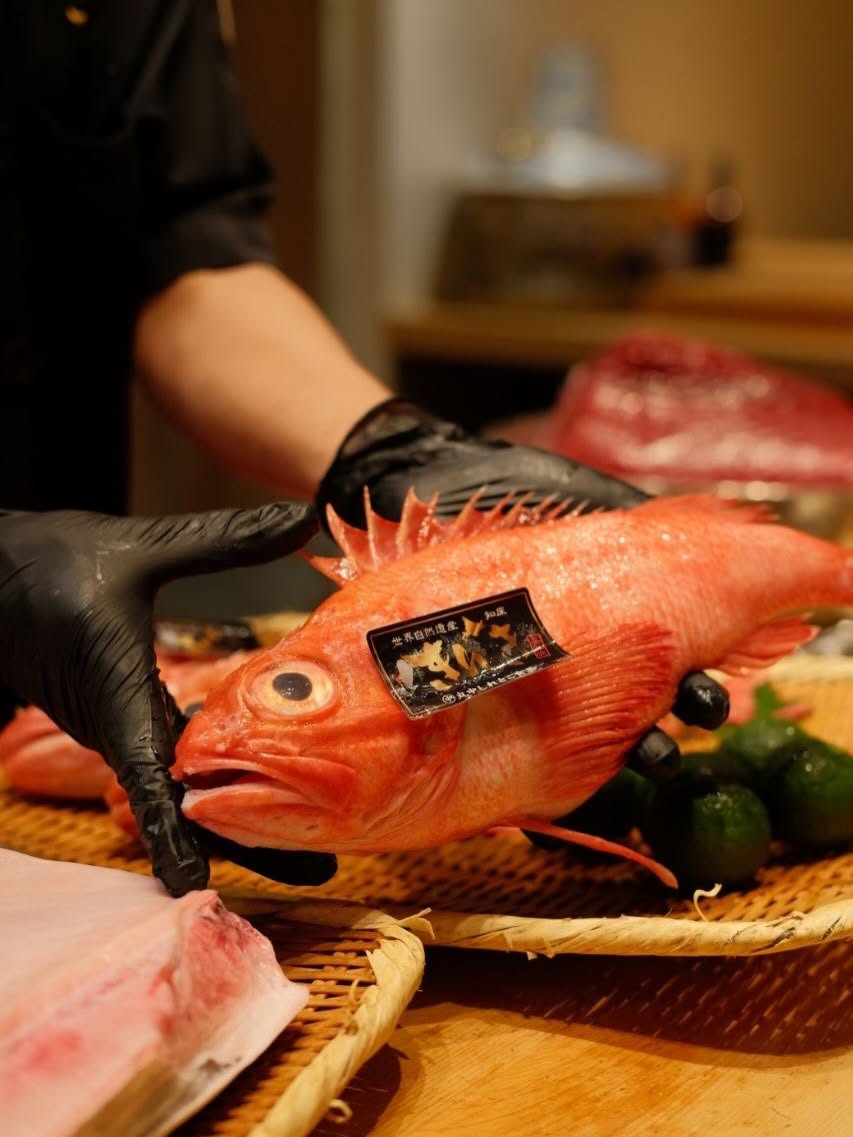
What Is Kinki Fish? Kichiji, the Deep Water
Kinki is the Japanese counter name for Sebastolobus macrochir, a deep water thornyhead from the northwestern Pacific that is classified as a white fish but carries far more fat than a white fish usually does. Kinki, kichiji and menme are three names for one species, used in different regions and different registers, and none of… Continue reading What Is Kinki Fish? Kichiji, the Deep Water
Local Story ● 2026 Aug 30
-
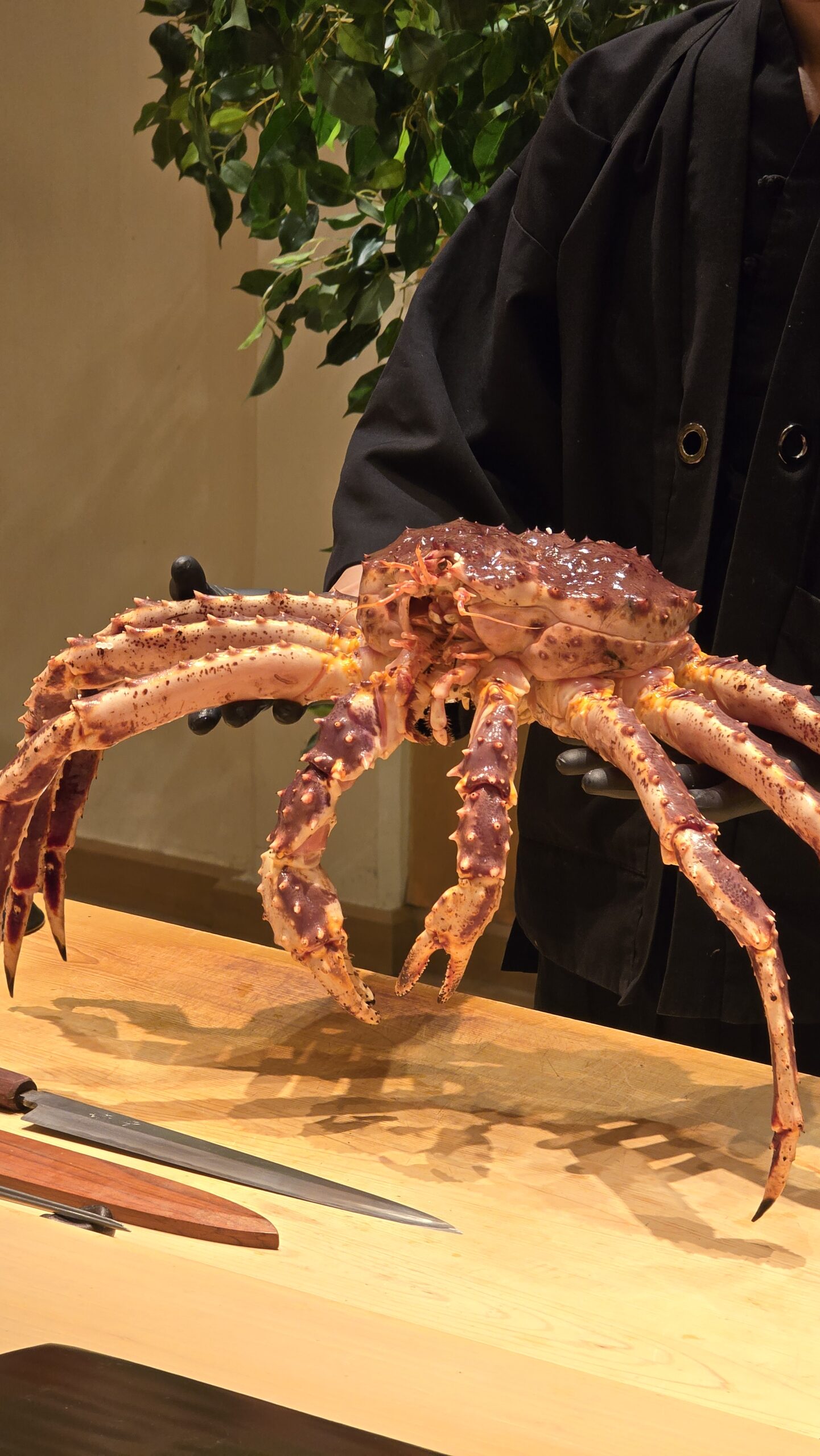
What Is Taraba King Crab? The Hokkaido Giant That Is Not Actually a Crab
Taraba king crab, tarabagani in Japanese, is the red king crab, the largest and most prized of the king crab species found in Japanese waters. Taraba is not a true crab. It belongs to the hermit crab family, and the giveaway is the leg count: true crabs have ten legs, taraba has eight, with two… Continue reading What Is Taraba King Crab? The Hokkaido Giant That Is Not Actually a Crab
Local Story ● 2026 Aug 30

