


What Is Kinki Fish? Kichiji, the Deep Water
Kinki is the Japanese counter name for Sebastolobus macrochir, a deep water thornyhead from the northwestern Pacific that is classified as a white fish but carries far more fat than a white fish usually does. Kinki, kichiji and menme are three names for one species, used in different regions and different registers, and none of… Continue reading What Is Kinki Fish? Kichiji, the Deep Water
Local Story ● 2026 Aug 30
Kinki is the Japanese counter name for Sebastolobus macrochir, a deep water thornyhead from the northwestern Pacific that is classified as a white fish but carries far more fat than a white fish usually does.
Kinki, kichiji and menme are three names for one species, used in different regions and different registers, and none of them refers to a different fish.
Kinki is expensive because the species is small, slow and lives deep, its best grounds are concentrated off northern Japan, and the window when the fish is at its fattest is short.
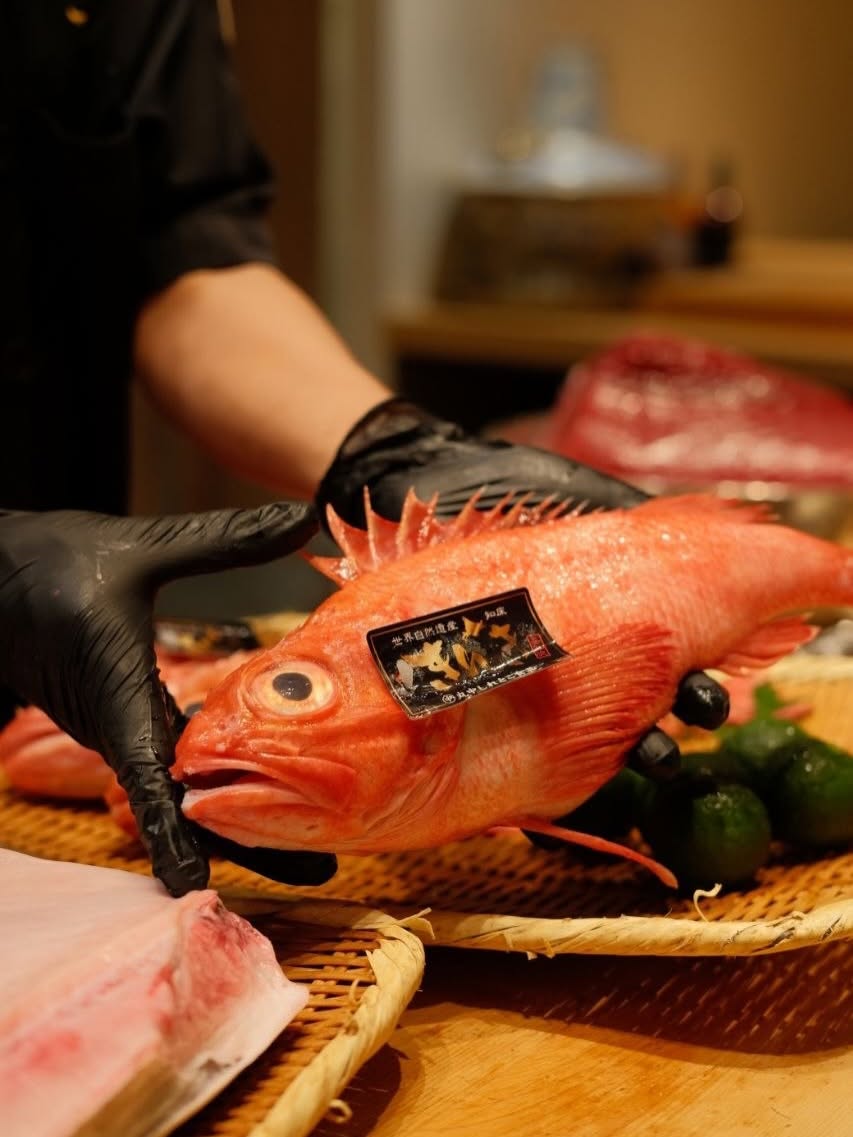
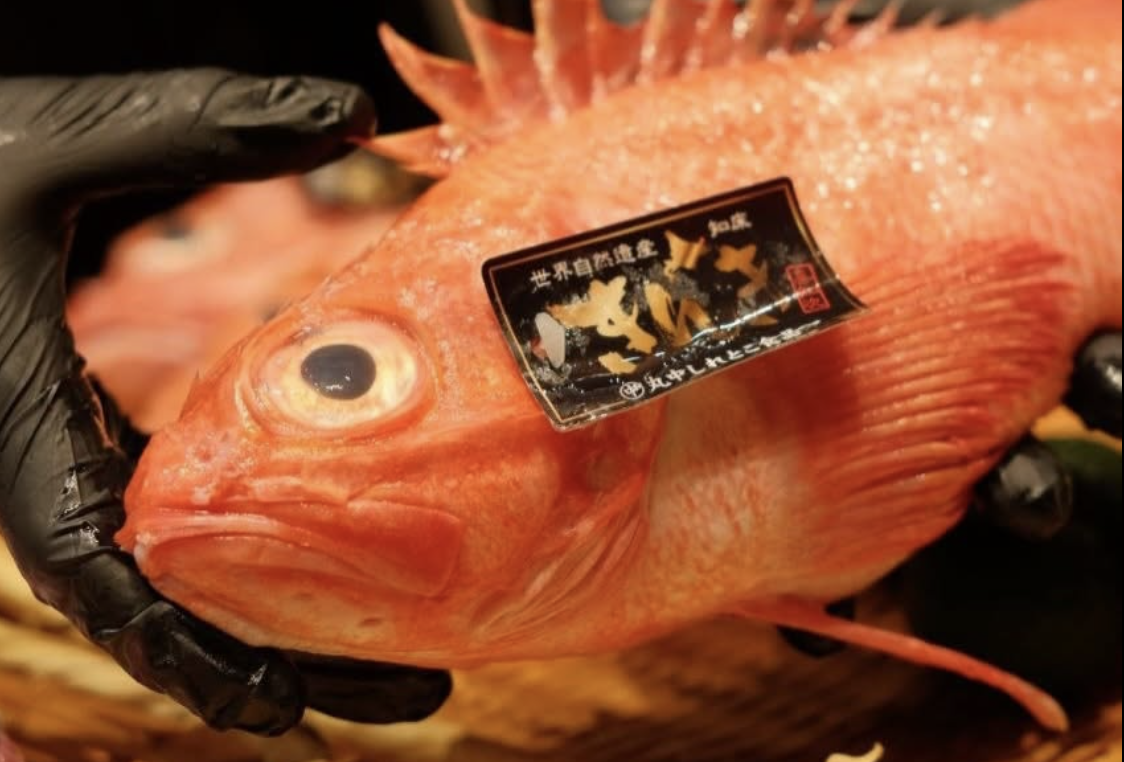
If you have ever watched a chef unpack a delivery box at the counter, you will know that most fish arrive looking like work. Kinki arrives looking like an argument. It is scarlet from the gill plate to the tail, its head is a third of its length, and the spines along its back stand up like something that expected to be left alone at the bottom of the sea. It is not a handsome fish. It is a fish that makes you ask what it is doing in a box that costs what that box costs. Yuzu Omakase walks you through what kinki (キンキ) actually is, why so little of it reaches a counter, and why a fish filed under white fish eats nothing like one.
What Kinki Fish Is
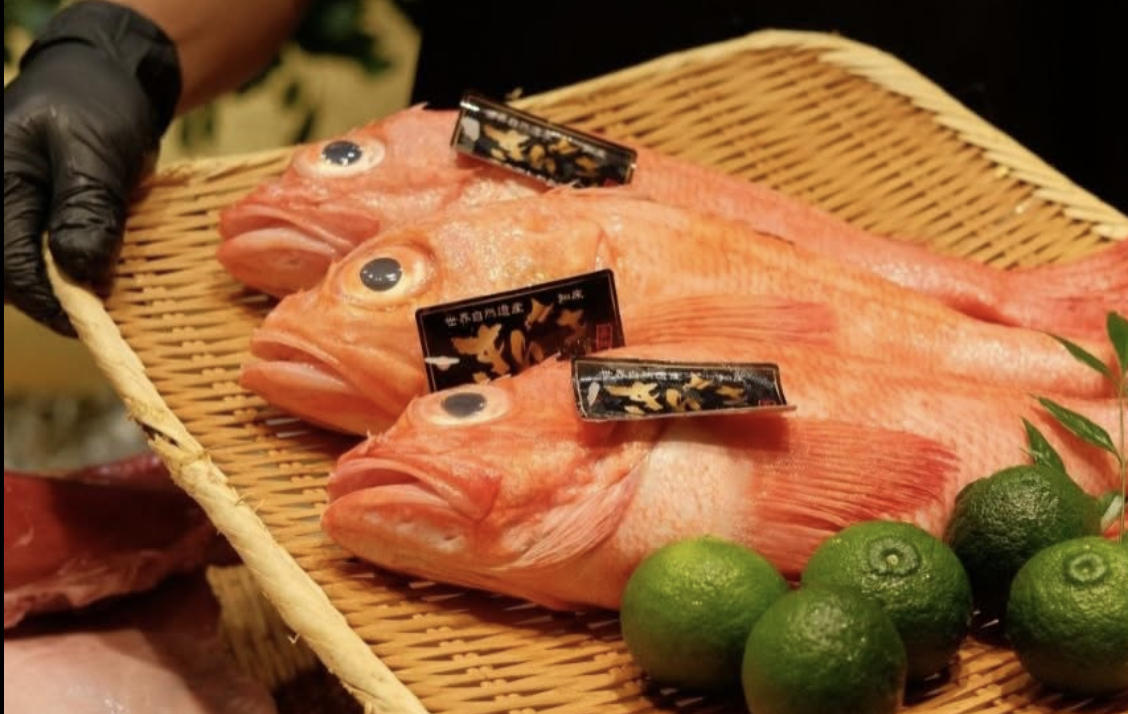
Kinki is Sebastolobus macrochir, described by Günther in 1877, a member of the family Scorpaenidae and the subfamily Sebastinae, which makes it a relative of the rockfishes rather than a snapper or a bream. English has never settled on one name for it. Thornhead, broadbanded thornyhead, short spined thornyhead, broadfin thornyhead, bighand thornyhead and kichiji rockfish all appear in reference sources, which is part of why the Japanese name travels better than the English one.
The fish lives on the bottom. Its recorded depth range runs from 257 metres to 1,537 metres, and its range in the northwestern Pacific runs between roughly 31 and 51 degrees north, from Sagami Bay in Japan north to the Kuril Islands and Sakhalin.
On a sushi counter it is filed as shiromi (白身), one of the lean white fleshed fish that traditionally open a meal. That classification is accurate about the colour of the flesh and misleading about everything else, which is the most interesting thing about the ingredient.
Three Names, One Fish
Kichiji is the written name, and it is written three different ways: 喜知次, 吉次 and 黄血魚. Kinki (キンキ) is what the fish is called in Kanto, and it is the name that reaches most menus. Menme (メンメ) is what it is called in eastern Hokkaido, close to where most of it is caught.
One species, three names, sorted by geography rather than by grade. A menu that lists menme and a menu that lists kinki are not offering you two things.
**Chef's Insight:** The name that appears on a menu often tells you where the person writing the menu learned the fish, not what is on the plate. Regional fish names in Japan work the way regional bread names do in Europe. The thing is the same, the vocabulary moved with the people.
Why Kinki Is Expensive
Four facts do most of the work here, and none of them is about demand.
1. The fish is small. Its maximum recorded standard length is 44 centimetres and its maximum recorded weight is 1.2 kilograms, but a more typical standard length is around 26 centimetres. A large kinki is not large by the standards of fish that command high prices. It is large by the standards of kinki.
2. The fish lives deep. Fishing at several hundred metres and beyond costs more in gear, fuel and time than fishing on a shelf, and it returns less per trip.
3. The grounds are concentrated. Hokkaido accounts for more than half the total catch, so supply depends on a small stretch of coast and the weather over it.
4. The good window is narrow. The fish is at its best from autumn into winter, before spawning, which compresses the period when the best fish are landed.
Put together, a counter buying kinki is buying a small animal from deep water, from a short season, out of a limited area. The price follows from the arithmetic rather than from fashion.
Notice what is not on that list. There is no claim here that kinki is the most expensive fish in Japan. That sentence circulates widely without a market record behind it. What can be said plainly is that kinki sits near the top of what a Japanese counter pays for a white fish, for the reasons above.
What Kinki Tastes Like
This is where the white fish label stops being useful. Kinki is unusually fatty for a shiromi, and that fat is distributed through pale flesh rather than banded into a visible layer, so the fish looks lean and does not eat lean. The taste is sweet and clean, with a richness that arrives after the sweetness rather than alongside it.
The texture is the other surprise. A lean white fish is usually firm and a little resistant. Kinki is softer, and it carries heat well, which is why so much of what is done with it involves warmth.
**Chef's Insight:** Fat is why the same fish gets three different treatments. A lean white fish is served raw because cooking it would take away the little it has. A fatty one can be simmered, seared or served raw, and each choice moves the fat somewhere different. The decision is not about the recipe. It is about what the chef wants the fat to do that evening.
Kinki, Kinmedai and Nodoguro Are Three Different Fish
All three are reddish, all three come from deep water, and all three turn up in the same sentence on menus. They are not related in any close sense.
1. Kinki is Sebastolobus macrochir, in the family Scorpaenidae.
2. Kinmedai, the golden eye snapper, is Beryx splendens, in the family Berycidae and the order Beryciformes, recorded at depths between 25 and 1,250 metres.
3. Nodoguro, also called akamutsu, is Doederleinia berycoides, in the family Acropomatidae, and it typically sits on continental shelf slopes at 80 to 150 metres.
Three families, three orders in two cases, three different fish. The confusion is understandable, since the species name berycoides was given to nodoguro precisely because it looks like a Beryx. Looking alike is where the similarity ends.
**Chef's Insight:** If you want a quick way to keep them apart at the counter, ask about the head. Kinki's head is disproportionately large and heavily spined, which is why it is so often cooked and served whole rather than broken down.
Frequently Asked Questions About Kinki
What is kinki fish?
A: Kinki is Sebastolobus macrochir, a deep water thornyhead in the family Scorpaenidae, found in the northwestern Pacific from Sagami Bay north to the Kuril Islands and Sakhalin. Sushi counters classify it as shiromi, a white fleshed fish, though it carries considerably more fat than that category usually implies.
Why is kinki so expensive?
A: Because the species is small, with a maximum recorded weight of 1.2 kilograms, lives at depths from 257 metres down to more than 1,500 metres, is concentrated in grounds off Hokkaido that supply more than half the catch, and is at its best only from autumn into winter. Scarcity and cost of capture do the work, not fashion.
What is the difference between kinki, kichiji and menme?
A: There is none. Kichiji is the written name, kinki is the Kanto name, and menme is the eastern Hokkaido name, all for Sebastolobus macrochir. The variation is regional vocabulary rather than grade or species.
Where does kinki come from?
A: Mostly Hokkaido, which accounts for more than half the total catch. Rausu, on the Shiretoko Peninsula, is one of the towns whose fishing industry is built around the fish.
Is kinki eaten raw or cooked?
A: Both. Nitsuke, the simmered preparation, is the classic treatment. It is also served as sashimi, grilled, deep fried, and as nigiri on sushi counters, where its fat also suits a brief sear.
Is kinki the same fish as nodoguro?
A: No. Nodoguro is Doederleinia berycoides in the family Acropomatidae, and kinki is Sebastolobus macrochir in the family Scorpaenidae. Kinmedai, a third fish often grouped with them, is Beryx splendens. All three are reddish deep water fish from different families.
When is kinki in season?
A: Autumn into winter, before spawning, is when it carries the most fat. It is landed at other times of year, so availability and peak condition are separate questions.
A Closing Thought
The fish that look least promising in the box are often the ones that reward the most attention. Kinki is scarlet, spiny, oversized in the head and undersized everywhere else, and it spends its life somewhere no one would choose to go. None of that reads as luxury. What makes it worth the trouble is a quiet mismatch between what the category says and what the fish does: filed as a lean white fish, eating like a rich one.
Kinki has a season, and the season is short. If you would like to taste it at the point where it is worth tasting, the counter is the place to ask.
Reserve a seat at Yuzu Omakase, 2F, 258/9 to 10 Siam Square Soi 3, Pathumwan, Bangkok.
Website: https://www.yuzuomakase.com/
Tel: 0638988989
RELATE
-
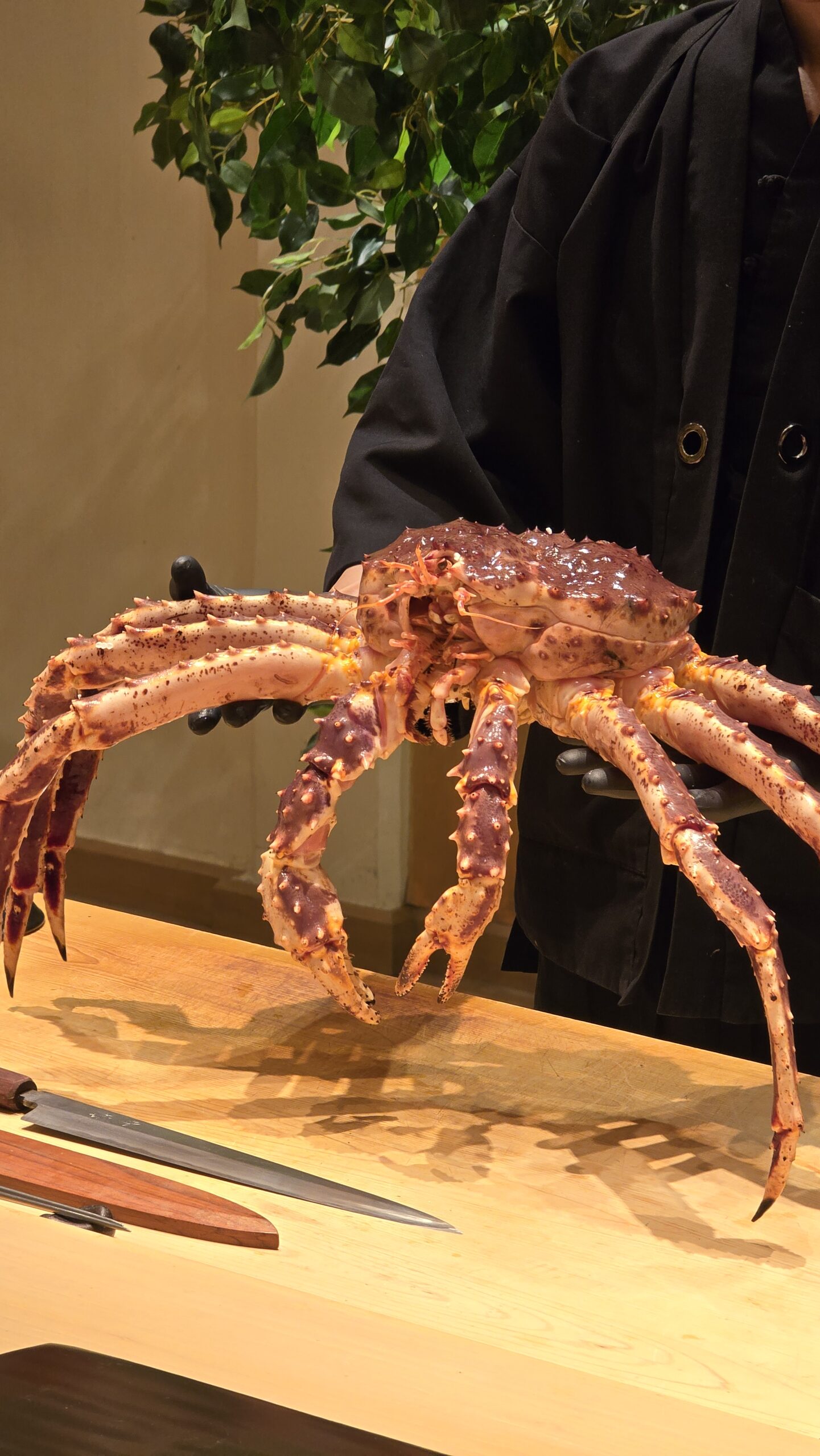
What Is Taraba King Crab? The Hokkaido Giant That Is Not Actually a Crab
Taraba king crab, tarabagani in Japanese, is the red king crab, the largest and most prized of the king crab species found in Japanese waters. Taraba is not a true crab. It belongs to the hermit crab family, and the giveaway is the leg count: true crabs have ten legs, taraba has eight, with two… Continue reading What Is Taraba King Crab? The Hokkaido Giant That Is Not Actually a Crab
Local Story ● 2026 Aug 30
-
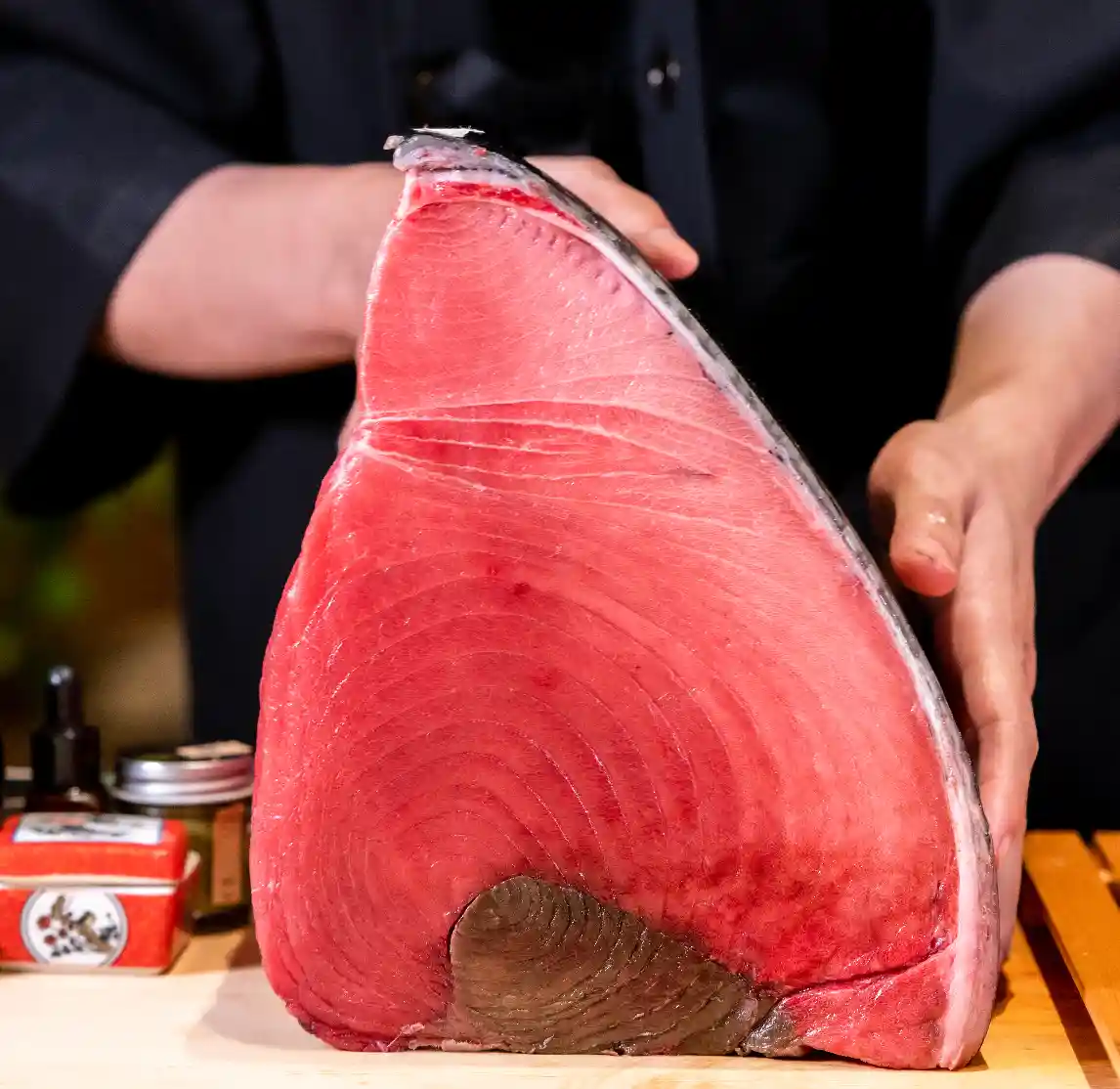
Akami, Chutoro, Otoro: The Three Cuts of Bluefin Tuna
Akami, chutoro, and otoro are the three sushi cuts of bluefin tuna, running from the lean loin along the spine, through the fattier belly and back, to the richest belly section nearest the head. The three cuts of bluefin tuna differ mostly in fat: akami carries barely any, chutoro about 15 to 20 percent, and… Continue reading Akami, Chutoro, Otoro: The Three Cuts of Bluefin Tuna
Local Story ● 2026 Jul 27
-
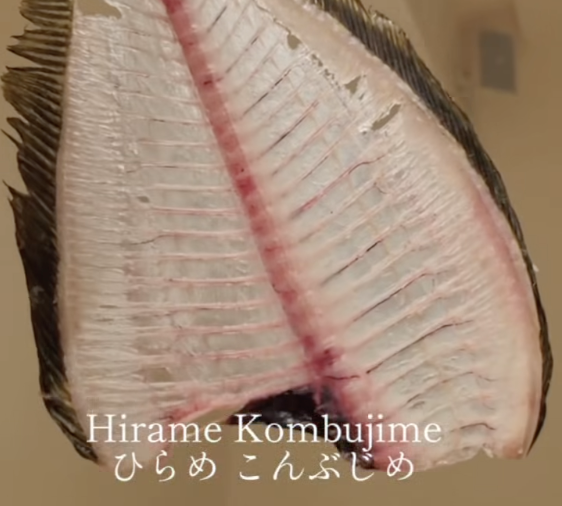
What Is Hirame Kombujime?
Hirame kombujime (昆布締め) is Japanese olive flounder cured between sheets of dried kombu kelp, a technique that firms the flesh and deepens its savoury flavour without any heat. Hirame kombujime tastes cleaner and rounder than raw hirame, with a firm, faintly springy bite, a quiet sweetness, and a long savoury finish carried by glutamate from… Continue reading What Is Hirame Kombujime?
Local Story ● 2026 Jul 27
-
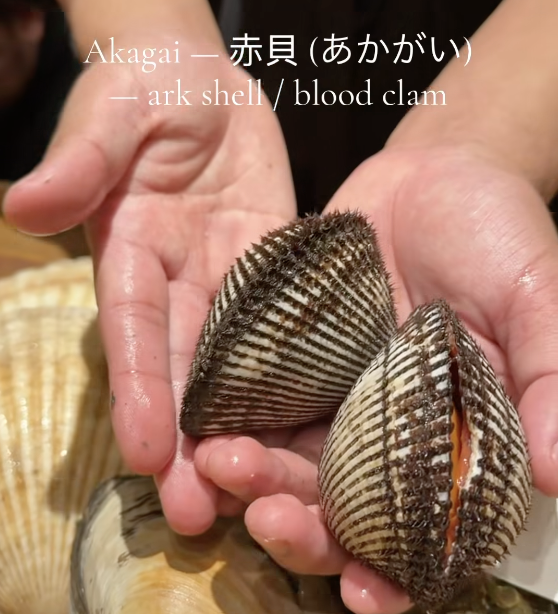
Why Japanese Akagai
Akagai (赤貝, ark shell or red clam) is one of the few clams whose flesh runs deep red, and it has been a fixture of Tokyo sushi counters since the nineteenth century. The color comes from a hemoglobin-like pigment in its blood, the texture is firm and crisp, and the aroma is the strongest argument… Continue reading Why Japanese Akagai
Local Story ● 2026 Jun 30

