



What Is Taraba King Crab? The Hokkaido Giant That Is Not Actually a Crab
Taraba king crab, tarabagani in Japanese, is the red king crab, the largest and most prized of the king crab species found in Japanese waters. Taraba is not a true crab. It belongs to the hermit crab family, and the giveaway is the leg count: true crabs have ten legs, taraba has eight, with two… Continue reading What Is Taraba King Crab? The Hokkaido Giant That Is Not Actually a Crab
Local Story ● 2026 Aug 30
Taraba king crab, tarabagani in Japanese, is the red king crab, the largest and most prized of the king crab species found in Japanese waters.
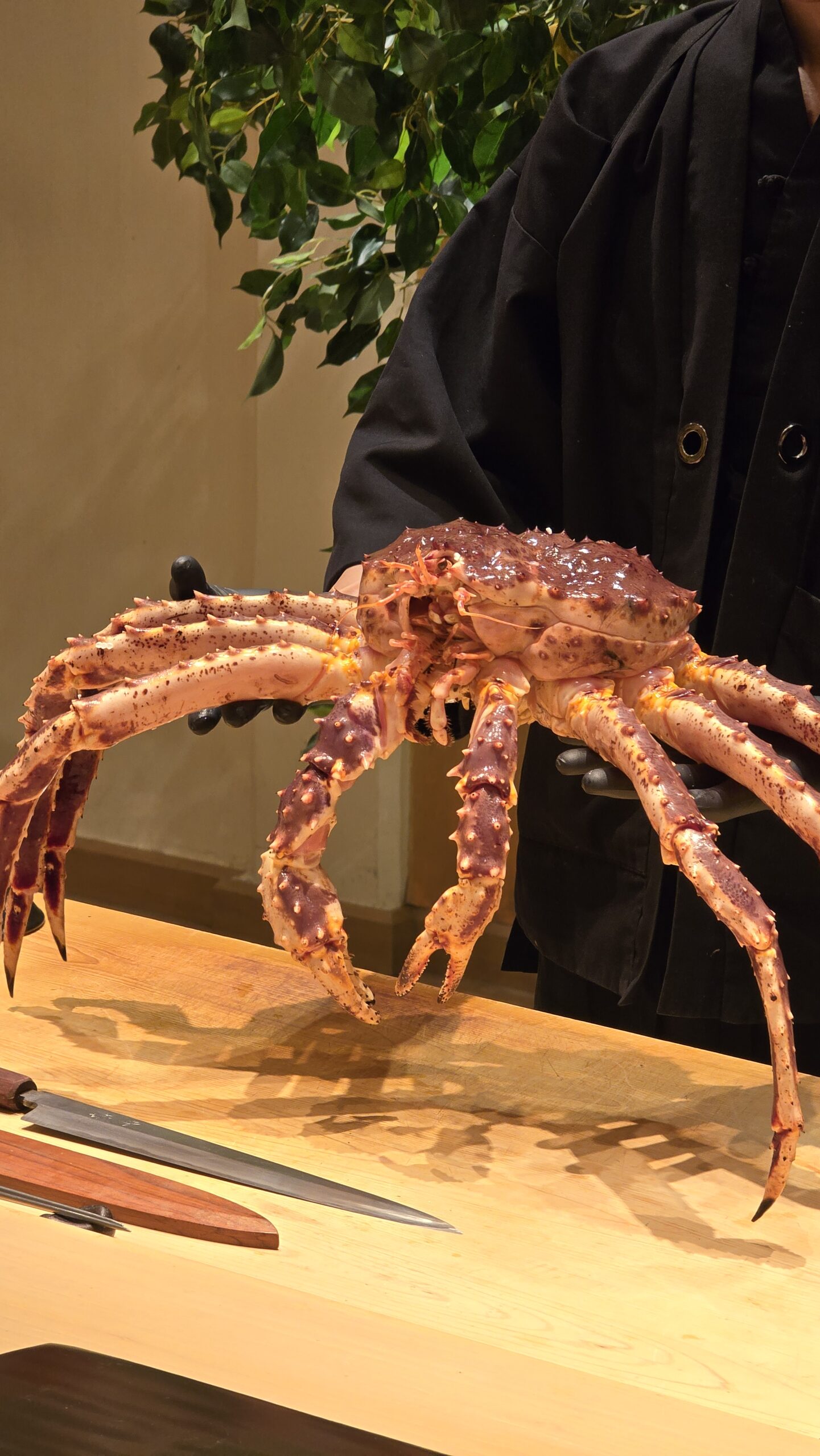
Taraba is not a true crab. It belongs to the hermit crab family, and the giveaway is the leg count: true crabs have ten legs, taraba has eight, with two more reduced to vestigial stubs tucked under the shell.
The main Hokkaido season for taraba runs spring through early summer, with most of the domestic catch landed between April and July, which makes the common assumption that king crab is a winter food only half right.
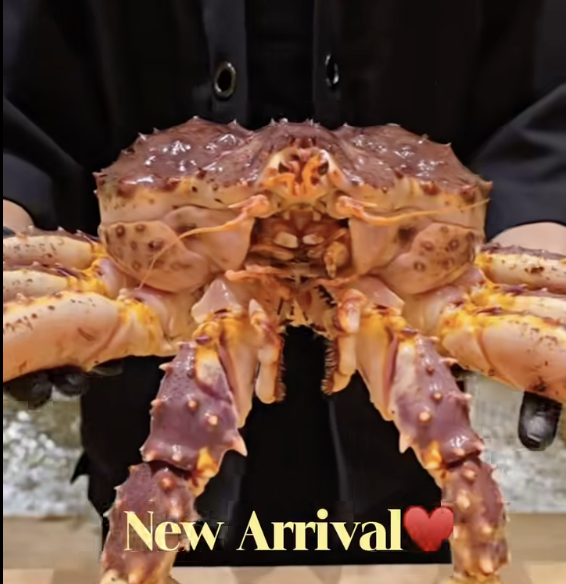
Count the legs. The animal will tell you what it is.
Almost everything a Bangkok diner believes about king crab turns out to be approximately true rather than actually true. It is a crab, except that it is not. It is a winter delicacy, except that the best of it is landed in spring. It comes from Hokkaido, except that most of what Japan eats today does not. None of these corrections make taraba less worth eating. They make it a more interesting thing to be served. Yuzu Omakase takes those three corrections in turn: what tarabagani (タラバガニ) actually is, when it is genuinely at its best, and why the leg on your plate is thicker than any crab leg has a right to be.
What Taraba King Crab Is
Taraba is the Japanese name for the red king crab, the largest and most prized of roughly fifteen king crab species found in Japanese waters. It is caught in deep, cold water, typically below 500 metres, in the seas around Hokkaido.
The size is the first thing anyone notices. Leg span reaches up to a metre, the body alone can weigh several kilograms, and some individuals live for more than thirty years. That last fact reframes the ingredient. A large taraba is not a large animal of the year. It is an old animal, and there is no way to make more of them quickly.
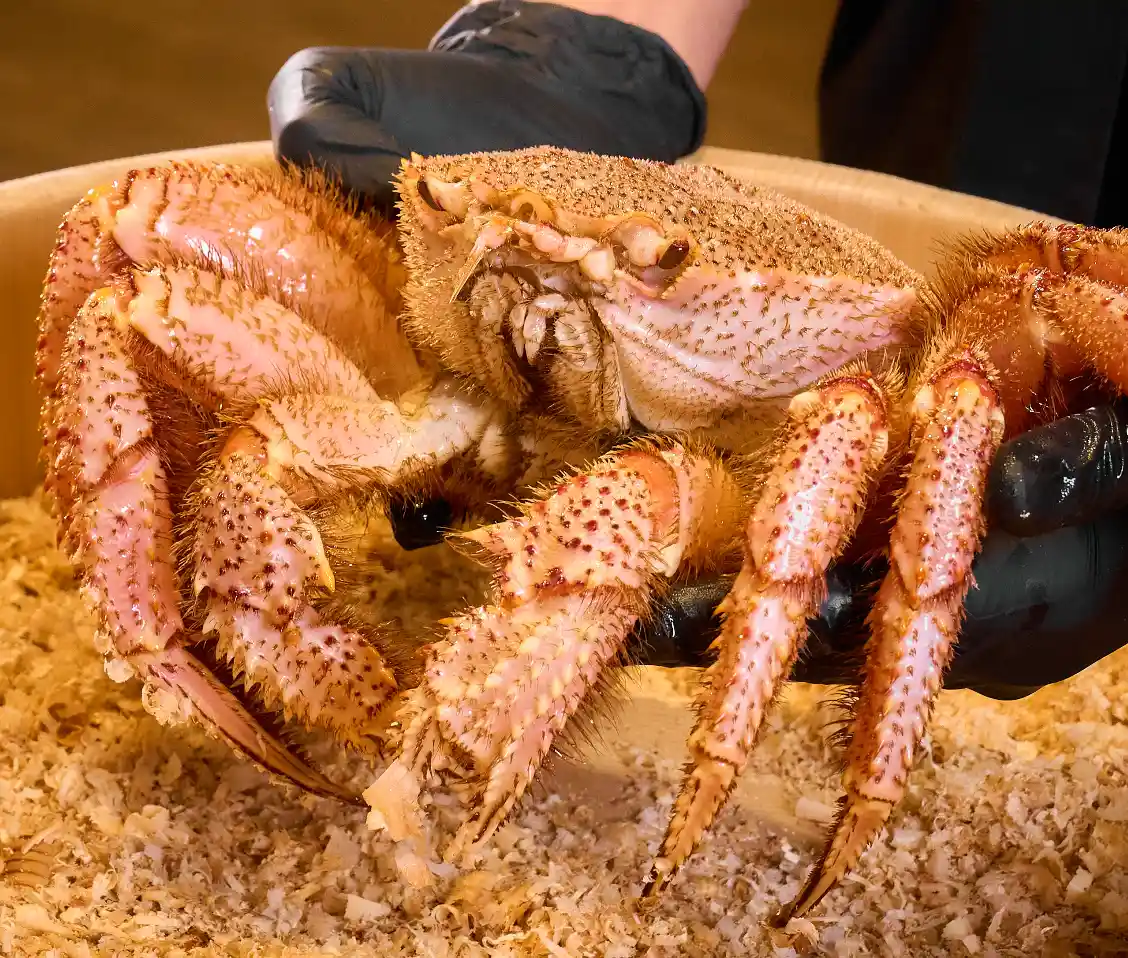
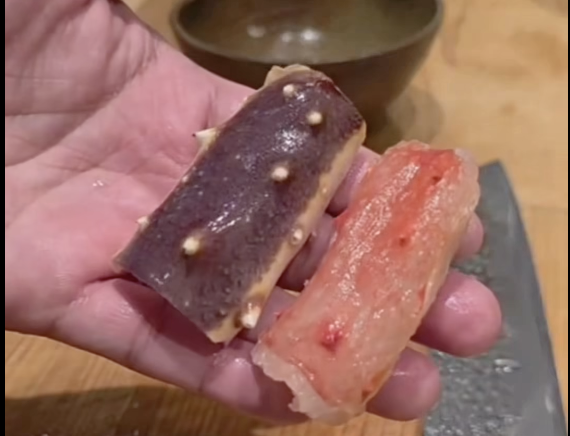
The shell carries fine thorn like protrusions, and the eight thick legs are what the animal is bought for. Larger crabs mean thicker legs and more edible meat, which is why size drives value here more directly than it does for most seafood.
Why It Is Called Taraba
The name is a piece of fishing history rather than biology. Tara is the Japanese word for cod, and early fishermen first encountered this animal as accidental bycatch while they were targeting cod. The crab took its name from the cod grounds where it kept turning up.
It Is Not a Crab
This is the fact that reliably surprises people, and it is not a technicality invented for menus.
Taraba belongs to the hermit crab family. The clearest evidence is the leg count. A true crab has ten legs. Taraba has eight, including the claws, with two additional legs reduced to vestigial stubs and tucked away beneath the shell. Everything else follows from that lineage: the asymmetry, the shell architecture, and the particular way the leg meat sits in the shell in thick, unbroken columns rather than in the finer strands a true crab produces.
It matters at the counter because it explains the eating. The reason taraba leg meat comes out in a single satisfying piece traces back to an animal that is not built like a crab at all.
What Taraba Tastes Like
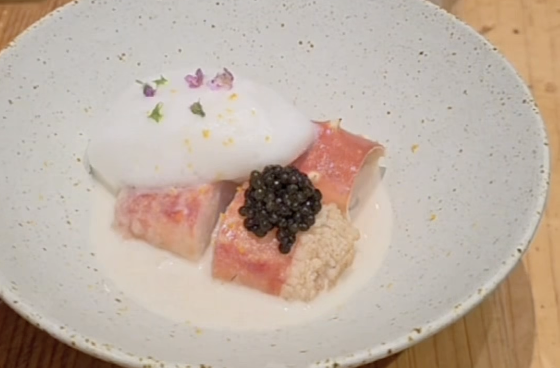
The meat is sweet and clean, with a mild briny undertone underneath the sweetness rather than over it. The texture is firmer and more substantial than snow crab, which is the comparison most diners have available.
Because the flavour is delicate and the texture is the main event, simple preparations bring it out better than heavily seasoned ones do. This is an ingredient that punishes ambition.
Taraba and Zuwaigani Are Not Interchangeable
Both turn up on the same Hokkaido menus, but they eat differently enough that a chef chooses between them deliberately.
1. Taraba is significantly larger, with firmer, meatier legs and thick columns of meat.
2. Zuwaigani, the snow crab, has thinner legs and more delicate meat that is slightly sweeter than taraba.
3. Snow crab is generally less expensive.
Neither is better. They answer different questions. If the point of the course is presence and texture, taraba is the answer. If the point is sweetness and finesse, zuwai is.
When Taraba Is Actually in Season
Here is where the received wisdom goes wrong. King crab is filed as a winter food almost everywhere it is sold, and the main Hokkaido season is spring through early summer.
The biology explains it. The crab spends late autumn and winter in deep water, roughly 100 to 200 metres, in a dormant state. As water temperatures rise in early spring and the drift ice clears from the Hokkaido coast, the crabs migrate toward shallower coastal waters where they can be fished. April and May, just after what is locally called the sea opening, are when the sweetness is said to be at its most concentrated.
The full picture is that Hokkaido has two fishing periods, roughly January to May and September to October, with most of the annual domestic catch landed between April and July. A smaller amount does come in over winter. So king crab in December is not a fiction. It is simply not the peak, and the peak is six months away from where most people assume it is.
**Editor's Note:** If someone tells you an ingredient is a winter speciality, it is worth asking whether they mean that it is caught in winter or that it is eaten in winter. Those are different claims, and for taraba only the second one holds.
How Taraba Is Prepared
Three treatments account for most of what is done with it.
1. Boiled legs, served cold or at room temperature with ponzu or with butter. This is the most common choice and the one that interferes least with the meat.
2. Grilled legs, charred slightly over an open flame, which is the izakaya and festival stall treatment.
3. Taraba nabe, the hot pot, where the crab cooks gently in a dashi broth alongside tofu and vegetables and gives most of its character to the liquid.
None of these involves much seasoning. The instruction is the same in all three forms: heat it as little as it needs and let the meat carry the course.
Taraba in an Omakase Meal
A crab course is a pacing decision before it is a flavour decision. Taraba is filling in a way that fish is not, and a chef placing it has to decide what the diner will still have appetite for afterwards.
Temperature is the second decision. Served cold, taraba reads as a clean interval, and it sits comfortably alongside the raw part of a meal. Served warm, it becomes a centrepiece and the courses on either side of it have to be planned around that.
The third decision is whether to serve it at all in a given month. For an ingredient whose peak sits in spring and early summer, a counter working from what the season offers will not put it forward in the same form all year. Yuzu Omakase works from Toyosu sourcing and an unbroken cold chain, with the selection following the season rather than a fixed list.
Frequently Asked Questions About Taraba King Crab
What is taraba king crab?
A: Taraba is the Japanese name for the red king crab, the largest and most prized of roughly fifteen king crab species in Japanese waters. It is caught in cold water below about 500 metres in the seas around Hokkaido, and its legs can span up to a metre.
Is taraba a real crab?
A: No. Taraba belongs to the hermit crab family. True crabs have ten legs, while taraba has eight including the claws, with two further legs reduced to vestigial stubs hidden beneath the shell.
Why is it called taraba?
A: Tara is the Japanese word for cod. Early fishermen encountered the animal as bycatch while fishing for cod, and it took its name from the cod grounds where it was found.
When is taraba king crab in season?
A: The main Hokkaido season is spring through early summer, with most of the domestic catch landed between April and July. Hokkaido has two fishing periods, roughly January to May and September to October, and April and May after the drift ice clears are when the sweetness is considered most concentrated.
What is the difference between taraba and zuwaigani?
A: Taraba is significantly larger with firmer, meatier legs. Zuwaigani, the snow crab, has thinner legs with more delicate meat that is slightly sweeter, and it is generally less expensive.
What does taraba king crab taste like?
A: Sweet and clean with a mild briny undertone, and firmer and more substantial in texture than snow crab. Because the flavour is delicate, simple preparations suit it better than heavily seasoned ones.
Does Japan's king crab come from Japan?
A: Mostly not any more. Domestic Hokkaido stocks are under pressure, and the majority of taraba consumed in Japan today is imported from Russian and Alaskan sources.
A Closing Thought
There is a particular pleasure in an ingredient that refuses to be what everyone says it is. Taraba is not a crab, it is not really a winter food, and increasingly it is not Japanese. What survives all three corrections is the thing itself: an animal that spent thirty years in cold, dark water growing legs thick enough to be worth the journey, served as plainly as the kitchen can manage.
Knowing the season is the useful part. If you would like to eat it when it is genuinely at its best, that is worth asking at the counter.
Reserve a seat at Yuzu Omakase, 2F, 258/9 to 10 Siam Square Soi 3, Pathumwan, Bangkok.
Website: https://www.yuzuomakase.com/
Tel: 0638988989
RELATE
-
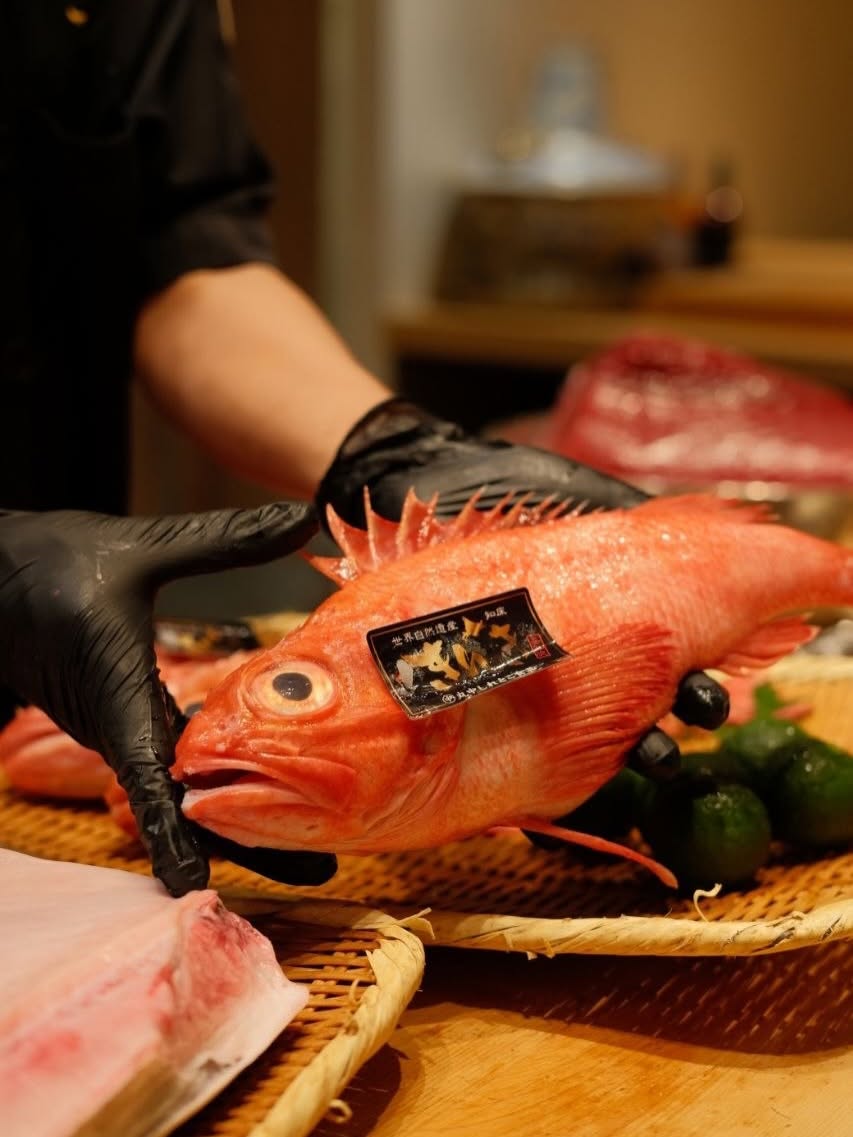
What Is Kinki Fish? Kichiji, the Deep Water
Kinki is the Japanese counter name for Sebastolobus macrochir, a deep water thornyhead from the northwestern Pacific that is classified as a white fish but carries far more fat than a white fish usually does. Kinki, kichiji and menme are three names for one species, used in different regions and different registers, and none of… Continue reading What Is Kinki Fish? Kichiji, the Deep Water
Local Story ● 2026 Aug 30
-
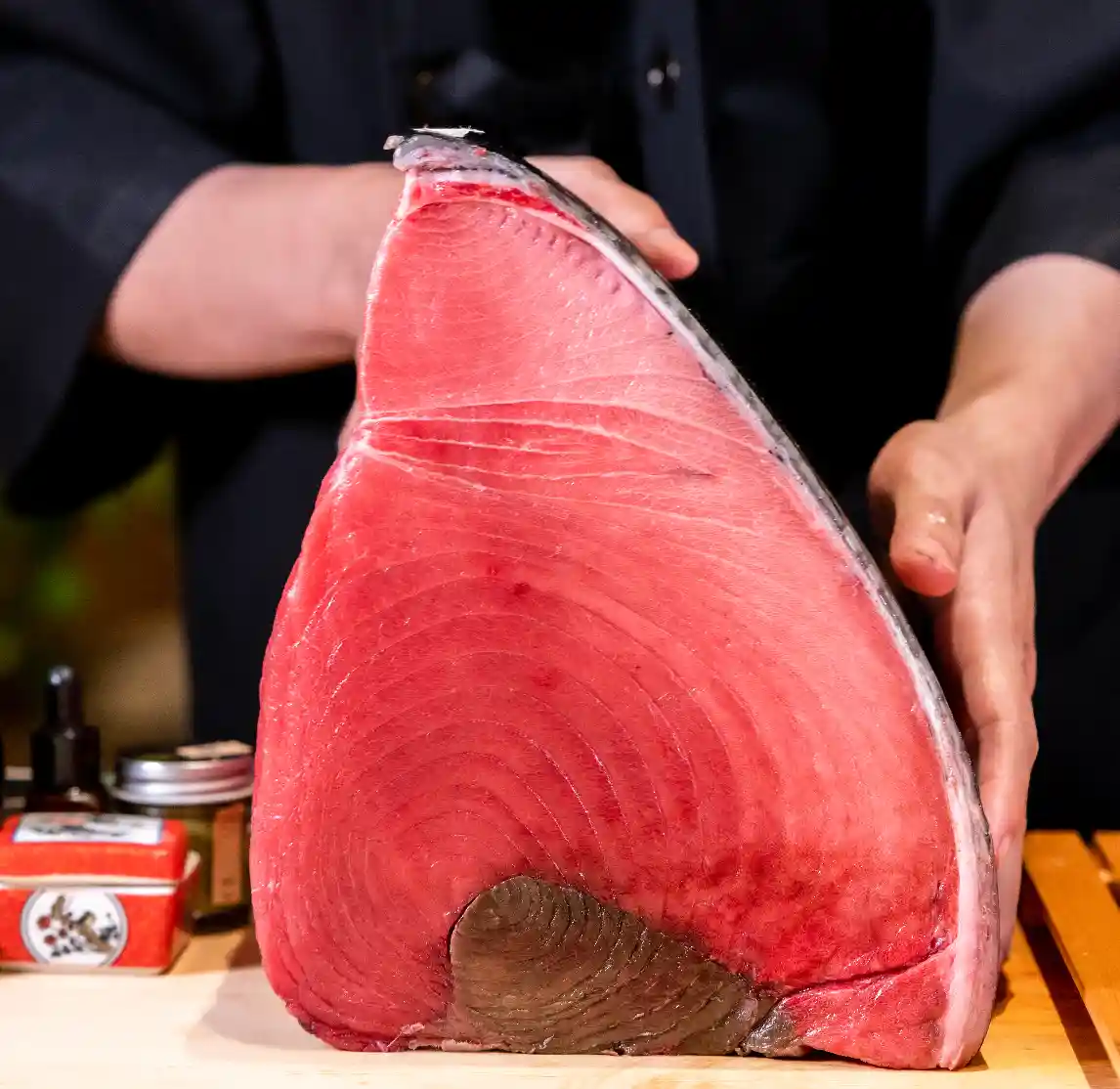
Akami, Chutoro, Otoro: The Three Cuts of Bluefin Tuna
Akami, chutoro, and otoro are the three sushi cuts of bluefin tuna, running from the lean loin along the spine, through the fattier belly and back, to the richest belly section nearest the head. The three cuts of bluefin tuna differ mostly in fat: akami carries barely any, chutoro about 15 to 20 percent, and… Continue reading Akami, Chutoro, Otoro: The Three Cuts of Bluefin Tuna
Local Story ● 2026 Jul 27
-
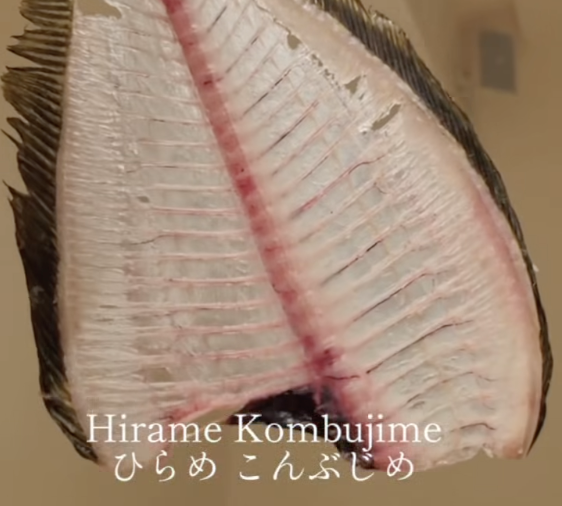
What Is Hirame Kombujime?
Hirame kombujime (昆布締め) is Japanese olive flounder cured between sheets of dried kombu kelp, a technique that firms the flesh and deepens its savoury flavour without any heat. Hirame kombujime tastes cleaner and rounder than raw hirame, with a firm, faintly springy bite, a quiet sweetness, and a long savoury finish carried by glutamate from… Continue reading What Is Hirame Kombujime?
Local Story ● 2026 Jul 27
-
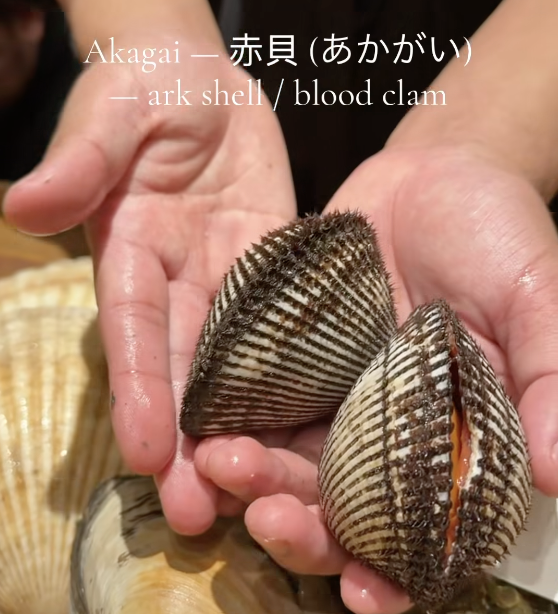
Why Japanese Akagai
Akagai (赤貝, ark shell or red clam) is one of the few clams whose flesh runs deep red, and it has been a fixture of Tokyo sushi counters since the nineteenth century. The color comes from a hemoglobin-like pigment in its blood, the texture is firm and crisp, and the aroma is the strongest argument… Continue reading Why Japanese Akagai
Local Story ● 2026 Jun 30

