




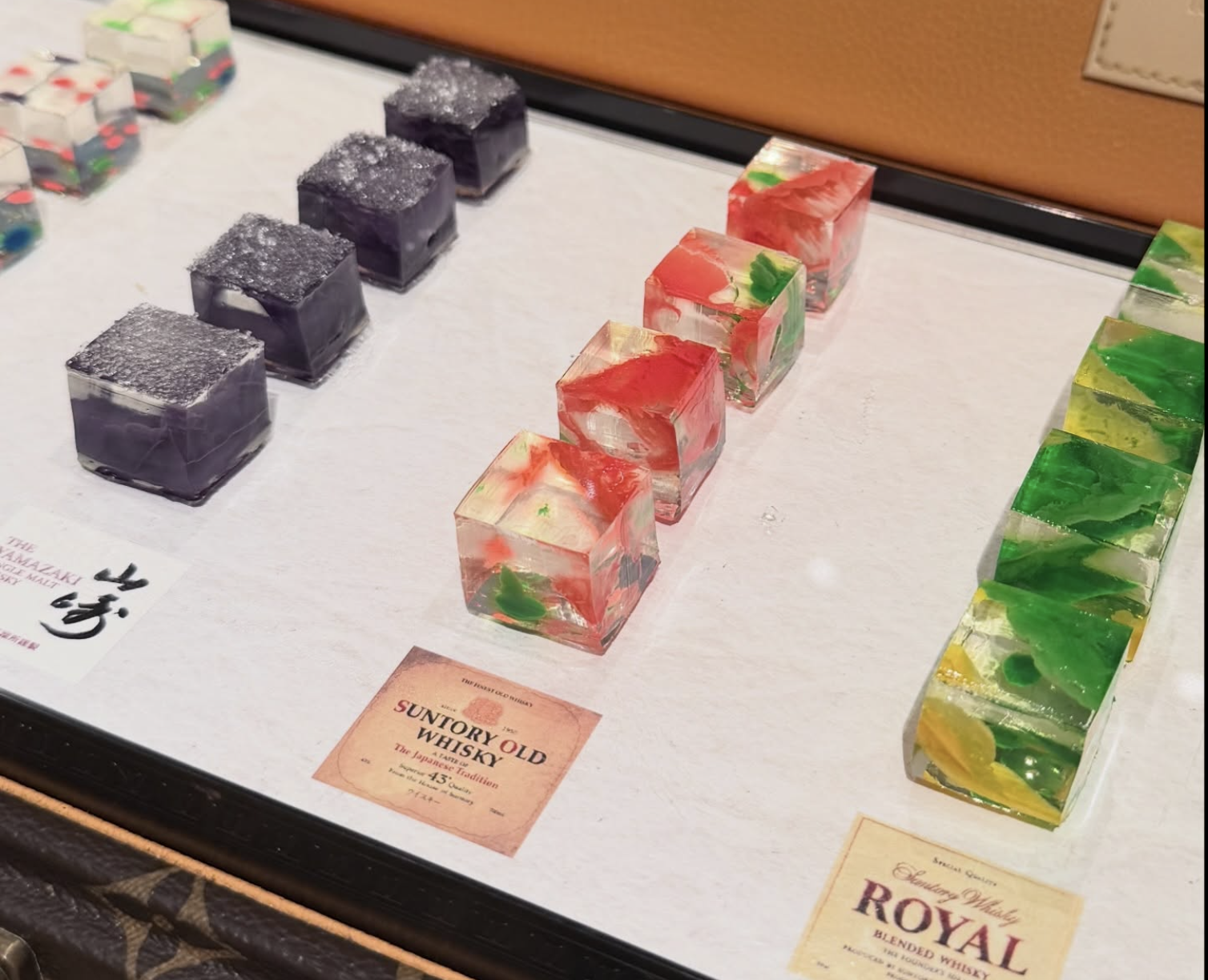
What Is Whisky Jelly?
Whisky jelly is a set dessert in which whisky is the flavouring rather than the drink, served in the same form Japan has used for coffee jelly and fruit jelly for roughly a century. Japan’s jelly dessert tradition is not ancient. It arrived in the Taisho period, from 1912 to 1926, as a domestic answer… Continue reading What Is Whisky Jelly?
Our Creations ● 2026 Aug 30
Whisky jelly is a set dessert in which whisky is the flavouring rather than the drink, served in the same form Japan has used for coffee jelly and fruit jelly for roughly a century.
Japan's jelly dessert tradition is not ancient. It arrived in the Taisho period, from 1912 to 1926, as a domestic answer to European moulded desserts, and Japanese versions are typically set with agar, called kanten, rather than gelatin.
Japanese whisky has a similar history. The country's first commercial whisky distillery opened at Yamazaki in 1923, which places the two traditions behind whisky jelly within about a decade of each other.
A whisky jelly is a contradiction served in a small glass. Whisky is the most deliberate drink in the room, aged for years to reach a particular character, and the point of drinking it is that it moves and warms and evaporates. Setting it means stopping all of that. You take a spirit whose whole appeal is what it does on the way down, and you make it sit still and wait to be eaten with a spoon. It should not work. It works because of two Japanese habits that turn out to be about a hundred years old each. Yuzu Omakase traces the form back to where it came from, what a whisky jelly actually is, and why the last course of a Japanese meal is a stranger place than it looks.
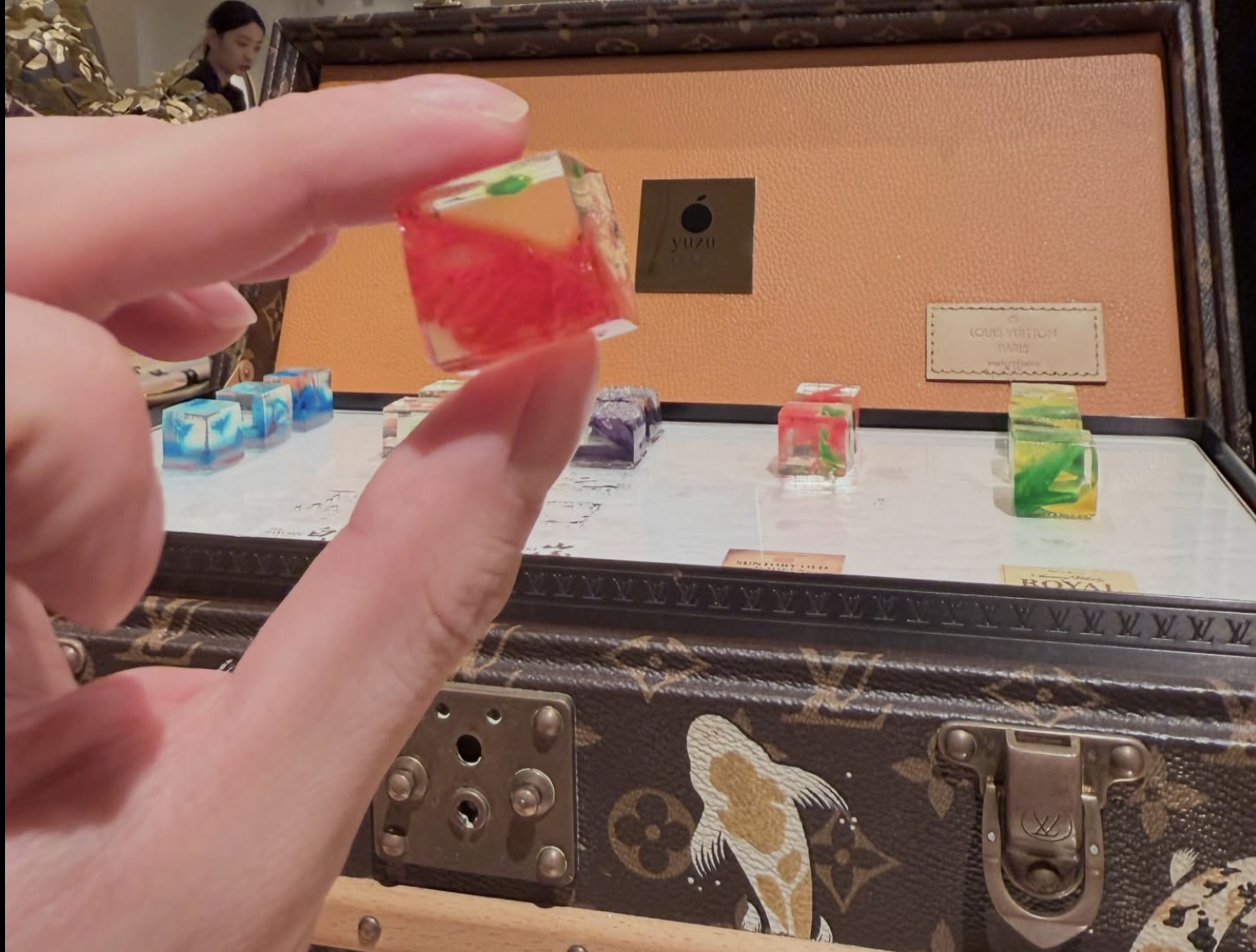
What Whisky Jelly Is
A whisky jelly is a set dessert built on the same principle as coffee jelly, Japan's most familiar jelly dessert. A flavoured liquid is set firm, then cut or spooned and served cold, usually in a small glass or bowl and often with something soft alongside it to offset the firmness.
The important thing to understand at the start is what this is not. Whisky jelly is not a classical Japanese dish with centuries behind it, and any article telling you otherwise is inventing a lineage. It is a modern dessert. What it does have is a real and traceable ancestry, and that ancestry is more interesting than a fake tradition would be.
**Did You Know?** The jelly dessert that Japan is most attached to is not a Japanese invention either. Coffee jelly recipes were appearing in English cookbooks as early as 1817, when the setting agent was calves' foot jelly. Japan adopted the form, changed what it was set with, and kept it long after the countries that invented it had mostly moved on.
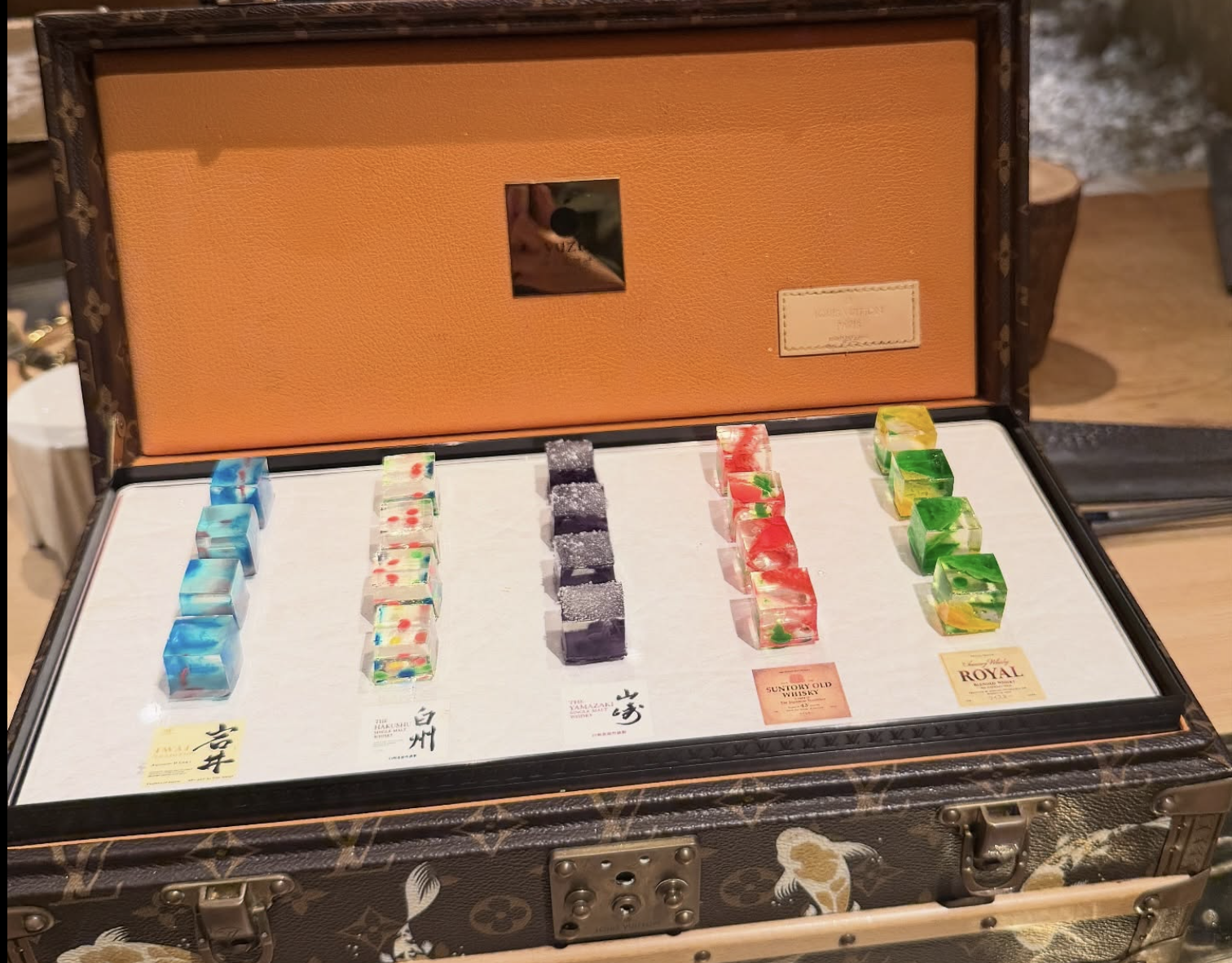
Where the Japanese Jelly Dessert Came From
Japanese coffee jelly, kohi zeri, developed during the Taisho period, between 1912 and 1926, as an imitation of the European moulded desserts that were fashionable at the time. It appealed to modern young men with a taste for Western style, and it spread alongside the growth of Japanese cafe culture.
It never left. Coffee jelly is still sold everywhere in Japan, cut into cubes and served in dessert dishes or dropped into drinks, and it remains popular enough that a major coffee chain built a frappuccino around it in 2016.
The technical change Japan made is the one that matters. Western jelly desserts are typically set with gelatin, an animal product. Japanese versions are usually set with agar, a gelling substance made from algae and known in Japanese as kanten. Agar sets firmer and holds at a higher temperature than gelatin does, and it produces a cleaner break when a spoon goes into it rather than the soft wobble a gelatin set gives.
That difference is why a Japanese jelly dessert tends to feel precise rather than comforting, and it is the single most useful thing to know before eating one.
Where Japanese Whisky Came From
The other half of the dessert has a founding date. The Yamazaki distillery opened in 1923 on the outskirts of Kyoto, Japan's first commercial whisky distillery, built by Shinjiro Torii and owned by the company that became Suntory.
Masataka Taketsuru is the other name in the story. He had gone to Scotland to learn how whisky was made, returned with the method, and served as Yamazaki's first distillery manager. He left in 1933 and built his own distillery at Yoichi, in Hokkaido, in 1934. That became Nikka. The two companies those men founded still dominate Japanese whisky.
There is a detail in the founding worth keeping. Torii chose Kyoto over Hokkaido because Hokkaido, whatever its merits for making whisky, was too far from the markets of central Honshu. Taketsuru went to Hokkaido anyway, because it was the better place to make the thing. The disagreement produced two houses instead of one.
**Did You Know?** Both halves of a whisky jelly are imports that Japan kept. The jelly form came from Europe in the Taisho period and the whisky method came from Scotland in the same decade. Neither is native, both were rebuilt locally, and both are now unmistakably Japanese. That is the actual tradition at work here, and it is a tradition of method rather than of recipe.
What Whisky Jelly Tastes Like
A whisky jelly is not a sweet course in the way most desserts are sweet. Whisky brings wood, smoke in some expressions, dried fruit and a warmth from the alcohol, and setting it concentrates the aromatic side while removing the burn. What reaches you is the smell of the spirit arriving before the taste, then a cold, firm texture that is at odds with everything the aroma promised.
The temperature contrast is the main event. A spirit that is normally warm, or at least room temperature, arriving cold and solid resets the palate in a way a warm dessert cannot.
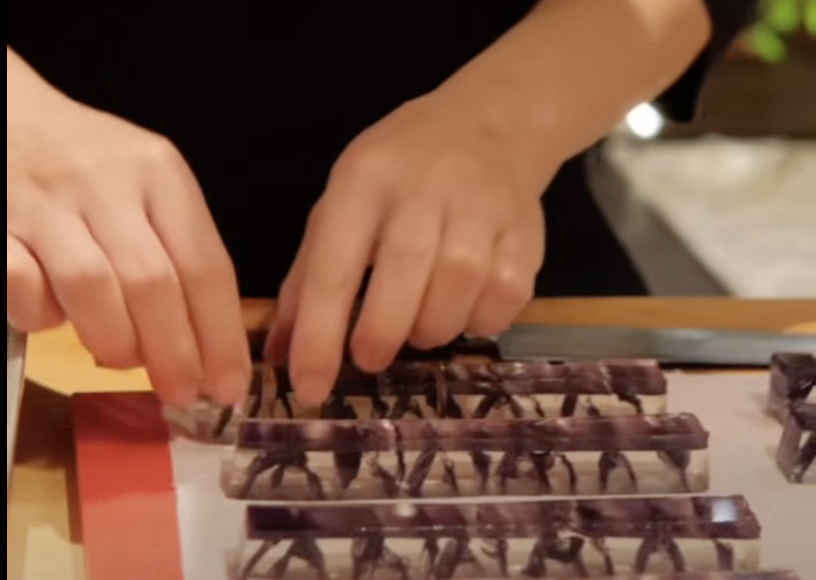
Whisky Jelly in an Omakase Meal
The decision a chef makes here is about proportion. A whisky jelly served too large stops being a closing note and becomes a course, which pulls focus back at exactly the point where the meal should be releasing it. Served small, it is a full stop.
The second decision is how much alcohol survives into the finished dessert, which changes both the flavour and who at the table can be served it.
Yuzu Omakase runs a counter where the seasonal selection drives the menu, and the closing course is built to sit against whatever came before it rather than being fixed in place.
Frequently Asked Questions About Whisky Jelly
What is whisky jelly?
A: Whisky jelly is a set dessert in which whisky is the flavouring rather than a drink. It is built on the same principle as coffee jelly, Japan's most familiar jelly dessert, with the flavoured liquid set firm and served cold.
Is whisky jelly a traditional Japanese dessert?
A: No. It is a modern dessert. What is traditional is the form it uses. Japan's jelly dessert tradition dates to the Taisho period, from 1912 to 1926, when Japanese coffee jelly developed as a version of European moulded desserts.
Is Japanese jelly made with gelatin or agar?
A: Japanese versions are usually set with agar, a gelling substance made from algae and called kanten in Japanese. Western jelly desserts typically use gelatin instead. Agar sets firmer and gives a cleaner break under a spoon.
How old is Japanese whisky?
A: The first commercial Japanese whisky distillery opened at Yamazaki in 1923, founded by Shinjiro Torii. Masataka Taketsuru, who had learned the method in Scotland, was its first distillery manager and later founded Yoichi in Hokkaido in 1934.
Does whisky jelly contain alcohol?
A: That depends entirely on how it is made, since alcohol content varies with the recipe and the preparation. It is a reasonable question to ask before ordering.
What does whisky jelly taste like?
A: The aroma of the spirit arrives first, carrying wood, dried fruit and in some expressions smoke, followed by a cold and firm texture rather than the warmth whisky normally delivers. Setting the spirit concentrates the aromatic side and removes the burn.
Why is jelly served at the end of an omakase meal?
A: Because a meal built on raw fish and small, intense flavours needs a clean stop rather than a rich one. A set dessert is cold, light and introduces no fat at a point where more fat would work against the meal.
A Closing Thought
The most Japanese thing about a whisky jelly is that neither half of it is Japanese. A dessert form borrowed from Europe in the 1910s, set with a seaweed extract instead of an animal one, flavoured with a spirit learned in Scotland in the 1920s and rebuilt in Kyoto and Hokkaido. Put that way it sounds like an accident. It is closer to a method: take the thing from elsewhere, work out what it is actually for, and rebuild it to answer a local question. A hundred years later the question at the end of a meal is still the same one, which is how to stop well.
If you would like to find out how a counter answers it, the last course is the one to pay attention to.
Reserve a seat at Yuzu Omakase, 2F, 258/9 to 10 Siam Square Soi 3, Pathumwan, Bangkok.
Website: https://www.yuzuomakase.com/
Tel: 0638988989
RELATE
-
Why Does Omakase Need to Be Creative?
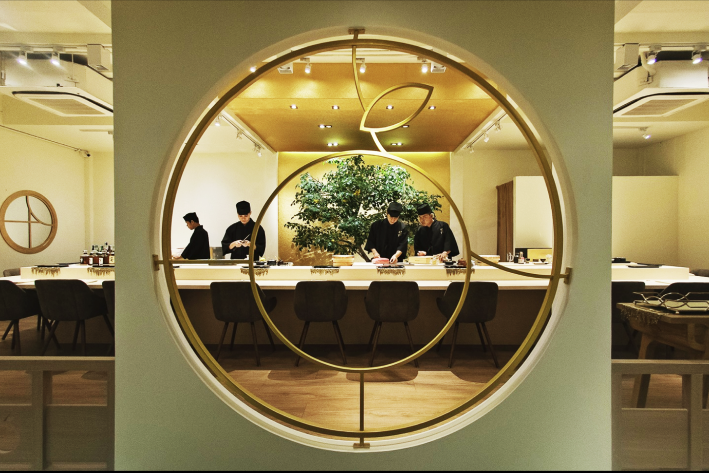
Omakase (お任せ) comes from the Japanese verb makaseru (任せる), to entrust, and means “I’ll leave it up to you,” so an omakase meal is one the diner hands to the chef instead of ordering from a menu. Omakase needs to be creative because the chef is expected to build the meal around the day’s seasonal… Continue reading Why Does Omakase Need to Be Creative?
Our Creations ● 2026 Sep 23
-
We Go Unlimited: 8th Anniversary | Yuzu Omakase Bangkok
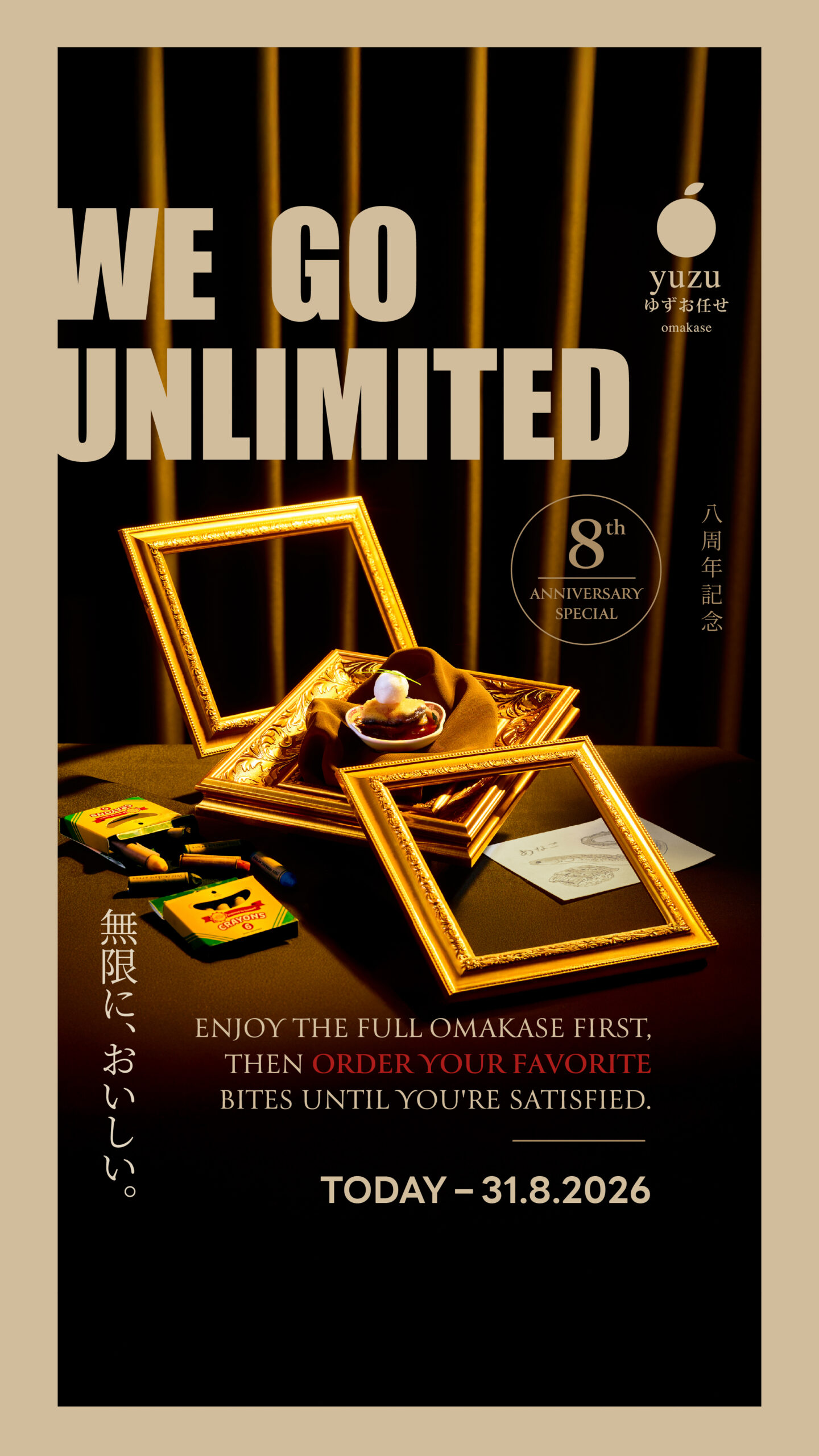
Eight years ago, Yuzu Omakase seated its first guests in Bangkok. To mark the eighth anniversary, the house is making a simple, generous promise called We Go Unlimited. Your full omakase (お任せ) course is served first, exactly as the chef composed it, from the first bite to the last. Then, once the last course has… Continue reading We Go Unlimited: 8th Anniversary | Yuzu Omakase Bangkok
Our Creations ● 2026 Jul 14
-
A New Beverage Pairing, Built Around the Counter
An omakase moves in courses, and so should the drink beside it. Yuzu Omakase has introduced a new beverage pairing at its Siam Square counter in Bangkok, a sequence of pours chosen to follow the meal rather than sit apart from it. The pairing arrives in three forms: a House Pairing that crosses sake, whisky,… Continue reading A New Beverage Pairing, Built Around the Counter
Our Creations ● 2026 May 29
-
The Rise of Private Dining Omakase: Why Intimate Settings Matter
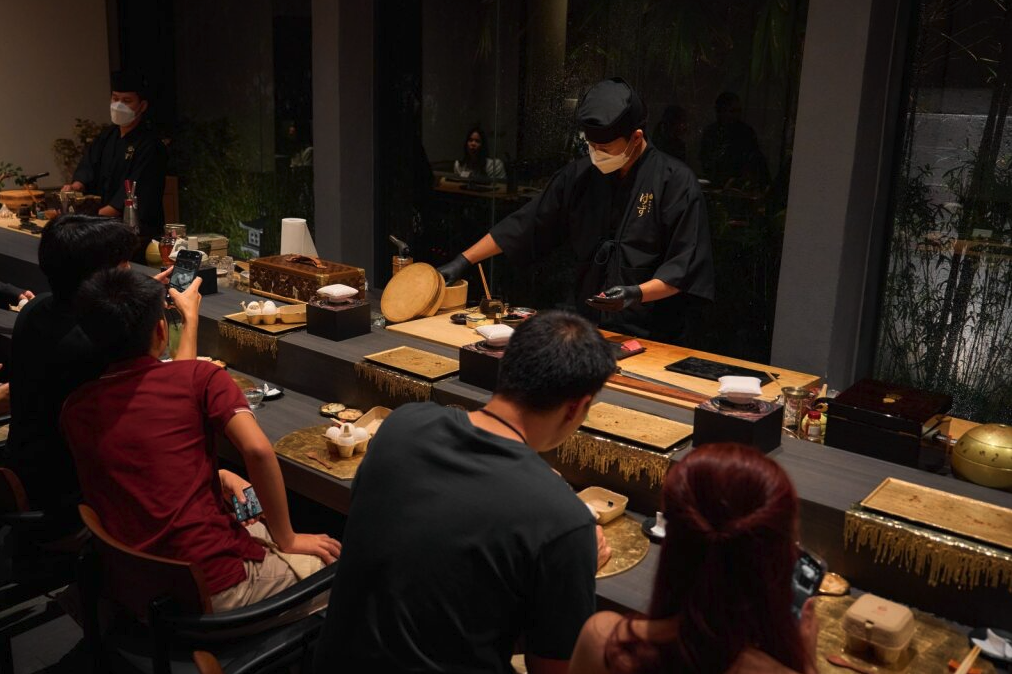
Private omakase is not an upgrade to the standard experience. It is the return to what omakase was always designed to be: one chef, one table, complete trust. The private dining room does not add something to the experience. It removes the one thing that was never supposed to be part of it in the… Continue reading The Rise of Private Dining Omakase: Why Intimate Settings Matter
Our Creations ● 2026 Mar 27

