



Why Japanese Akagai
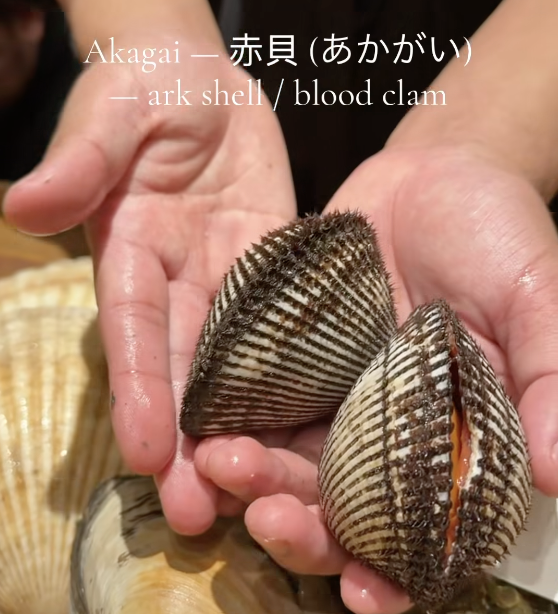
Akagai (赤貝, ark shell or red clam) is one of the few clams whose flesh runs deep red, and it has been a fixture of Tokyo sushi counters since the nineteenth century. The color comes from a hemoglobin-like pigment in its blood, the texture is firm and crisp, and the aroma is the strongest argument… Continue reading Why Japanese Akagai
Local Story ● 2026 Jun 30
Akagai (赤貝, ark shell or red clam) is one of the few clams whose flesh runs deep red, and it has been a fixture of Tokyo sushi counters since the nineteenth century. The color comes from a hemoglobin-like pigment in its blood, the texture is firm and crisp, and the aroma is the strongest argument for it. Japanese domestic akagai is prized above imported clams for one reason: the scent and the bite hold up where the cheaper version does not.
WHAT AKAGAI ACTUALLY IS
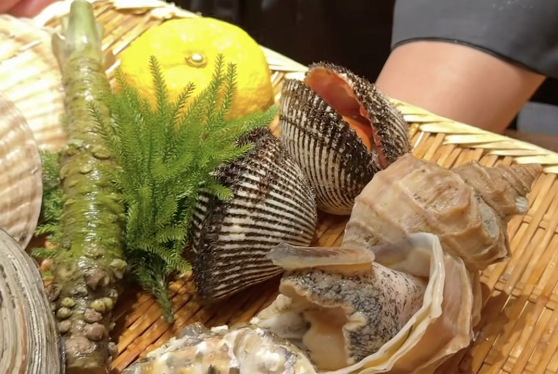
Akagai is the Japanese name for Anadara broughtonii, a member of the ark clam family that lives buried in shallow, muddy coastal bays. An adult shell reaches roughly twelve centimeters. What sets it apart from almost every other clam on the counter is the color of the meat. Most bivalves carry pale flesh. Akagai is red.
The reason is biology. Ark clams are among the rare mollusks that carry a hemoglobin-like pigment in their blood, the same family of iron-based compound that makes human blood red. It allows the clam to draw oxygen from the low-oxygen mud where it lives, and it stains the flesh a clear, deep red that needs no help from any dye. The English name bloody clam comes directly from this.
There are two parts worth knowing. The main body, or tongue, is the piece most diners picture: firm, sweet, with a clean snap when you bite. The second is the himo (紐, the mantle frill that lines the shell). The himo carries a stronger aroma and a chewier, more mineral character, and many regulars prefer it to the body itself.
WHY JAPANESE AKAGAI
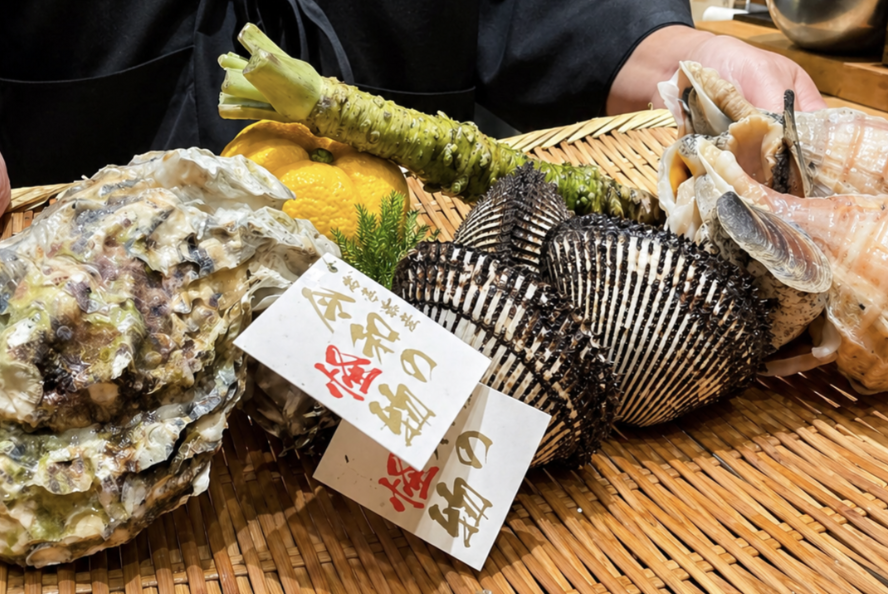
Akagai is harvested in China, Korea, and Japan, and roughly eighty percent of what Japan consumes is imported from Korea and China. The imported clam is not the same product. Serious sushi counters insist on domestic Japanese akagai because the aroma and the texture are on a different level, and aroma is the entire point of this clam.
Akagai once filled Edo Bay itself, the water that gave Edomae (江戸前, the Tokyo style of sushi) its name, but those grounds thinned generations ago, and today the clam is scarce and costly wherever it comes from. The domestic grounds carry the reputation. Yuriage in Miyagi is the name most often spoken with akagai, alongside Mikawa Bay in Aichi and the Seto Inland Sea. Clams from these waters are graded on size and on the thickness of the meat, and the larger, thicker specimens command the highest prices as supply tightens. The distinction is not snobbery. A domestic akagai keeps its scent and its crispness from the cutting board to the plate; a lesser clam goes flat and soft, and on a counter where the clam is served raw, there is nowhere to hide that.
SEASON AND HOW IT IS SERVED
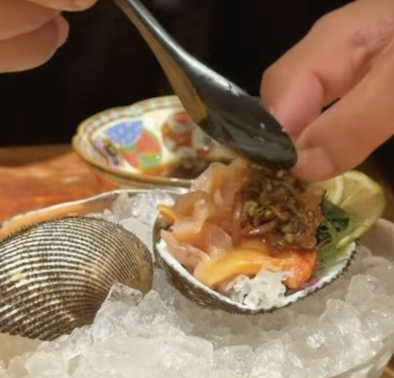
Akagai is available across much of the year, but it is at its best in the cold months, from late autumn through early spring, with the peak in the weeks before spawning when the meat is at its fattest and sweetest. Outside that window it is still good; at its peak it is a different clam.
The preparation is pure Edomae. The chef opens the live clam, separates the himo, and washes the meat in vinegared water. The body is then scored with fine, shallow knife cuts across the surface. The scoring does two things: it lets the meat fold cleanly onto the rice, and it opens the surface so the aroma lifts the moment the piece reaches you. Just before forming the nigiri, the chef slaps the meat hard against the cutting board. The shock makes the flesh contract and curl, tightening the texture into that signature crunch and showing, in plain sight, that the clam was alive until the last moment. It is served most often as nigiri, sometimes as sashimi, and the himo turns up rolled with cucumber into himokyu-maki (a slim ark-shell-and-cucumber roll).
AT YUZU OMAKASE
What can be said is the standard that governs the counter. Yuzu sources through Toyosu (豊洲, the Tokyo market that supplies serious sushi counters), runs a cold chain that does not break, and is staffed by Tokyo-trained chefs who work in the Edomae tradition. A clam like akagai is served only when it arrives in the condition the counter requires, and not on a fixed schedule. If it appears on your course, it is because the clam was right that week.
QUESTIONS GUESTS ASK
Is akagai the same as the small cockle I know from Thai food?
No. Akagai (Anadara broughtonii) is a larger Japanese ark clam, reaching around twelve centimeters, while the small Southeast Asian cockle is a different, smaller species in the same broad family. They share a lineage but differ in size, texture, and flavor.
Why is the flesh red when other clams are pale?
Ark clams carry a hemoglobin-like pigment in their blood to survive in low-oxygen mud. That iron-based compound stains the meat red, which is why the clam is sometimes called the bloody clam.
Why does the chef slap it on the board?
The slap makes the flesh contract and curl, tightening the crunch and releasing aroma. It also shows the clam was alive moments before serving. It is a working step, not a performance.
FINAL THOUGHT
Akagai is judged on aroma and bite, and both fade fast in a clam that traveled too far or sat too long. That is why the domestic Japanese clam, handled the Edomae way, is worth the difference. Taste it once at its peak and you understand what the cheaper version was missing.
RELATE
-
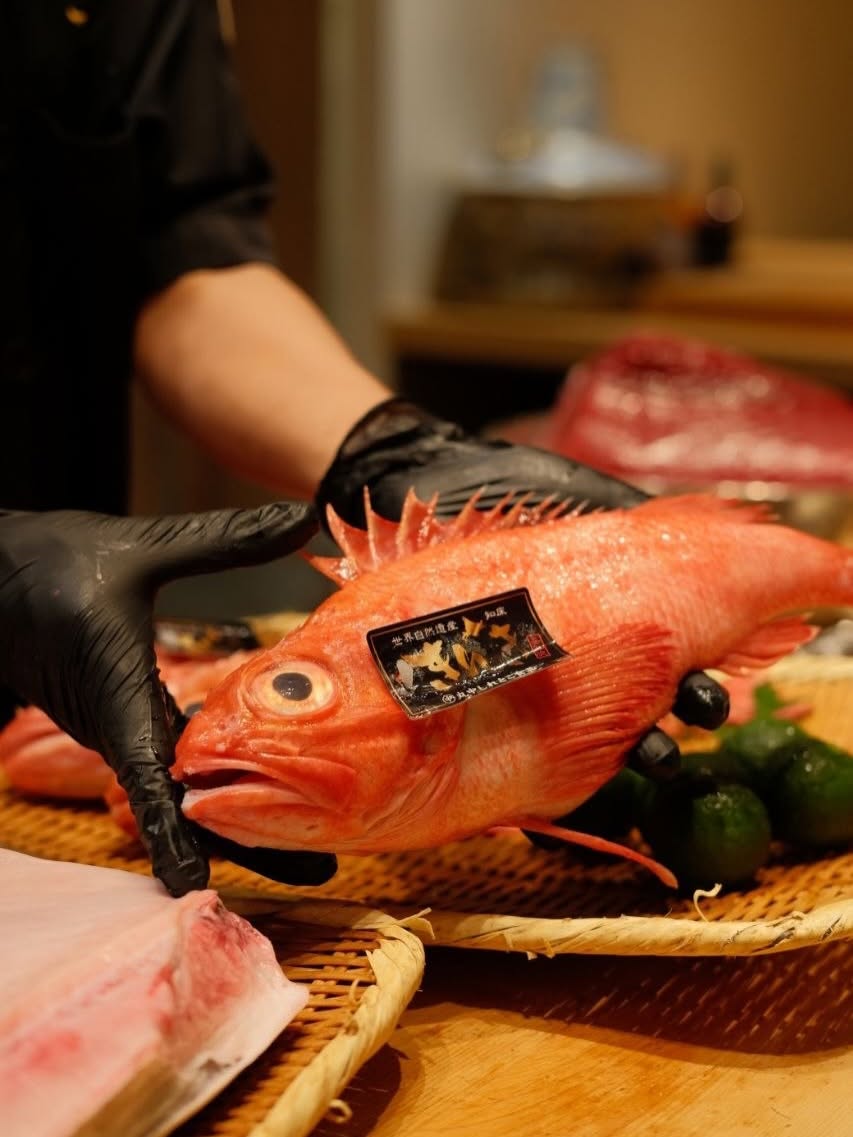
What Is Kinki Fish? Kichiji, the Deep Water
Kinki is the Japanese counter name for Sebastolobus macrochir, a deep water thornyhead from the northwestern Pacific that is classified as a white fish but carries far more fat than a white fish usually does. Kinki, kichiji and menme are three names for one species, used in different regions and different registers, and none of… Continue reading What Is Kinki Fish? Kichiji, the Deep Water
Local Story ● 2026 Aug 30
-
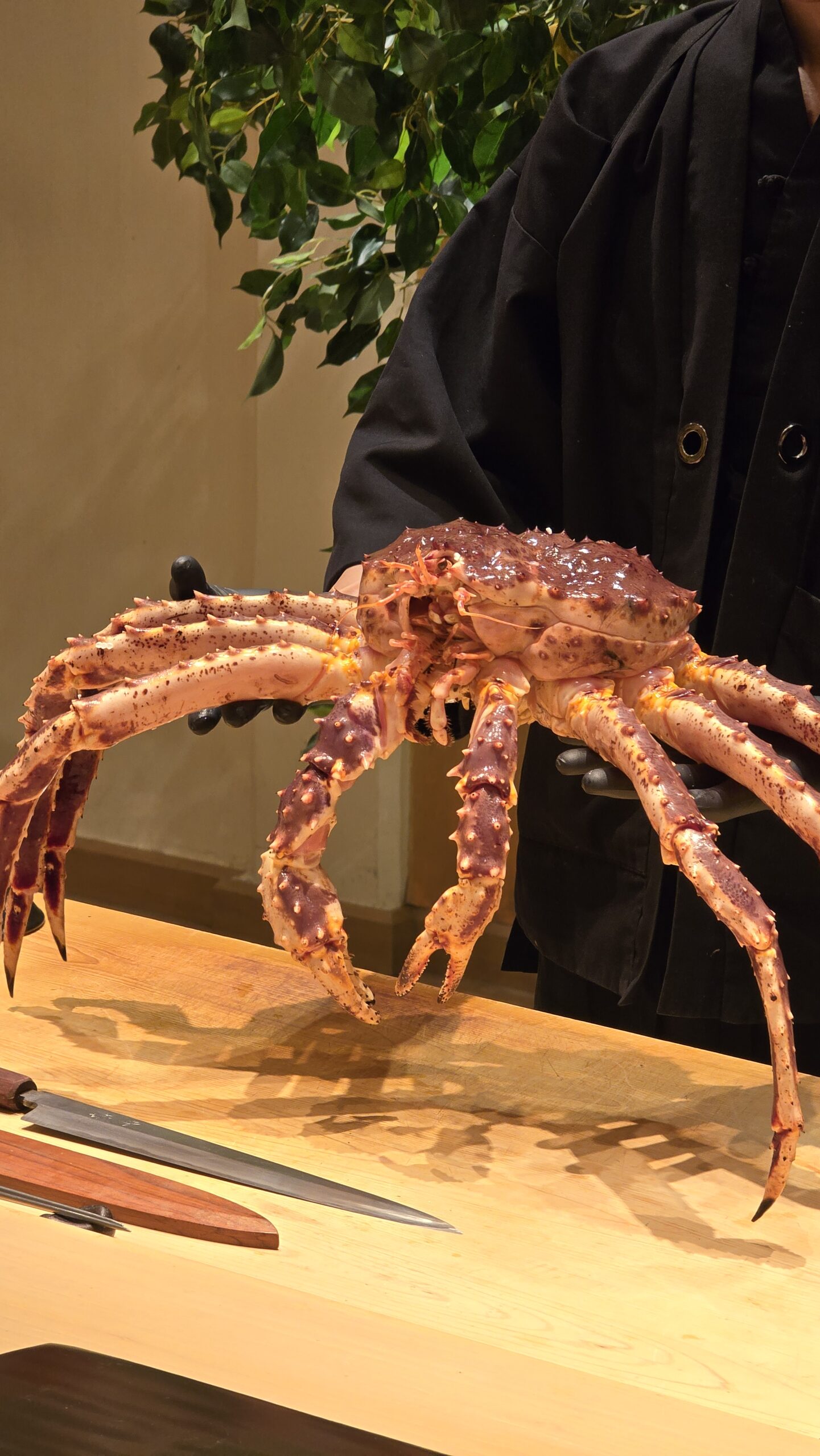
What Is Taraba King Crab? The Hokkaido Giant That Is Not Actually a Crab
Taraba king crab, tarabagani in Japanese, is the red king crab, the largest and most prized of the king crab species found in Japanese waters. Taraba is not a true crab. It belongs to the hermit crab family, and the giveaway is the leg count: true crabs have ten legs, taraba has eight, with two… Continue reading What Is Taraba King Crab? The Hokkaido Giant That Is Not Actually a Crab
Local Story ● 2026 Aug 30
-
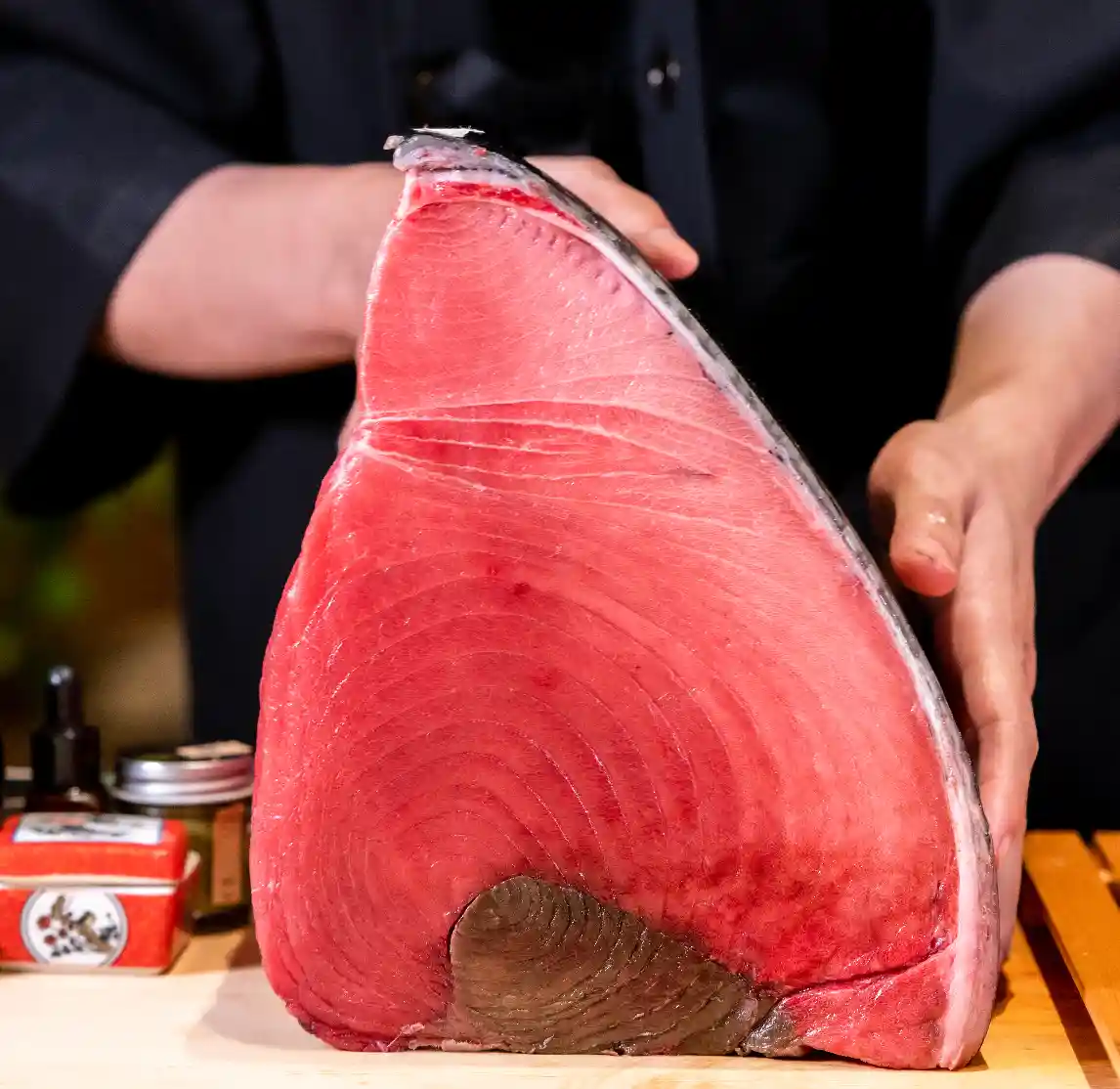
Akami, Chutoro, Otoro: The Three Cuts of Bluefin Tuna
Akami, chutoro, and otoro are the three sushi cuts of bluefin tuna, running from the lean loin along the spine, through the fattier belly and back, to the richest belly section nearest the head. The three cuts of bluefin tuna differ mostly in fat: akami carries barely any, chutoro about 15 to 20 percent, and… Continue reading Akami, Chutoro, Otoro: The Three Cuts of Bluefin Tuna
Local Story ● 2026 Jul 27
-
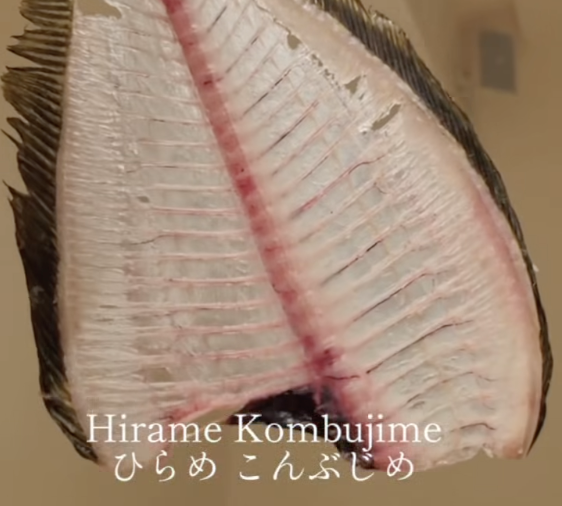
What Is Hirame Kombujime?
Hirame kombujime (昆布締め) is Japanese olive flounder cured between sheets of dried kombu kelp, a technique that firms the flesh and deepens its savoury flavour without any heat. Hirame kombujime tastes cleaner and rounder than raw hirame, with a firm, faintly springy bite, a quiet sweetness, and a long savoury finish carried by glutamate from… Continue reading What Is Hirame Kombujime?
Local Story ● 2026 Jul 27

