




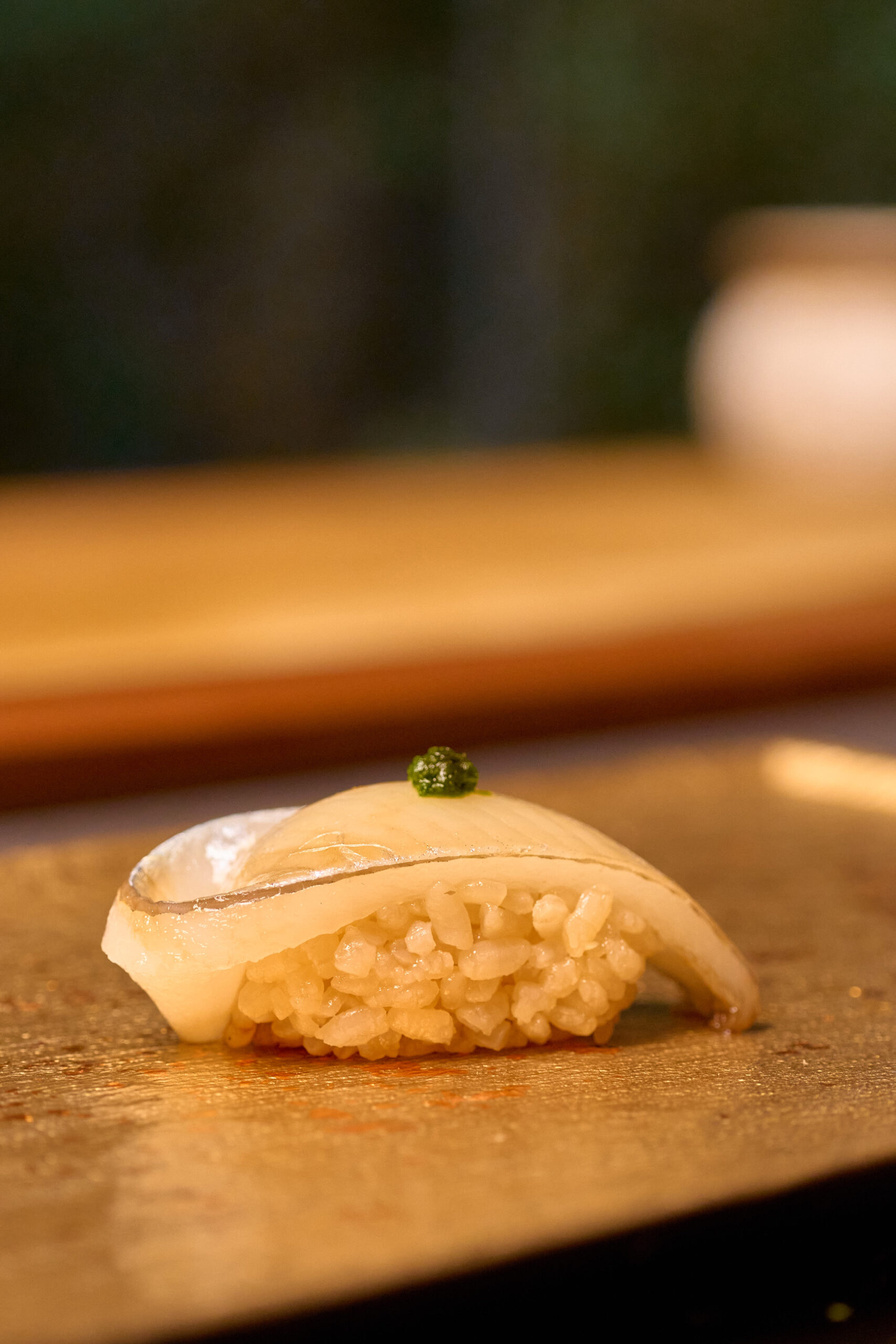
Why Is Wasabi Always Served with Sushi?
Wasabi accompanies sushi for three essential reasons: it kills harmful bacteria in raw fish, enhances umami flavor, and cleanses the palate between bites. This pairing dates back to the Edo period in Japan when refrigeration did not exist. Quick Answer Card The Science Behind Wasabi and Raw Fish Wasabi contains allyl isothiocyanate, a natural compound… Continue reading Why Is Wasabi Always Served with Sushi?
Local Story ● 2026 Jan 28
Wasabi accompanies sushi for three essential reasons: it kills harmful bacteria in raw fish, enhances umami flavor, and cleanses the palate between bites. This pairing dates back to the Edo period in Japan when refrigeration did not exist.
Quick Answer Card
- Primary purpose: Antibacterial protection against parasites in raw fish
- Flavor function: Enhances umami and cuts through fish oil
- Palate cleanser: Refreshes taste buds between different fish
- Historical origin: Edo period (1603–1868), Tokyo bay fish markets
- Traditional placement: Applied by the chef between fish and rice
The Science Behind Wasabi and Raw Fish
Wasabi contains allyl isothiocyanate, a natural compound with powerful antimicrobial properties. This chemical kills bacteria and parasites commonly found in raw seafood, including Anisakis larvae and Vibrio bacteria.
Before modern refrigeration existed, Edo-period sushi chefs discovered that wasabi kept their fish safer for consumption. The compound breaks down bacterial cell walls within minutes of contact, creating a protective layer between raw fish and the human digestive system.
Research published in the International Journal of Food Microbiology confirms wasabi's effectiveness against foodborne pathogens. The antibacterial effect activates immediately when wasabi contacts moisture on the fish surface.
How Wasabi Enhances Sushi Flavor
Beyond safety, wasabi serves a precise culinary function. The sharp heat stimulates nasal receptors rather than tongue receptors, creating a sensation that clears the palate without lingering.
Flavor Enhancement Table
| Function | How It Works | Result |
|---|---|---|
| Umami boost | Amplifies glutamate perception | Deeper fish flavor |
| Oil cutting | Breaks down fatty acids | Cleaner mouthfeel |
| Palate reset | Stimulates trigeminal nerve | Fresh taste between pieces |
| Aroma release | Opens nasal passages | Enhanced fish fragrance |
This explains why omakase chefs apply wasabi directly between the neta (fish topping) and shari (sushi rice). The placement allows heat to dissipate upward through the fish as you eat.
Real Wasabi vs. Western Wasabi: What Most People Eat
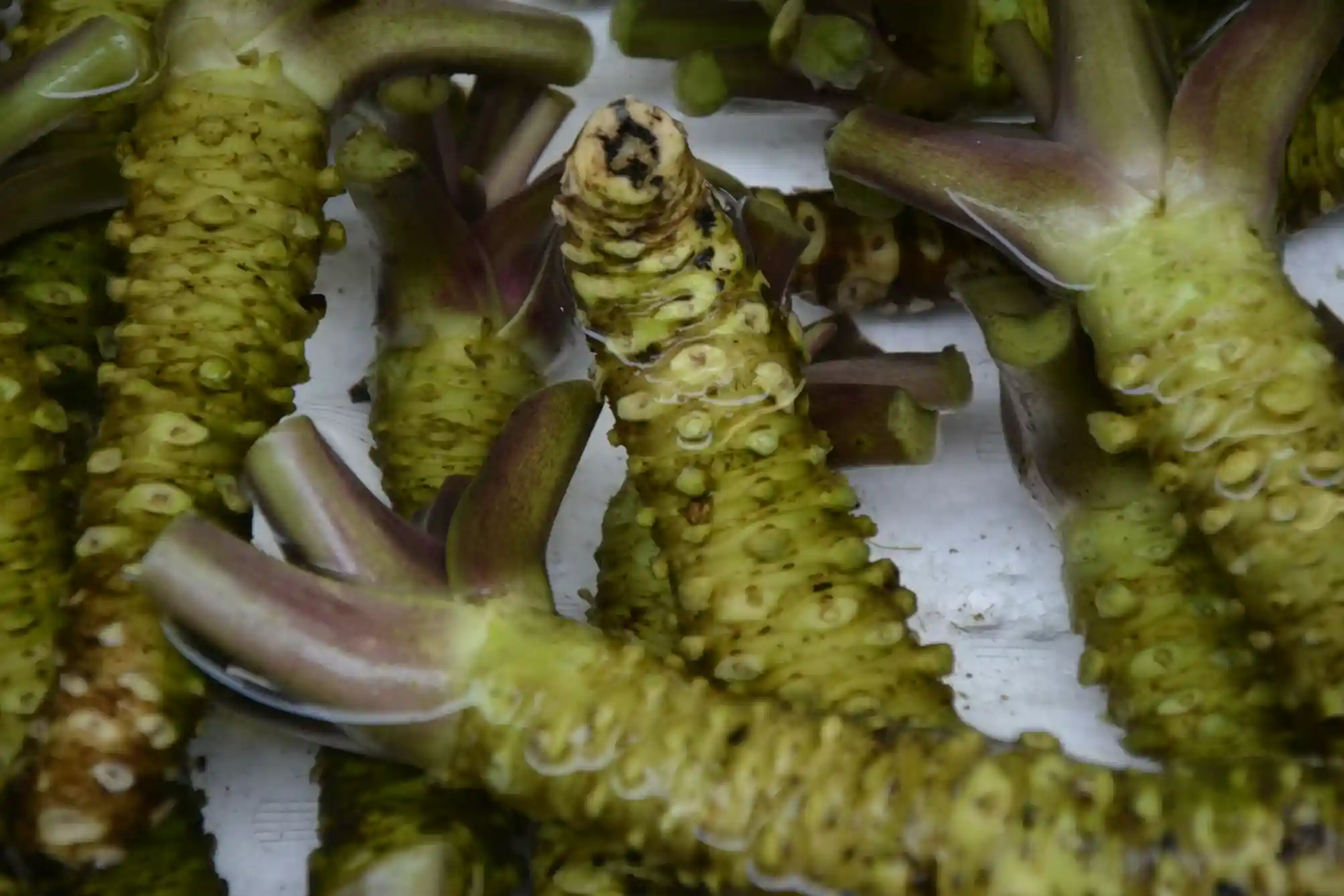
Most wasabi served outside Japan is actually horseradish mixed with mustard and green food coloring. Authentic wasabi comes from the rhizome of Wasabia japonica, a plant that grows only in cold, pristine mountain streams.
Comparison: Real Wasabi vs. Imitation Wasabi
| Characteristic | Real Wasabi | Imitation Wasabi |
|---|---|---|
| Main ingredient | Wasabia japonica rhizome | Horseradish, mustard |
| Flavor profile | Subtle, sweet, complex | Sharp, one-dimensional |
| Heat duration | Fades in 15 seconds | Lingers for minutes |
| Price per kilogram | $160–$250 USD | $2–$5 USD |
| Antibacterial strength | High | Moderate |
| Color | Pale green, natural | Bright green, artificial |
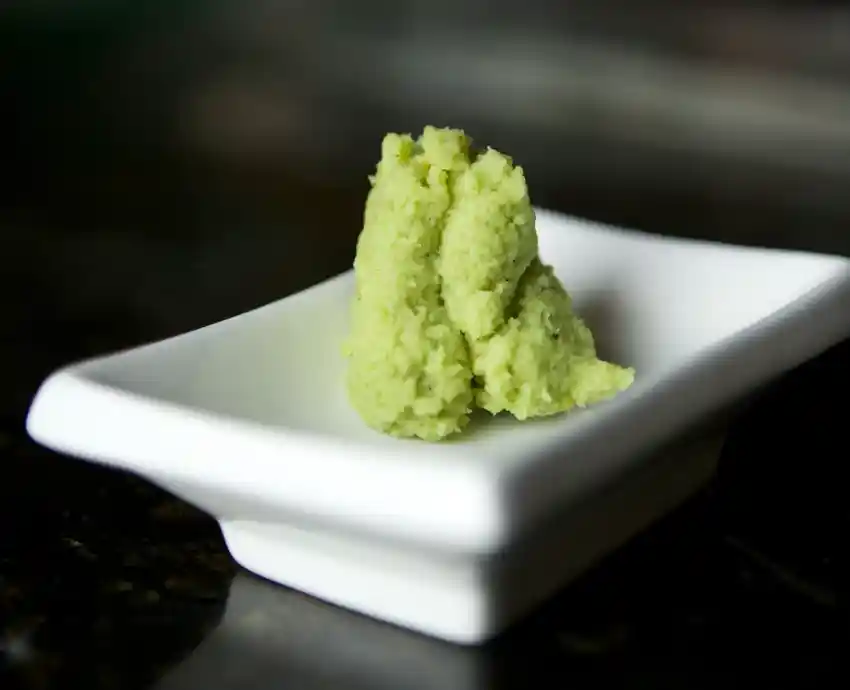
Authentic Japanese restaurants and omakase establishments typically serve freshly grated hon-wasabi, which must be used within 15 minutes before oxidation dulls its flavor.
Traditional Wasabi Etiquette in Japanese Dining
In proper sushi etiquette, guests should not mix wasabi into soy sauce. This practice, common in Western countries, dilutes the wasabi's effect and insults the chef's careful portioning.
Proper wasabi etiquette includes:
- Trust the chef's wasabi application on nigiri sushi
- Request more wasabi politely if needed
- Apply wasabi directly to sashimi, not into soy sauce
- Never create wasabi-soy sauce soup in your dish
- Acknowledge that some fish require no wasabi at all
Experienced itamae (sushi chefs) adjust wasabi quantity based on each fish's fat content, origin, and freshness. Fatty cuts like otoro receive less wasabi, while leaner fish like hirame receive more.
Frequently Asked Questions
Why do sushi chefs put wasabi between fish and rice? The placement allows wasabi to activate against the moist fish surface while the heat rises through the neta as you eat, maximizing both antibacterial effect and flavor enhancement.
Can you eat sushi without wasabi? Yes. Many guests request "sabi-nuki" (without wasabi) for children, those sensitive to spice, or when eating certain delicate fish where wasabi would overpower the flavor.
Does wasabi kill all bacteria in raw fish? Wasabi reduces bacterial load significantly but does not sterilize fish completely. Proper sourcing, temperature control, and handling remain essential for sushi safety.
Why does real wasabi taste different from the green paste? Authentic wasabi contains different volatile compounds than horseradish. Real wasabi offers sweetness and herbal complexity, while imitation wasabi delivers only sharp heat.
How can you tell if a restaurant uses real wasabi? Real wasabi appears freshly grated with visible fiber texture, pale green color, and a subtle fragrance. It also costs significantly more, so premium omakase restaurants are more likely to serve it.
Is wasabi healthy? Wasabi contains antioxidants, anti-inflammatory compounds, and may support cardiovascular health. However, typical consumption amounts are too small for significant health benefits.
Key Takeaways
- Wasabi protects against bacteria in raw fish through natural antimicrobial compounds
- The heat enhances umami and cleanses the palate between different fish
- Authentic wasabi differs dramatically from common horseradish substitutes
- Proper etiquette respects the chef's wasabi placement decisions
- Premium omakase dining features freshly grated hon-wasabi for maximum effect
Experience Authentic Wasabi Pairing at Yuzu Omakase Bangkok
At Yuzu Omakase in Siam, Bangkok, every detail of the wasabi-sushi relationship receives expert attention. The restaurant's itamae sources premium ingredients and applies traditional Edomae techniques to each piece of nigiri.
Guests experience the precise balance between fresh fish and properly prepared wasabi that defines exceptional omakase dining. The chef's careful calibration of wasabi quantity for each course demonstrates the craftsmanship that elevates sushi from food to art.
Location: Siam Square area, Bangkok Dining style: Authentic Japanese omakase with seasonal courses Reservation: Recommended for the full chef's counter experience
RELATE
-
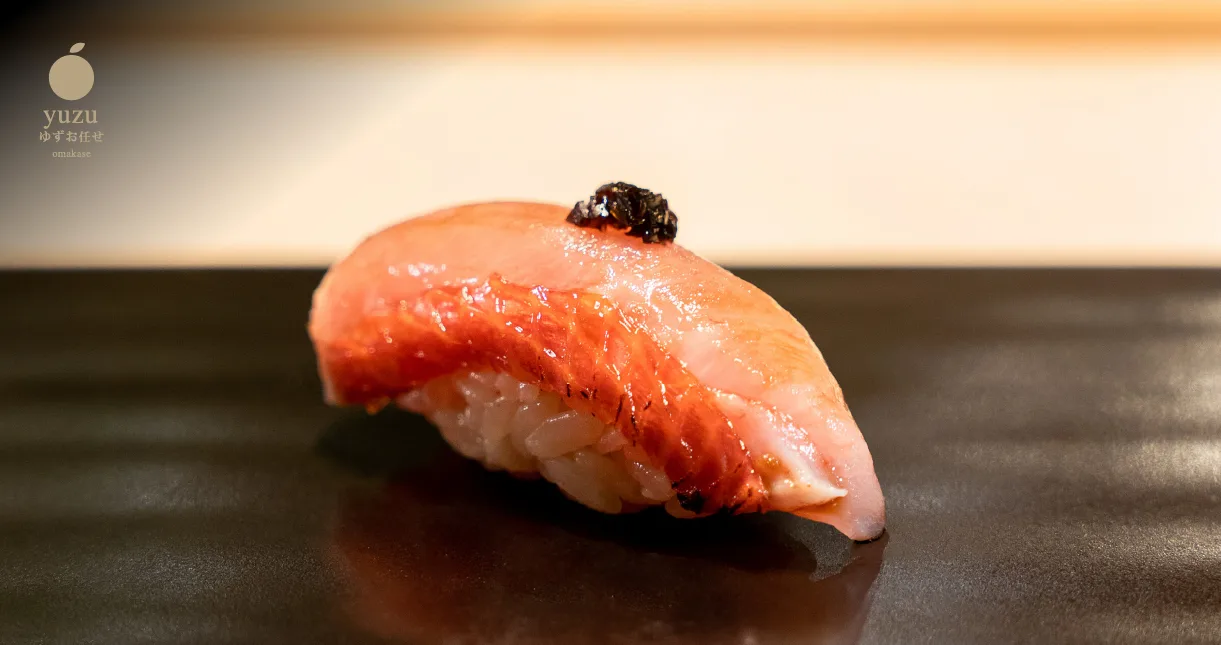
HAND TO HAND NIGIRI: THE MOST INTIMATE WAY TO EAT OMAKASE
Hand to hand nigiri means the chef places each piece of sushi directly into your open palm — and you eat it immediately with your fingers. No chopsticks. No plate. Just the rice, the fish, and the chef’s intent. It is the oldest and most traditional way to eat omakase sushi, and at Bangkok’s finest… Continue reading HAND TO HAND NIGIRI: THE MOST INTIMATE WAY TO EAT OMAKASE
Local Story ● 2026 Mar 11
-
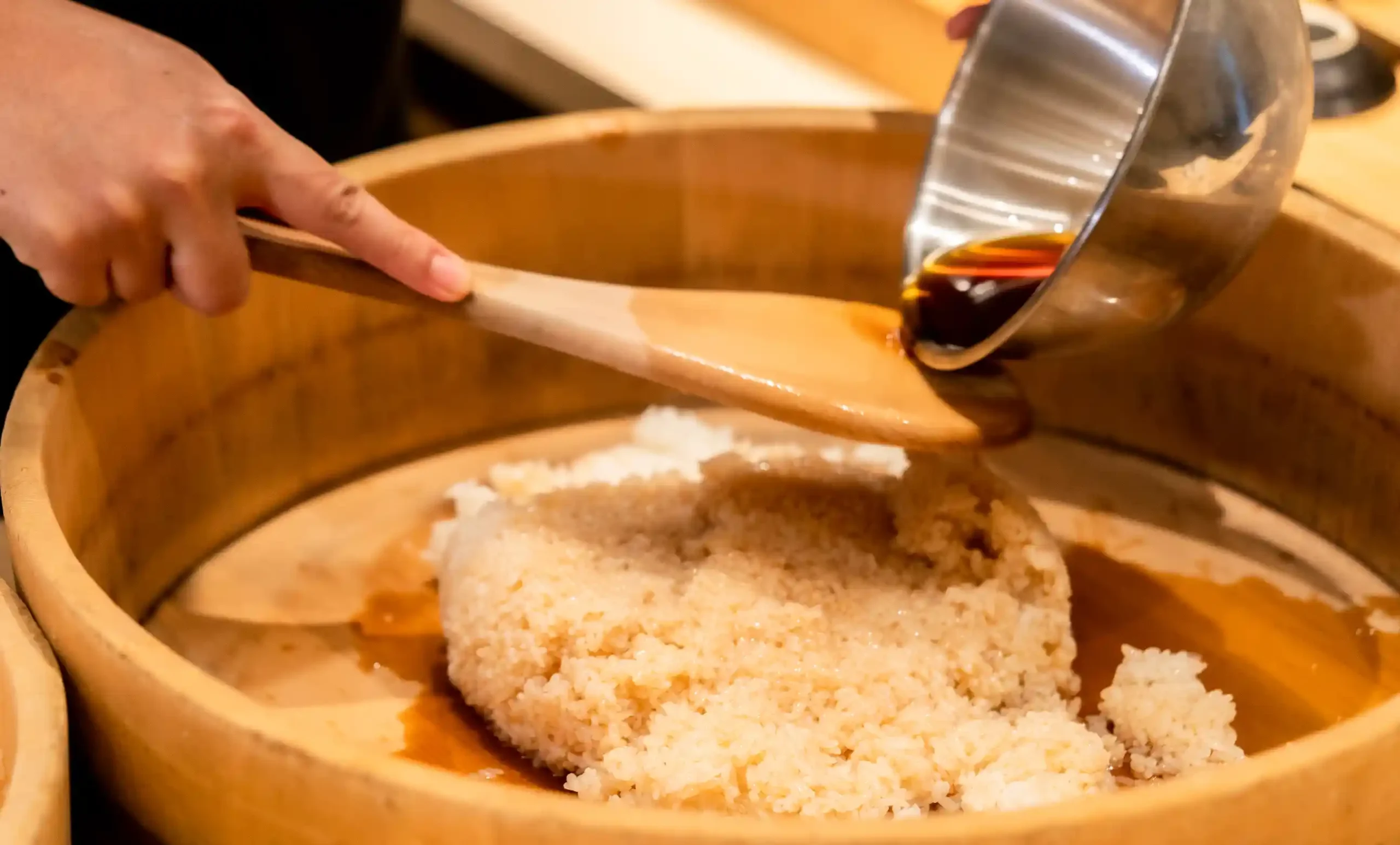
Temperature in Sushi Rice: The Foundation of Authentic Sushi Craftsmanship
What Is the Ideal Temperature for Sushi Rice? Sushi rice (shari) should be served at body temperature, approximately 35-40°C (95-104°F). This warmth allows the vinegar seasoning to release its aroma, keeps grains soft and glossy, and melts the fat of fish toppings upon contact for optimal flavor release. Key Facts at a Glance Why Does… Continue reading Temperature in Sushi Rice: The Foundation of Authentic Sushi Craftsmanship
Local Story ● 2026 Jan 29
-
Hokkaido Uni vs Kyushu Uni: What’s the Difference?
Hokkaido uni offers a rich, creamy sweetness with a firm texture, while Kyushu uni delivers a lighter, more delicate flavor with a softer, melt-in-your-mouth consistency. The difference comes from water temperature, diet, and harvesting season. Understanding Japanese Sea Urchin Varieties Japan produces some of the world’s finest uni, with regional terroir creating distinct flavor profiles.… Continue reading Hokkaido Uni vs Kyushu Uni: What’s the Difference?
Local Story ● 2026 Jan 22
-
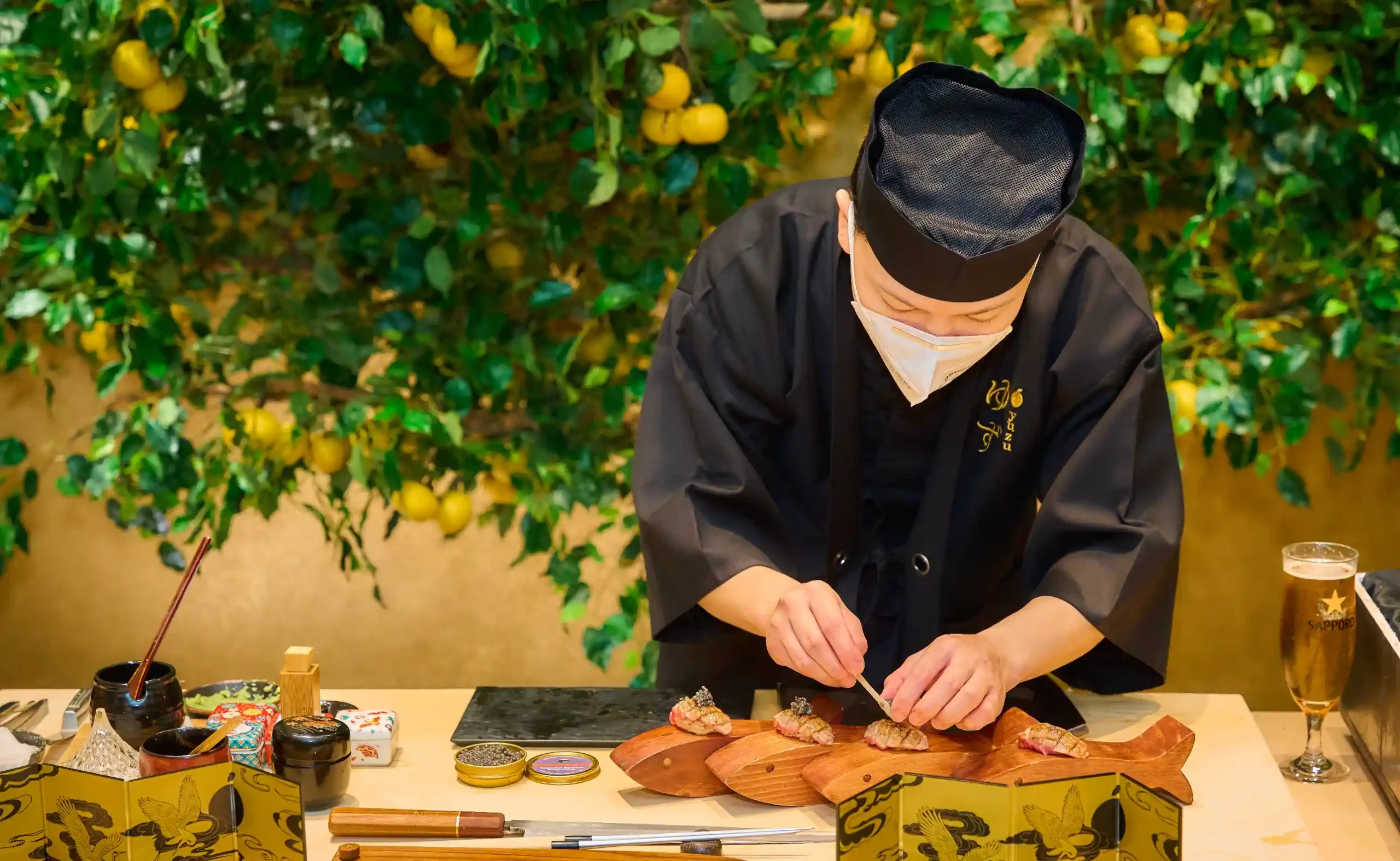
Sushi Knives Explained: Yanagiba, Deba, Usuba and Their Purpose
Japanese sushi knives (hocho) are single-bevel blades designed for specific tasks in washoku cuisine. The essential trio—Yanagiba, Deba, and Usuba—form the foundation of professional sushi preparation, each serving a distinct purpose in the itamae’s craft. Which Knife for What? • Yanagiba: Slicing sashimi and sushi toppings (neta) • Deba: Filleting whole fish, removing heads, breaking… Continue reading Sushi Knives Explained: Yanagiba, Deba, Usuba and Their Purpose
Local Story ● 2026 Jan 22

