




Ishigaki Dai: The Stone Wall Fish, and How It Differs From Ishidai
Ishigaki dai (イシガキダイ, 石垣鯛) is the spotted knifejaw, Oplegnathus punctatus, a white fleshed fish from the rocky coasts of southern Japan in the family Oplegnathidae. It is not another name for ishidai (石鯛). The two are separate species in the same family: ishigaki dai is covered in dark spots, and ishidai carries black vertical bars.… Continue reading Ishigaki Dai: The Stone Wall Fish, and How It Differs From Ishidai
Uncategorized ● 2026 Oct 19
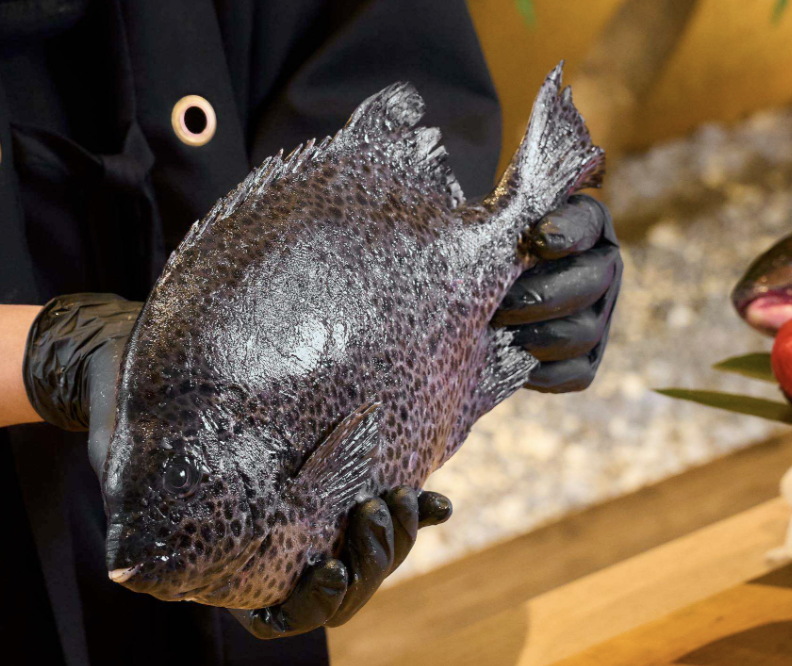
Ishigaki dai (イシガキダイ, 石垣鯛) is the spotted knifejaw, Oplegnathus punctatus, a white fleshed fish from the rocky coasts of southern Japan in the family Oplegnathidae.
It is not another name for ishidai (石鯛). The two are separate species in the same family: ishigaki dai is covered in dark spots, and ishidai carries black vertical bars.
The flesh is white, firm and springy, with a faint scent of the sea, and the fish is eaten at its best in summer.
You may have seen the name on a chalkboard, or heard a chef say it while laying a slice so thin it is nearly transparent in front of you, and wondered whether it is the ishidai you have heard of. It is not, and you can tell the difference before anyone picks up a knife: it is written on the skin. Yuzu Omakase explains where the name comes from, how to tell the two fish apart, what the flesh actually tastes like, and what to pay attention to when it reaches you.
Why “Ishigaki”: A Stone Wall, Not an Island
Ishigaki (石垣) means stone wall. The fish is named for the dark brown blotches across its body, which look like the irregular stones of a dry stone wall. The name has nothing to do with Ishigaki Island in Okinawa, which is the assumption most people make first.
The spotted knifejaw lives in tropical and subtropical waters of the northwest Pacific. In Japan it reaches the Bōsō Peninsula on the Pacific side and occurs from Yamaguchi southward on the Sea of Japan side. Beyond Japan it ranges from southern Korea to the South China Sea.
It eats hard shelled animals, crustaceans, shellfish and sea urchins, cracking them with teeth fused into a beak. That beak is where the English name knifejaw comes from.
Ishigaki Dai vs Ishidai
The two knifejaws share a family, a habitat and much of their flavour. The quickest way to separate them is to look at the pattern.
| Ishigaki dai (石垣鯛) | Ishidai (石鯛) | |
| English name | Spotted knifejaw | Barred knifejaw |
| Scientific name | Oplegnathus punctatus | Oplegnathus fasciatus |
| Pattern | Dark brown spots all over, like a stone wall | Seven black vertical bars |
| Old males | Spots fade and the mouth turns white: kuchishiro (口白) | The mouth turns black: kuchiguro (口黒) |
| Scent | A more subtle sea scent | Slightly stronger |
The two also cross. Natural hybrids turn up carrying ishidai’s bars and ishigaki dai’s spots on one body, and in 1970 Kindai University bred the cross artificially. Japanese anglers call it ishigaki-ishidai, or simply kindai, after the university.
Kuchishiro: the fish shore anglers dream about
As a male spotted knifejaw ages, its spots fade, its body turns a greyish brown, and the area around its mouth turns white. That fish is called kuchishiro, white mouth. Females keep their spots. Among rock anglers on Japan’s coasts, a large kuchishiro is one of the most coveted catches there is.
What Ishigaki Dai Tastes Like
Ishigaki dai is shiromi (白身), a white fleshed fish, and its defining quality is texture. The flesh is firm, springy and pleasantly chewy, a little firmer and tighter than madai, the Japanese red sea bream. The sea scent is light, and softer than ishidai’s.
The darker meat near the bone, the chiai (血合い), is a dull rather than bright red, and it is surprisingly fatty. The deep umami of the fish is usually credited to its diet of sea urchins, shellfish and crustaceans.
Freshly killed, the flesh is so firm it is hard to slice. The chef has to choose both the cut and the timing to suit the fish in hand.
Season and Size: Why Chefs Choose a Medium Fish
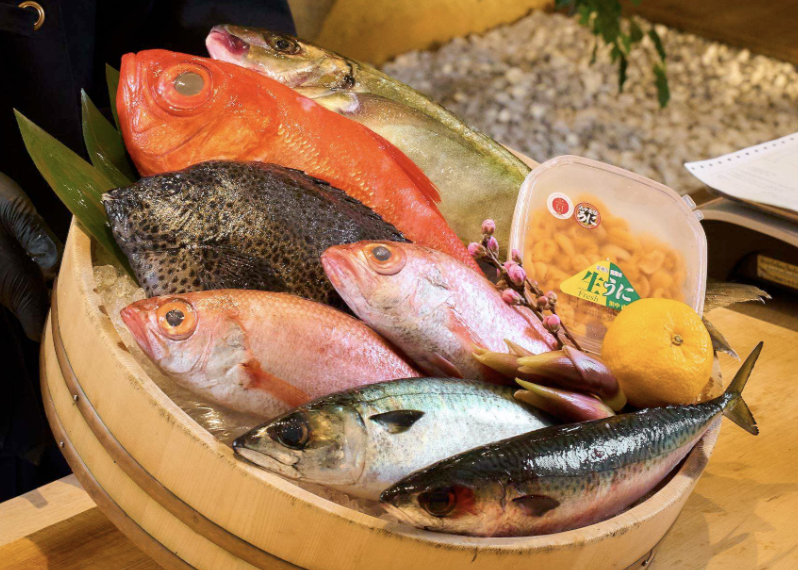
Ishigaki dai is a summer fish. The exact window shifts with where it is landed, so the chef judges the fish in front of them rather than the date on the calendar.
Size matters as much as season. Adults typically reach about 50 centimetres and individuals over 90 centimetres have been recorded, but the fish considered best to eat are those up to about 40 centimetres.
There is a second reason to avoid the giants. Very large spotted knifejaw carry a risk of ciguatera, a natural toxin that accumulates up the food chain. Choosing a medium fish is a decision about flavour and about safety at the same time.
Chef’s Insight: The biggest fish at the market is rarely the best one. With ishigaki dai, knowing which fish to turn down matters as much as knowing which one to buy.
Ishigaki Dai at the Omakase Counter
Because the flesh is so firm, ishigaki dai is usually served as usuzukuri (薄造り), sliced almost translucent, the way fugu is. Thin slicing turns a tight, resistant flesh into a clean, springy bite.
As sushi, it is often eaten with salt and kabosu, a tart Japanese citrus, instead of soy sauce, so the delicacy of the white flesh stays in front. In Japan it is far easier to find raw on a counter in Shikoku and Kyushu than in Tokyo.
Japanese kitchens cook it too: as arai (洗い), raw slices rinsed in iced water, salt grilled, simmered in soy, and deep fried as karaage.
At Yuzu Omakase, a counter in Siam Square where the season decides the menu, a white fish like this is where the chef’s knife work is easiest to taste.
Other Japanese White Fish Worth Knowing
Ishigaki dai is one of several shiromi that appear on an omakase counter. A few others to know by name:
- Madai (真鯛), Japanese red sea bream: firm, springy, gently sweet.
- Kinki (キンキ): a white fish that carries far more fat than the category suggests.
- Kinmedai (金目鯛), golden eye snapper: red skin, fragrant fat.
- Shima aji (縞鯵), striped jack: pale pink, sweet and rich.
- Hirame (鮃), olive flounder: clean, translucent, refined.
- Amadai (甘鯛), tilefish: soft, moist flesh, famous grilled with its scales on.
Frequently Asked Questions
Q: What is ishigaki dai?
A: Ishigaki dai (石垣鯛) is the spotted knifejaw, Oplegnathus punctatus, a white fleshed fish from the rocky coasts of southern Japan. Its flesh is firm and springy with a light sea scent, and it is eaten at its best in summer.
Q: Is ishigaki dai the same as ishidai?
A: No. They are separate species in the family Oplegnathidae. Ishigaki dai (Oplegnathus punctatus) is spotted, and ishidai (Oplegnathus fasciatus) has seven black vertical bars. Old male ishigaki dai develop a white mouth, while old male ishidai develop a black one.
Q: Why is it called ishigaki?
A: Ishigaki (石垣) means stone wall, after the blotched pattern on the fish’s body. It is not named after Ishigaki Island in Okinawa.
Q: When is ishigaki dai in season?
A: Summer. The fish considered best to eat are up to about 40 centimetres, and very large fish carry a risk of ciguatera.
Q: How is ishigaki dai served?
A: Most often as usuzukuri, sliced almost translucent, or as sushi with salt and kabosu citrus. It is also prepared as arai, salt grilled, simmered or deep fried.
Some fish announce themselves with fat. Ishigaki dai announces itself with texture, a firmness that only becomes pleasure in the hands of a sharp knife and a precise cut. The next time you see the name on the board, look for the stone wall on its skin, then taste a thin white slice with nothing more than a pinch of salt.
Reserve a seat at Yuzu Omakase, 2F, 258/9 to 10 Siam Square Soi 3, Pathumwan, Bangkok.
RELATE
-
The Best Season to Taste Amadai: Winter, or Summer?
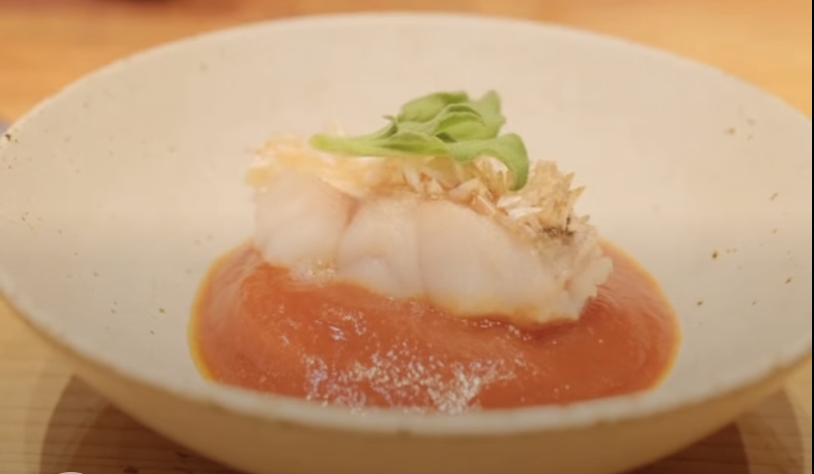
Japanese cooking calls amadai (甘鯛), the Japanese tilefish, a winter fish, at its best from roughly December to February, and Kyoto has a name for it in that season: kan-guji (寒ぐじ). Measured fat tells a different story. The Yamaguchi Prefectural Fisheries Research Center found that red amadai (アカアマダイ) from the Sea of Japan side carries… Continue reading The Best Season to Taste Amadai: Winter, or Summer?
Uncategorized ● 2026 Oct 18
-
What is Wagyu Kappo? The Counter-Style Wagyu Course Explained (2026)
Wagyu Kappo is a Japanese counter-style dining format built around premium wagyu beef. The chef cooks in front of the guest, course by course, using grilling, searing, simmering and lightly raw preparations to show different sides of the same animal. Kappo (割烹) literally means “to cut and to cook with heat”, and a wagyu kappo… Continue reading What is Wagyu Kappo? The Counter-Style Wagyu Course Explained (2026)
Uncategorized ● 2026 Apr 29
-
Yuzu Omakase × Central Cee: Inside the Bangkok Afterparty (2026)
On 20 March 2026, Yuzu Omakase brought its kitchen to The Yang’s Club 94 in Bangkok for the Central Cee afterparty, part of the British artist’s Asia tour. The collaboration was the first time the omakase counter known for its 19-seat Siam Square dining room stepped out of its dining room and into a club.… Continue reading Yuzu Omakase × Central Cee: Inside the Bangkok Afterparty (2026)
Uncategorized ● 2026 Apr 29
-
Why Truffle Is the King of Mushrooms and Flavours
Truffle is the most expensive ingredient on earth by weight — and it earns the title. No other fungus, no other flavour, comes close to the depth, complexity, and sheer rarity of a fresh truffle. One bite and you understand why chefs across Bangkok compete to source it, and why a single white truffle can… Continue reading Why Truffle Is the King of Mushrooms and Flavours
Uncategorized ● 2026 Mar 11

