




AGING FISH: WHY IT MATTERS AND HOW IT MAKES OMAKASE TASTE BETTER
Fresh does not always mean better. In the world of omakase, one of the most important skills a chef has is knowing when NOT to serve fish immediately after it arrives. Aging fish — resting it under controlled temperature and humidity for days, sometimes weeks — produces deeper umami, a silkier texture, and flavour complexity… Continue reading AGING FISH: WHY IT MATTERS AND HOW IT MAKES OMAKASE TASTE BETTER
Uncategorized ● 2026 Mar 11
Fresh does not always mean better. In the world of omakase, one of the most important skills a chef has is knowing when NOT to serve fish immediately after it arrives. Aging fish — resting it under controlled temperature and humidity for days, sometimes weeks — produces deeper umami, a silkier texture, and flavour complexity that just-caught fish simply cannot deliver.
Bangkok's top omakase kitchens have adopted this technique, and diners who understand it eat completely differently at the counter. This is what fish aging is, how it works, and why it matters.
THE PROBLEM WITH FISH THAT IS TOO FRESH
This surprises most people: serving fish too soon after it is killed produces worse results than aging it correctly.
Here is why.
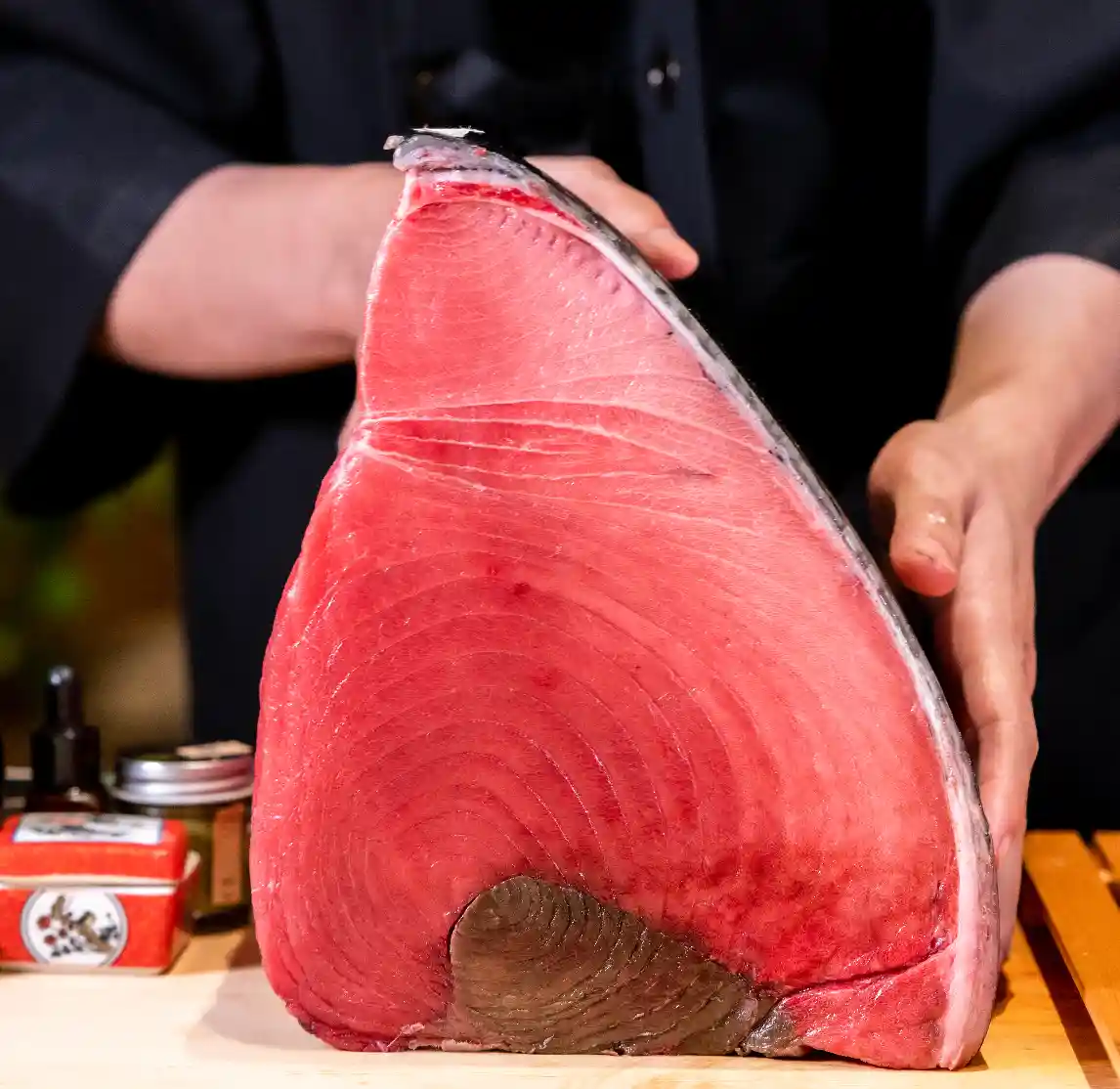
When a fish dies, its muscles enter a state called rigor mortis — the same post-death stiffening that occurs in all animals. In fish, rigor mortis typically lasts 15 to 24 hours depending on size and species. During this period, the muscle fibres are contracted and tense.
If you slice and serve sashimi from a fish still in rigor mortis, the texture is noticeably chewy and rubbery. The fish resists the knife. It resists the palate. It fights back.
Simultaneously, anaerobic muscle contractions produce lactic acid and pyruvic acid as byproducts. These accumulate in the flesh and create mild sour, off-notes — not unpleasant enough to notice explicitly, but enough to flatten the flavour profile.
A skilled itamae (sushi chef) knows this. They never serve fish at its most "fresh" moment. They serve it at its optimal moment — which almost always comes after aging.
DRY AGING VS WET AGING: DIFFERENT RESULTS
Not all aging is the same. Serious omakase kitchens use both methods, sometimes on the same fish at different stages.
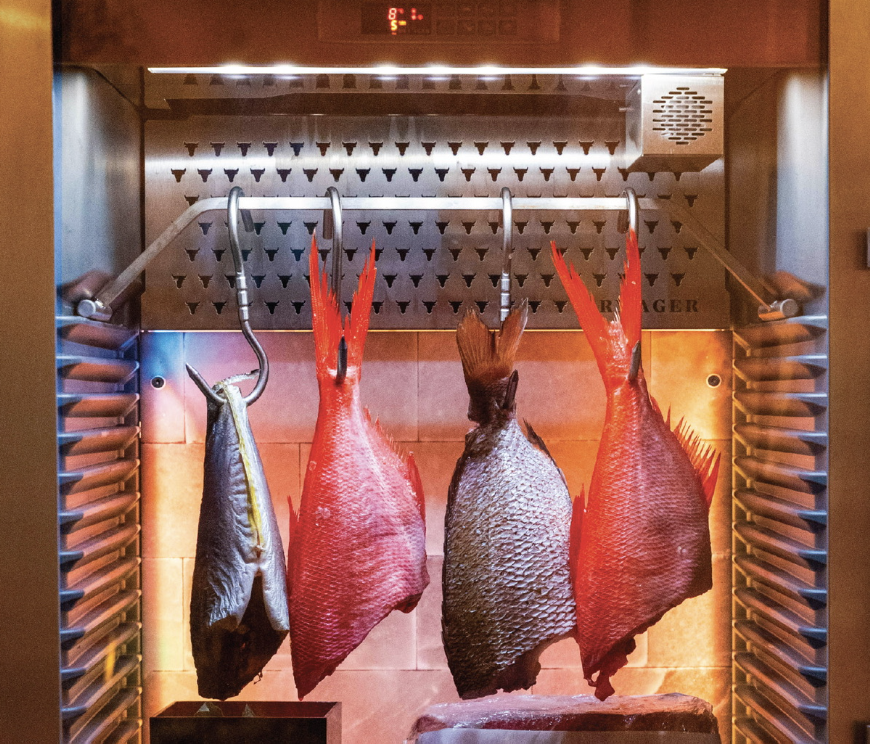
DRY AGING
Conditions: 1–2°C, 70–85% relative humidity, fish uncovered or loosely wrapped
Duration: 3 to 90 days depending on species and size
Result: Concentrated, complex flavour with nutty, funky aged notes. Firmer surface forms a pellicle (protective outer layer) that seals the interior. Produces the most dramatic flavour development.
Best for: Large whole fish (tuna, amberjack, kingfish), species with substantial connective tissue (Spanish mackerel, sawara)
WET AGING
Conditions: 1–2°C, vacuum-sealed or wrapped, near 100% humidity
Duration: 3 to 15 days
Result: Subtler development. Cleaner flavour without the distinctive aged character of dry aging. More controlled, lower risk of spoilage.
Best for: More delicate white fish, situations requiring consistent results across a service
The minimum viable size for dry aging is approximately 1 kg whole fish. Smaller fish dry out too fast before meaningful enzymatic improvement occurs. For large tuna portions that are removed during storage, a minimum of 3–4 kg is standard practice.
HOW LONG DO DIFFERENT FISH AGE?
Every species has a different optimal window, determined by fat content, muscle density, and enzyme activity rate. Serving outside the optimal window — too early or too late — produces inferior results.
WHITE FISH (SHIROMI) — flounder (hirame), sea bream (tai), snapper
Optimal aging: 3–7 days
Effect: Firm flesh softens into a clean, sweet, milky quality. Glutamic acid levels rise noticeably. The fish becomes expressive where it was previously neutral.
TUNA (MAGURO) — akami (lean), chu-toro (medium fatty), otoro (fatty)
Optimal aging: 7–14 days (akami and chu-toro), shorter for otoro due to fat content
Effect: The lean, almost metallic quality of fresh tuna deepens into rich, round umami. The iron-forward flavour of akami rounds and sweetens. Otoro becomes even more unctuous.
AMBERJACK / YELLOWTAIL (HAMACHI / BURI)
Optimal aging: 5–10 days
Effect: The natural richness of hamachi intensifies. Fat breaks down slightly, distributing more evenly through the flesh. The result has a butteriness not present in fresh fish.
SPANISH MACKEREL (SAWARA)
Optimal aging: 7–14 days
Effect: Sawara has substantial connective tissue and handles extended aging exceptionally well. One of the species where aging produces the most dramatic transformation — from a firm, straightforward fish to something complex and deeply savoury.
THE TRADITIONAL TECHNIQUE: KOMBU-JIME
Before refrigeration existed, Japanese chefs developed kombu-jime — wrapping fish fillets tightly between sheets of dried kelp (kombu) for 12 to 48 hours.
The technique does two things simultaneously:
- The kelp draws excess moisture from the fish surface, achieving a mild wet-aging effect
- Glutamic acid from the kombu transfers into the fish, adding an additional layer of umami from the outside in
Kombu-jime is still used in traditional Edomae omakase kitchens today. It is one of the techniques that gives classic Edomae sushi its characteristic clean-yet-deep flavour — different from the more intense flavour of modern dry-aged fish, but unmistakable in its own right.
WHY THIS MATTERS FOR OMAKASE IN BANGKOK
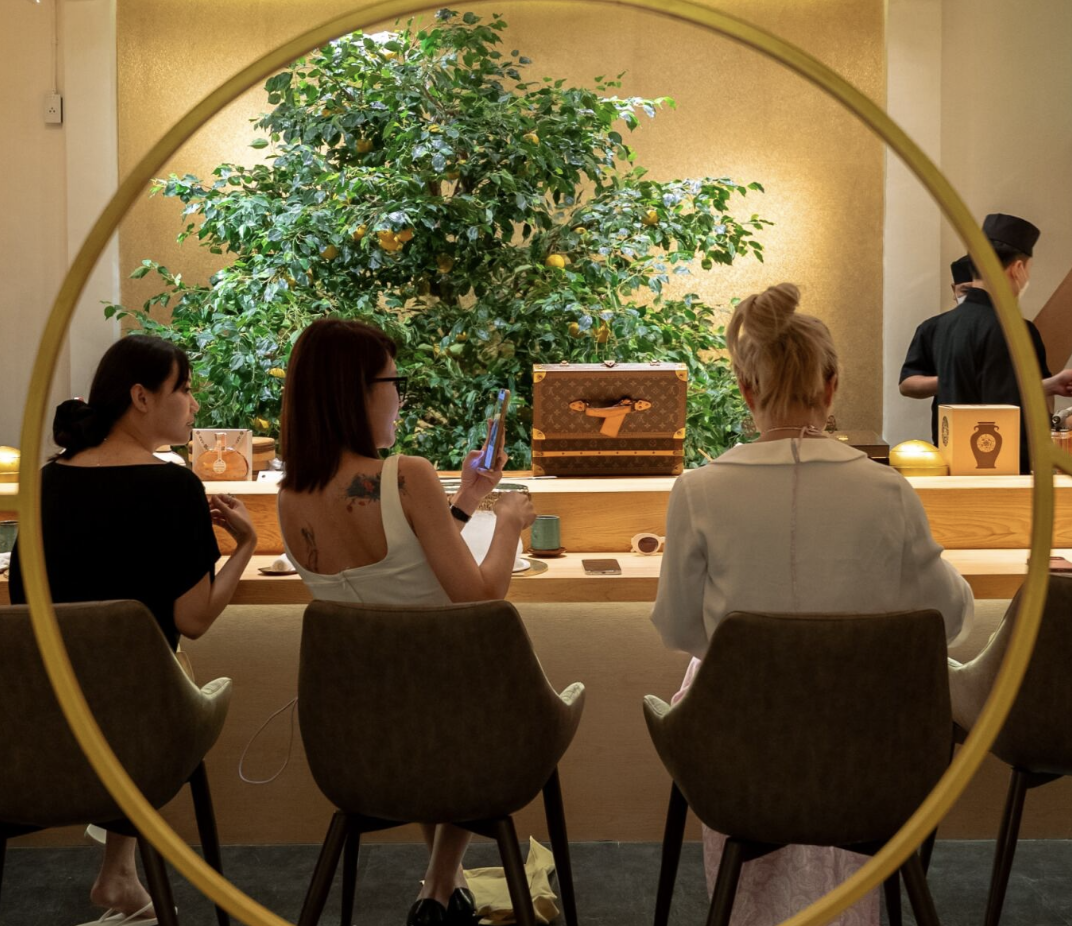
Bangkok has become one of Asia's most serious cities for omakase dining. The city now has dozens of high-quality counters, and the most technically rigorous among them have adopted Japanese aging protocols as standard practice — sourcing whole fish rather than pre-cut fillets specifically to control the aging process from catch to plate.
For Bangkok diners, understanding aging changes what you notice at the counter. When an itamae tells you a piece of flounder has been aged seven days, or that the tuna was rested fourteen days, that information is not trivia — it is the chef telling you they chose this piece over a fresher one because it is better. The flavour you're tasting is the result of that decision.
At Yuzu Omakase in Siam Square, the kitchen applies aging to key species in the menu. The chawanmushi and nigiri courses reflect not just the quality of fish sourced, but the timing decisions made before any guest sits down. Knowing that the hamachi on your plate is not served at its freshest but at its best — those are different things — is what separates a technically serious omakase from one that simply uses expensive ingredients.
FREQUENTLY ASKED QUESTIONS
Why does aged fish taste more umami than fresh fish?
Aging triggers enzymatic breakdown that converts proteins into free amino acids, particularly glutamic acid — the compound our taste buds detect as umami. Fresh fish has these proteins intact; aged fish has them partially broken down into their flavour-active components. More free glutamic acid and inosinic acid means more perceived umami.
How long is fish typically aged for omakase in Bangkok?
It varies by species. White fish like flounder and sea bream are typically aged 3–7 days. Tuna is aged 7–14 days. Fattier or denser species like Spanish mackerel can be aged up to two weeks. The exact timing depends on the individual fish, its size, and the chef's judgment.
Is aged sushi safe to eat?
Yes, when prepared by a trained kitchen using proper refrigeration (1–2°C), correct humidity, and clean handling. Controlled enzymatic aging is fundamentally different from bacterial spoilage. Professional omakase kitchens manage this precisely — it is part of the craft.
What is the difference between Edomae sushi and regular sushi?
Edomae sushi (from the Edo period in Tokyo) traditionally uses aged, marinated, or cured fish rather than raw fresh fish. The aging and preparation techniques — including kombu-jime, vinegar marination, and salt curing — are part of the style. Modern omakase often blends Edomae techniques with fresh fish depending on species and season.
Can I taste the difference between aged and non-aged fish?
Yes, clearly. Non-aged fish has a clean, direct flavour that fades quickly on the palate. Aged fish has layered umami that builds and lingers. The texture is also noticeably different — silkier and more integrated rather than firm and separated. Once you have eaten well-aged fish at a serious omakase counter, the difference is immediately recognisable.
Where can I experience aged fish omakase in Bangkok?
Yuzu Omakase at Siam Square (258/9-10 Siam Square Soi 3, Bangkok) practices fish aging as part of their kitchen protocol. Menus run from ฿4,500 to ฿9,500 per person across 13–18+ course formats. The kitchen uses both Japanese-sourced and seasonally curated fish, aged to the itamae's specification before each service.
THE REAL REASON AGING DEFINES THE BEST OMAKASE
Any restaurant can buy expensive fish. The skill is not in sourcing — it is in timing. Knowing that a piece of amberjack is better on day six than day one or day ten, and being confident enough in that judgment to serve it at exactly the right moment — that is the craft.
Fish aging is not a trend. It is what separates omakase from sushi. It is what separates a technically serious kitchen from one that serves premium ingredients without understanding them. And in Bangkok, as the city's omakase scene matures, it is increasingly the difference between a good counter and a great one.
The best piece of fish you will eat in Bangkok was not the freshest piece available that day. It was the piece that waited.
RELATE
-
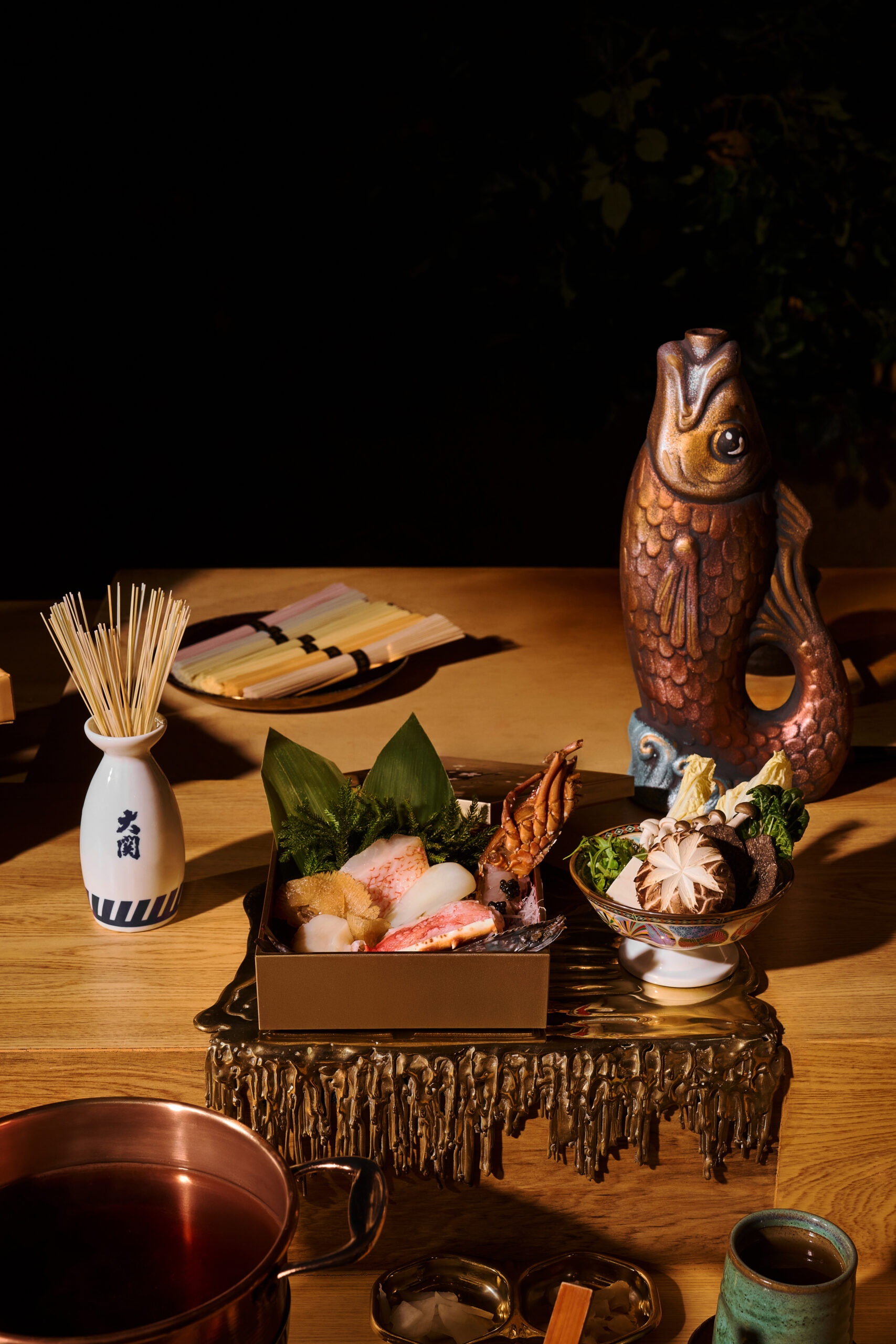
What is Wagyu Kappo? The Counter-Style Wagyu Course Explained (2026)
Wagyu Kappo is a Japanese counter-style dining format built around premium wagyu beef. The chef cooks in front of the guest, course by course, using grilling, searing, simmering and lightly raw preparations to show different sides of the same animal. Kappo (割烹) literally means “to cut and to cook with heat”, and a wagyu kappo… Continue reading What is Wagyu Kappo? The Counter-Style Wagyu Course Explained (2026)
Uncategorized ● 2026 Apr 29
-
Yuzu Omakase × Central Cee: Inside the Bangkok Afterparty (2026)
On 20 March 2026, Yuzu Omakase brought its kitchen to The Yang’s Club 94 in Bangkok for the Central Cee afterparty, part of the British artist’s Asia tour. The collaboration was the first time the omakase counter known for its 19-seat Siam Square dining room stepped out of its dining room and into a club.… Continue reading Yuzu Omakase × Central Cee: Inside the Bangkok Afterparty (2026)
Uncategorized ● 2026 Apr 29
-
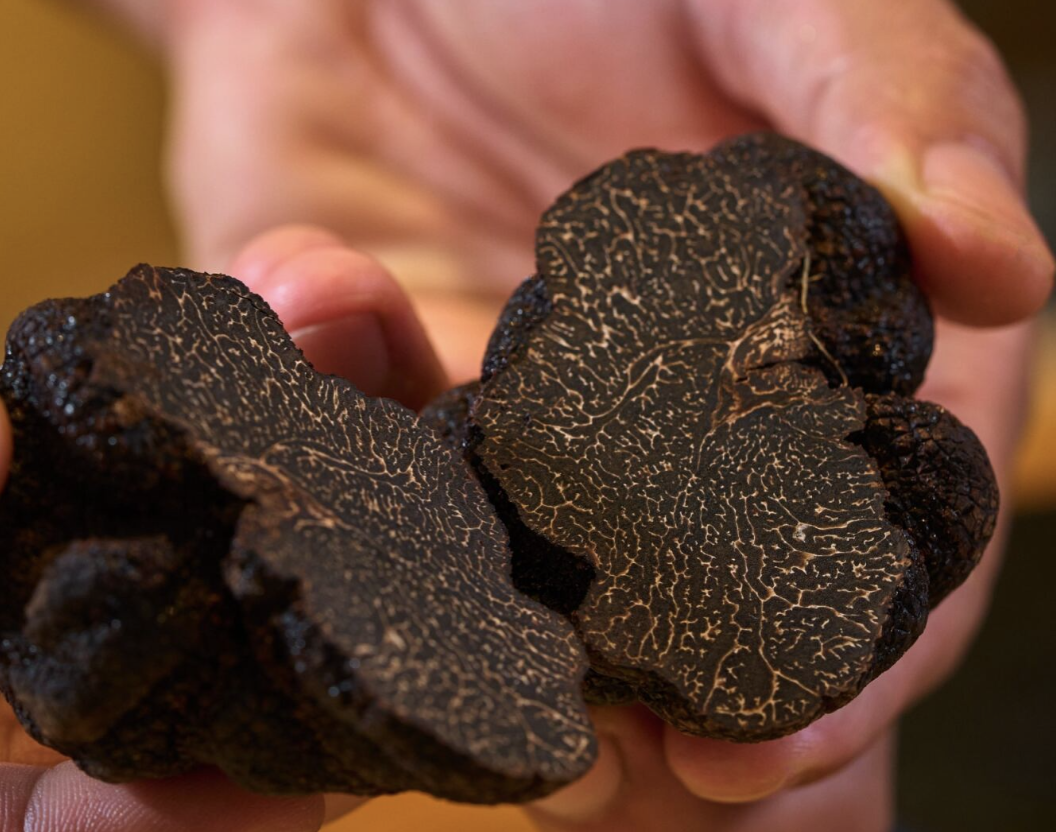
Why Truffle Is the King of Mushrooms and Flavours
Truffle is the most expensive ingredient on earth by weight — and it earns the title. No other fungus, no other flavour, comes close to the depth, complexity, and sheer rarity of a fresh truffle. One bite and you understand why chefs across Bangkok compete to source it, and why a single white truffle can… Continue reading Why Truffle Is the King of Mushrooms and Flavours
Uncategorized ● 2026 Mar 11
-
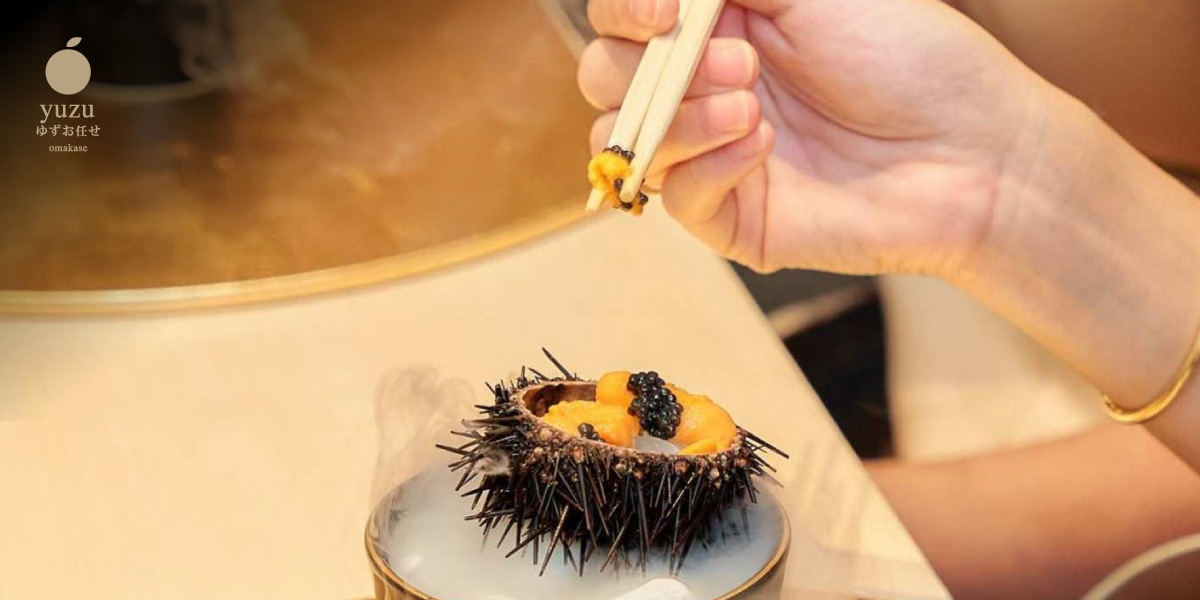
What is Uni Sushi?
Uni sushi is a bite of vinegared rice topped with uni—the creamy, sweet-briny edible gonads of a sea urchin—most often served as gunkan (a nori-wrapped “battleship”) or as delicate nigiri. Fresh uni tastes custardy and ocean-clean; poor-quality uni can taste bitter or ammoniacal. What is uni (and why it’s not “roe”)? Many people think uni… Continue reading What is Uni Sushi?
Uncategorized ● 2025 Sep 11

